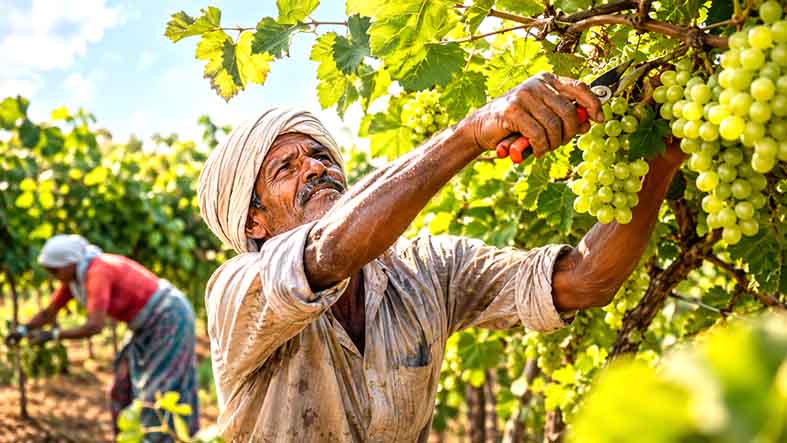
Till recently, agricultural development was measured through the familiar indicators of crop yields, acreage under cultivation, irrigation coverage, fertiliser consumption, seed quality and access to markets. Governments have invested heavily in improving these variables. Yet the important factor that rarely figures in agricultural planning with the seriousness it deserves is the health of the farmer.
Agriculture remains one of the most physically demanding occupations in the world, involving prolonged exposure to heat, repetitive movements, heavy lifting, awkward working postures, dust, pesticides and unpredictable weather. The people responsible for producing food are routinely exposed to occupational hazards that can diminish their capacity to work, reduce their household incomes and compromise the long-term viability of their farms.
The consequences extend beyond individual well-being. A farmer suffering from chronic back pain, respiratory illness or joint degeneration is a productive economic asset whose capacity to cultivate, harvest and market crops is under threat.
This is the premise behind the proposed Farmers’ Health Capital (FHC) framework, on which I have been working on for several years and which seeks to measure the relationship between farmers’ physical health, occupational exposure, healthcare expenditure and agricultural productivity. Drawing on field-level observations across diverse agricultural belts and crops, including grapes, pomegranates, cashews, cotton and sugarcane, the framework highlights a dimension of agricultural development that conventional productivity assessments frequently overlook.
The Labour Equation
Agricultural economics traditionally treats labour as a measurable input, expressed in terms of working days, hours or the availability of agricultural workers. But this approach assumes a degree of physical uniformity that does not exist in practice. Two farmers may put in identical working hours and yet deliver substantially different levels of output because their health, strength, mobility and endurance differ.
The distinction becomes particularly important in labour-intensive horticulture. Grapes and pomegranates, for instance, require careful pruning, canopy management, spraying and harvesting. These operations are time-sensitive and often cannot be postponed without affecting the quality and marketability of the produce. Cashew cultivation, cotton picking and sugarcane harvesting similarly involve demanding physical routines.
Much of this work is undertaken manually, often with limited access to ergonomic equipment. Repeated bending, lifting, squatting and carrying heavy loads place considerable strain on the spine, knees and shoulders. Over time, these activities can contribute to musculoskeletal disorders, chronic pain and restricted mobility.
The problem is compounded by the seasonal character of agricultural employment. A farmer may be able to work through periods of relative inactivity but find the physical demands of sowing or harvesting increasingly difficult. During critical agricultural windows, even a few days of incapacity can have disproportionate consequences.
In the case of perishable commodities, the implications are immediate. Grapes and other fruits must be harvested within narrow windows to maintain quality and meet market requirements. Delays can result in deterioration, lower prices or the loss of an entire portion of the crop. Unlike industrial production, where work can sometimes be rescheduled, agricultural operations are governed by biological cycles and weather conditions. A missed harvesting window cannot necessarily be recovered.
The result is a direct connection between occupational health and farm productivity.
The economic consequences of poor health are magnified by the limited availability and affordability of rural healthcare. For small and marginal farmers, medical emergencies can quickly become financial emergencies.
Agricultural households already operate within tight cash-flow constraints. Expenditure on seeds, fertilisers, pesticides, irrigation, labour and equipment must often be incurred well before the crop generates revenue. A sudden hospital admission or prolonged treatment can disrupt this carefully balanced financial arrangement.
Out-of-pocket healthcare expenditure remains a significant burden in India. Rural patients have to travel considerable distances for specialist treatment, adding transport costs and the loss of working days to their medical bills. When illness strikes during a cropping season, families face difficult choices.
Borrowing is another common response. Informal loans obtained to meet emergency medical expenses carry high interest rates and create repayment obligations that persist beyond the agricultural season. In the absence of adequate financial protection, a health shock can therefore develop into a cycle of indebtedness, forcing families to sell assets, lease out land or gradually withdraw from cultivation.
Farmer indebtedness is frequently examined through the prism of crop failure, falling prices, input costs and institutional credit. Healthcare-related expenditure deserves comparable attention. A farmer can experience financial distress even when the crop performs reasonably well if a medical emergency consumes the income generated by it.
Beyond Farm Subsidies
India’s agricultural policy has made substantial investments in improving production. Soil Health Cards, micro-irrigation programmes, crop insurance, agricultural mechanisation and improved seed varieties have all sought to address constraints on farm output. Yet the human being operating this system has not received equivalent attention.
The next stage of agricultural development must therefore integrate occupational health into mainstream farm policy.
Ergonomic improvements offer a practical starting point. Lightweight harvesting equipment, anti-vibration pruning tools, improved spraying systems, protective clothing and mechanical aids for lifting and carrying can reduce the physical burden of farm operations. Small interventions, if appropriately designed and made affordable, can improve working conditions while preserving productivity.
Agricultural mechanisation must also be understood in broader terms. It is not simply about replacing human labour with machinery or increasing the scale of operations. Appropriately designed equipment can reduce repetitive physical strain, improve precision and enable older farmers and those with physical limitations to remain economically active.
Equally important is the provision of occupational healthcare within agricultural regions. Mobile medical units and farm-gate health camps could provide screening for musculoskeletal disorders, respiratory ailments, pesticide exposure, heat-related illnesses and other occupational risks. Such services would be particularly valuable during peak agricultural seasons, when farmers are least likely to interrupt work to seek medical attention.
Preventive healthcare is also economically more rational than allowing treatable conditions to become chronic. Regular screening, early diagnosis and timely intervention can reduce both medical expenditure and the loss of productive working days.
Measuring Health Capital
For these interventions to become part of national agricultural planning, governments need a systematic method of measuring the problem. This is where a proposed National Farmers’ Health Capital Index, under the institutional aegis of the Food and Agriculture Organization (FAO), could play an important role.
The proposed index would broaden the conventional assessment of agricultural performance by incorporating the health and occupational conditions of farmers.
Such a composite measure could help governments identify agricultural regions where poor occupational health is undermining productivity. It would also allow comparisons across crops, regions and farming systems, providing a more comprehensive picture of the relationship between human health and agricultural performance.
The implications would extend beyond national agricultural ministries. Multilateral institutions such as the World Bank, the International Fund for Agricultural Development (IFAD) and the Asian Development Bank could incorporate appropriate health-related indicators into the evaluation of rural development programmes. Agricultural credit and development projects could include provisions for healthcare access and protection against medical emergencies.
There is a growing international dimension here. Export-oriented agriculture increasingly operates within supply chains concerned with environmental sustainability, labour standards and responsible production. A credible measure of farmers’ occupational health could eventually complement existing social and environmental benchmarks, helping demonstrate that agricultural commodities are produced under conditions that protect the people cultivating them.
The FAO would be a natural institutional platform for developing common definitions, indicators and methodologies, although such an index would require extensive field validation, consultation with farming communities and coordination with national health and agricultural agencies. Its credibility would depend on reliable data.
Agricultural policy cannot remain confined to the condition of land and the availability of inputs.
Climate change makes this challenge even more urgent. Farmers working outdoors face greater risks of dehydration, heat exhaustion and other occupational illnesses. The idea of Farmers’ Health Capital offers an opportunity to rethink agricultural productivity from the ground up. It recognises that healthcare is not merely a social expenditure to be addressed after economic development has taken place.
(The writer is a member of Maharashtra Agriculture Price Commission. Views personal.)