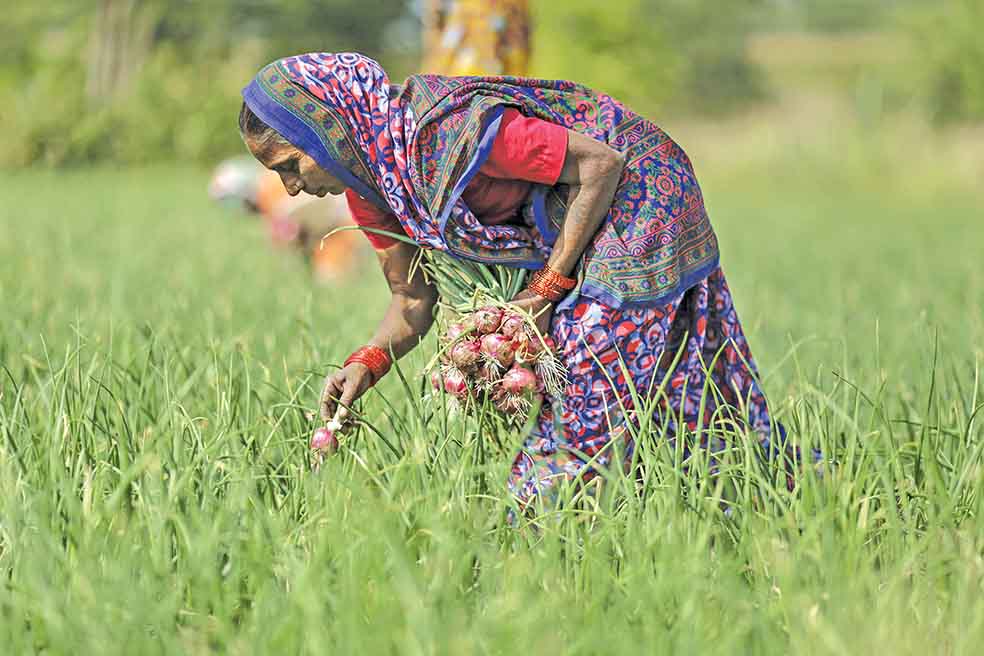
Agricultural finance has an enduring paradox. It recognises that soil loses fertility, groundwater reserves decline and machinery depreciates with use. It accounts for the deterioration of almost every productive asset on a farm. Yet the person who works the land is routinely treated as an inexhaustible resource, capable of absorbing physical strain, occupational hazards and illness without any measurable consequence for agricultural productivity.
This is a fundamental flaw in the way agricultural investment is conceived and evaluated. The World Bank, which commits billions of dollars to climate-resilient agriculture, irrigation infrastructure and rural credit across developing economies, needs to recognise that the health of the cultivator is itself a form of productive capital.
During the course of my research, I have developed a methodology that could help address this deficiency which I term as the Farmers’ Health Capital (FHC) Index.
The Missing Variable
Existing international benchmarks, including the World Bank’s Human Capital Index Plus (HCI+), measure important dimensions of human development, such as childhood stunting, educational attainment and adult survival. These indicators are valuable for assessing national development outcomes. They are, however, too broad to capture the occupational hazards and cumulative physical deterioration experienced by agricultural workers.
A farmer working in an intensive horticultural or cash-crop belt faces a particular combination of risks including prolonged pesticide exposure, extreme heat, respiratory ailments, repetitive physical exertion and chronic back and joint injuries. These affect the capacity to cultivate, harvest and invest, and therefore have a direct bearing on agricultural productivity.
My research, based on a field survey of 1,200 farmers across intensive cash-crop and horticultural regions of Maharashtra, attempts to quantify this relationship. It examines how the deterioration of physical health translates into economic vulnerability at the farm level. Its underlying proposition is that the farmer’s physical capacity is one of its essential inputs of agricultural production.
The financial consequences are considerable. Survey findings indicate that 92 per cent of farming households postpone necessary medical treatment because of the immediate costs involved. Such delays can turn manageable ailments into debilitating conditions. An injury during sowing or harvesting can disrupt an entire production cycle, leaving a household with fewer options than it might have in a more flexible occupation.
The resulting distress often extends beyond healthcare. Families may borrow from informal lenders at punitive interest rates, lease out land under unfavourable conditions or struggle to service existing bank loans. A health shock thus becomes a credit shock, with consequences that can persist well beyond the immediate illness.
The research also points to a significant relationship between a cultivator’s physical stamina and willingness to invest in the following agricultural season. Preventive ergonomic interventions, meanwhile, can generate attractive benefit-cost returns.
Rethinking Credit
Incorporating the FHC Index into World Bank operations would require a change in the design of agricultural finance, not simply the addition of another statistical indicator.
First, agricultural credit programmes supported through the International Bank for Reconstruction and Development (IBRD) and the International Development Association (IDA) should incorporate assessments of occupational health risks in their target regions. Poor regional health scores must not become grounds for denying credit to older or vulnerable cultivators. That would penalise precisely those whom development finance is intended to assist. Instead, such assessments should trigger health-shock buffers, appropriately designed micro-insurance and safeguards within agricultural lending programmes.
Second, farm modernisation needs to move beyond its traditional emphasis on seeds, fertilisers and machinery. Investment in productivity-enhancing inputs is important, but so is reducing the physical cost of using them. Lightweight pesticide sprayers, ergonomic harvesting harnesses and anti-vibration pruning shears may appear modest compared with large irrigation or mechanisation projects. Yet they can prevent cumulative injuries and reduce the loss of working days. The FHC Index could help identify where such interventions would deliver the greatest returns.
Third, rural healthcare needs to be brought closer to the farm. Mobile occupational health units in intensive agricultural belts could provide timely attention for pesticide exposure, heat exhaustion, respiratory complaints and musculoskeletal injuries. Multilateral infrastructure finance could support such facilities in coordination with public health authorities, rather than leaving agricultural and healthcare budgets to operate in isolation. Preventive treatment at the farm gate is potentially less expensive than allowing an illness to develop into a prolonged economic crisis.
There is also a role for the International Finance Corporation (IFC), the World Bank Group’s private-sector arm. The FHC Index could inform environmental, social and governance benchmarks for agribusinesses and international agricultural supply chains. Global buyers would then have an additional basis for assessing whether the farms from which they source produce provide reasonably safe working conditions. Better occupational standards would become part of responsible sourcing rather than an optional corporate commitment.
Rather than beginning with an entirely new framework, the World Bank could evaluate the FHC Index as an operational diagnostic instrument, subject to independent validation and adaptation across different agricultural settings.
A consistent survey and scoring protocol could help country teams identify regional patterns, compare occupational risks and assess whether investments are improving farmers’ capacity to work without compromising their health. Its application would, of course, require sensitivity to differences in crops, climates, farming systems and labour practices. But these are reasons to refine the methodology, not to ignore the underlying problem.
The FHC Index offers an opportunity to correct a longstanding imbalance in development finance. The World Bank has spent decades improving the measurement and protection of natural and physical capital. It is time to extend the same discipline to the human being at the centre of agricultural production.
(The writer is a member of Maharashtra Agriculture Price Commission. Views personal.)