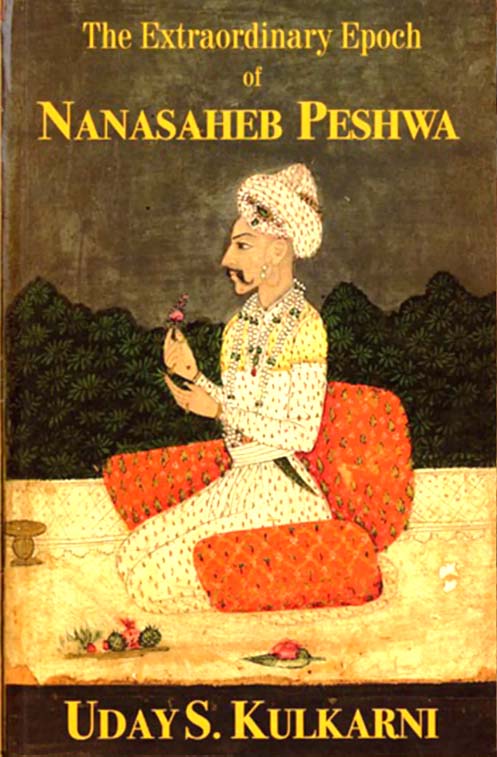
There was once a Pune, wreathed in history, in which I grew up. That city today is almost wholly extinct. In ‘Old Poona’, one could palpably sense the vestiges of the Peshwa era. As a child, Shaniwar Wada, with its bastions protruding into the modern city, and Parvati Hill never failed to stir a frisson as living landmarks of a past that had not quite relinquished its hold on the present.
It is this vanished world, and the larger political universe in which Pune was verily the cockpit of Indian politics for a period, that Dr. Uday S. Kulkarni brings so vividly back to life in his magisterial The Extraordinary Epoch of Nanasaheb Peshwa (2020).
Dr. Kulkarni first came to wider notice with Solstice at Panipat (2011), a rigorous account that introduced the critical Third Battle of Panipat in 1761 to a new generation of serious history aficionados. But it is his opus on Balaji Baji Rao, popularly known as Nanasaheb Peshwa, and the turbulent, tortuous world of eighteenth-century Indian politics that has a strong claim to being his masterwork.
History, as the great French historian Fernand Braudel demonstrated in his monumental study of the Mediterranean world under Philip II, unfolds in several tempos: the event, which is surface and flash; the conjuncture, which undulates over decades; and the longue durée, that deep, subterranean current in which civilisations shift their tectonic plates.
The eighteenth century in Indian history and politics — with the decline of Mughal authority, the emergence of regional powers, the shifting loyalties of military chiefs and the growing ambitions of European companies — was a period of profound political transition that demands nothing short of a Braudelian understanding.
James Grant Duff’s History of the Mahrattas, published in 1826, was a pioneering undertaking, albeit one with several limitations. Duff was an administrator with access to the Satara archives, an acquaintance with Marathi and Persian, and an extensive network of informants. Despite this, his work was an indispensable starting point for those who followed.
The next great movement in the reconstruction of Maratha history came from within Maharashtra itself. The criticism of Grant Duff’s work by N.J. Kirtane in 1868, followed by the efforts of Marathi scholars to recover original records, is a fascinating story in itself. Kashinath Shastri Sane, working with J.B. Modak, helped publish historical material through Kavyetihasa-Sangraha (1878).
Justice Ranade’s 1900 classic Rise of the Maratha Power remains a foundational text of Maratha historiography, seeking to reinterpret Maharashtra’s past as a disciplined national effort. V.K. Rajwade made the painstaking search, collection and publication of original documents his life’s mission, producing the monumental Marathyanchya Itihasachi Sadhane (1898–1918).
D.B. Parasnis continued this work through publications such as Bharata Varsha and Itihas-Sangraha while Sir Jadunath Sarkar, G.S. Sardesai, Surendra Nath Sen, V.G. Dighe, Dr. Bal Krishna, Vasudeo Shastri Khare, V.S. Bendrey, Setu Madhav Rao Pagdi and others, right up to the late G.B. Mehendale have tremendously enlarged the scope of Maratha historiography through meticulous archival research, documentary publication and historical interpretation.
It is within this distinguished tradition that Kulkarni’s work must be situated. A surgeon-turned-historian who wields his pen with the precision of his scalpel, he has emerged as one of the most meticulous chroniclers of eighteenth-century Maratha and Indian history at work today.
In The Extraordinary Epoch of Nanasaheb Peshwa, Kulkarni turns his attention to the twenty-one-year tenure of Balaji Baji Rao, better known as Nanasaheb Peshwa, the cerebral statesman under whose stewardship the Maratha Confederacy extended its zari-patka from the banks of the Cauvery to the shadow of the Hindu Kush.
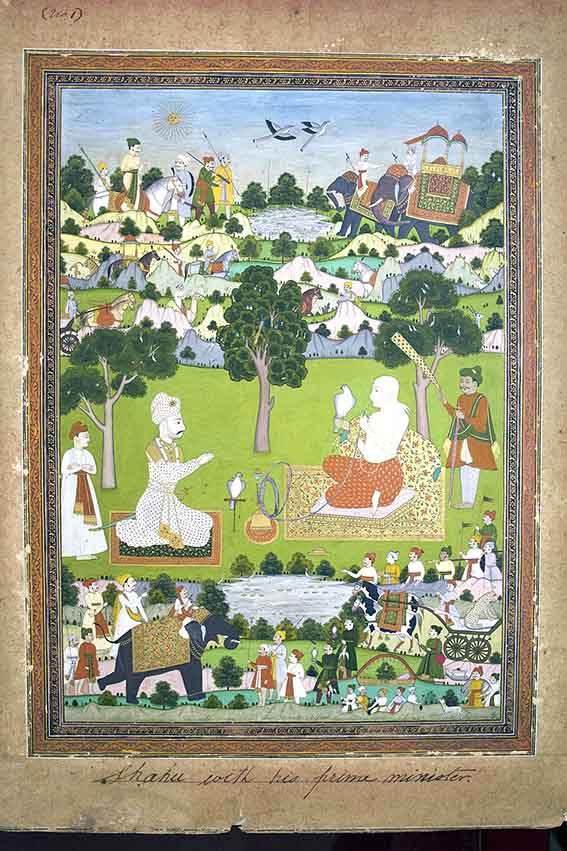
during a hunt by Shivram Chitari
Following in the footsteps of generations of historians, Kulkarni draws upon a rich wellspring French, English, Portuguese and Persian sources, while synthesising old and new Marathi material to conjure a dazzling tapestry of the tangled eighteenth century.
Cerebral Prime Minister
If Baji Rao I — the dashing, tempestuous cavalry general immortalised in popular lore — was the sword arm of the Maratha Empire after Chhatrapati Shivaji Maharaj, his eldest son Nanasaheb was its architect and administrator.
Ascending the musnad of the premiership in June 1740 at the age of nineteen, Nanasaheb inherited a formidable political inheritance, but one burdened by debt and riven by internal rivalries among ambitious Maratha chieftains.
How this young Peshwa navigated the complexities of governing an expanding Maratha Confederacy, even as the Mughal Empire tottered towards political irrelevance and ominous challenges gathered on the horizon, is the central thread of Kulkarni’s remarkable account.
To the north lay the Afghan menace under Ahmad Shah Abdali; in the south and east, the Nizam, the French and the English were steadily reshaping the military and diplomatic landscape of the subcontinent.The old imperial order was disintegrating, but no settled successor had emerged.
As Kulkarni shows, it was for this brief but consequential period that Pune became the cockpit of the subcontinent’s politics and decisions emanating from within the walls of Shaniwar Wada reverberated from the Carnatic to Bengal and from the Deccan to the northern plains.
The Maratha state was not a centrally administered empire in the modern sense. Its far-flung chiefs - the Scindias, the Holkars, the Bhonsles, the Gaekwads, the Angres - possessed considerable autonomy, and their interests did not always coincide with those of the Peshwa at Poona or the Chhatrapati at Satara.
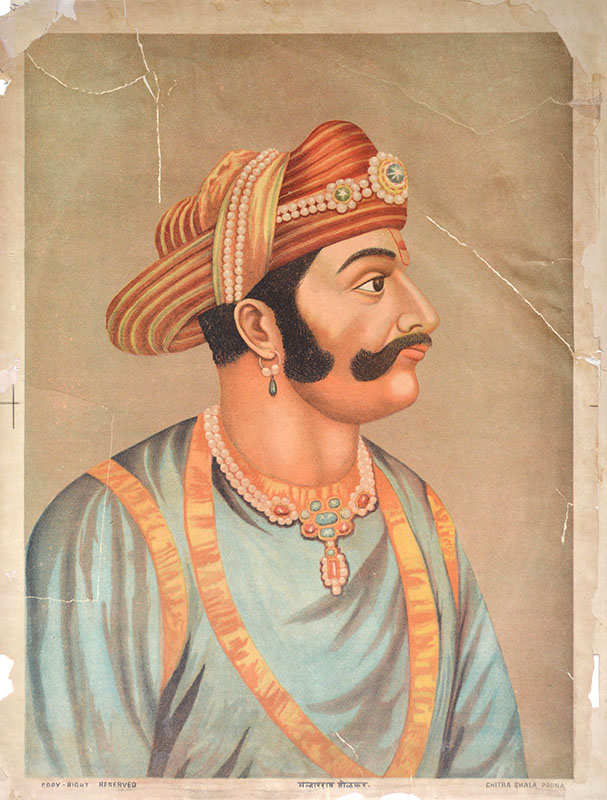
Kulkarni is at his best when demystifying the complex political architecture of this arrangement. The Maratha system had grown through the assignment of territories and revenue rights to powerful chiefs, who were expected to remit a portion of their collections to the central authority. The arrangement enabled rapid expansion but also created competing centres of power. Distance, slow communications and the personal ambitions of provincial commanders made the task of maintaining cohesion an unending exercise in diplomacy and coercion.
Nanasaheb faced a daunting task of governing not merely territories, but managing the men who had long acquired the habit of acting independently.
The Peshwa’s political intelligence lay in recognising that military victories alone could not sustain this sprawling enterprise; the regular flow of revenue, logistics and the management of competing interests were even more critical.
In a strikingly poetic letter to his friend Nana Purandare, written from the fertile plains of Bundelkhand, Nanasaheb laments Pune’s parched landscape and dreams of bringing the agricultural and mercantile wealth of the north to the Deccan through a metaphorical ‘river of gold’.
Kulkarni does not sanitise his subject. He exposes the raw underbelly of eighteenth-century realpolitik, be it the bitter rivalry between the Peshwa and Raghuji Bhonsle of Nagpur, shifting diplomatic calculations or the ruthless domestic contests for power, including the public humiliation of Babuji Naik through the weaponised ritual of dharna.
Yet, he judges these actors within the often-brutal circumstances of their own time, rather than through the more comfortable moral certainties of the present.
The book is splendidly alert to the personal dimensions of power. The correspondence between Nanasaheb and his commanders is revealing. His letters to Scindia and Holkar, for instance, disclose the anxiety of a leader who felt abandoned by men whose fortunes had been made under his father.
Correcting the Canvas
One of Kulkarni’s principal achievements is to restore the eighteenth-century Indian political landscape to its full complexity. The weakening of Mughal authority after Nadir Shah’s sack of Delhi in 1739 did not produce an empty political space. It created a contest among regional powers, each seeking to inherit, appropriate or reshape the imperial order. The Marathas were among the most consequential participants in this struggle.
By juxtaposing Marathi dispatches and patras with the eyewitness diaries of Ananda Ranga Pillai, the administrative records of the English East India Company at Fort St. George and French correspondence from the period of Dupleix, Kulkarni constructs a polyphonic account of an extraordinarily complex age.
He also draws upon indigenous literary sources such as the Maharashtra Purana and Anandamangala, private diaries and intimate ministerial correspondence. This breadth of material gives the narrative an unusual texture.
The reader is swept by the shifts accompanying the decline of Mughal power after Nadir Shah’s catastrophic sack of Delhi in 1739 to the almost microscopic anxieties contained in a single dispatch between a Maratha vakil and his master.
History, in Kulkarni’s telling, is shaped not merely by grand designs but by individual actors making desperate and often contingent choices amid the uncertainties of war and diplomacy.
The Bengal campaigns illustrate the point. The expeditions led by Raghuji Bhonsle and his commander Bhaskar Ram Kolhatkar have often been reduced in earlier narratives to a story of plunder. Kulkarni seeks to restore these incidents to the political and fiscal context of the time, without which the eastern expeditions cannot be properly understood.
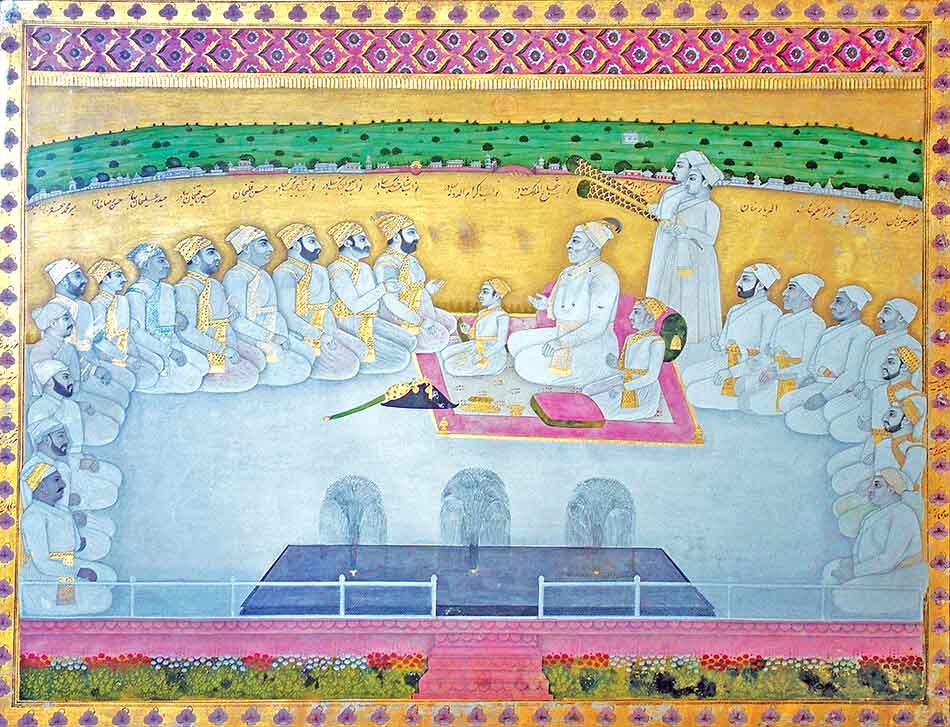
His account of Alivardi Khan’s treacherous massacre of Bhaskar Ram and twenty-one other Maratha chiefs at Plassey on 30 March 1744 is especially chilling and carries the echoes of a Greek tragedy. The Nawab had invited the Maratha leaders into a tent, behind whose canvas screens soldiers had been concealed. At his signal, they were attacked and killed. The episode is reconstructed through a careful use of Marathi and Persian material, including the Bengali poetic account. The fact that this happened at Plassey, thirteen years before the celebrated battle of 1757, adds a grim historical irony to the place-name.
Kulkarni is also attentive to the human absurdities surrounding such episodes: the Nawab’s frantic search for his missing slipper after the massacre is a detail that brings the grotesque theatre of power into sharp focus.
The Carnatic chapters are equally absorbing. Here, the Maratha story intersects with the ambitions of the French and English East India Companies, the succession disputes within the Nizam’s family and the rival claims to the Nawabship of Arcot. The release and political career of Chanda Sahib, the campaigns around Trichinopoly and the manoeuvres of Dupleix are narrated as part of the same continental struggle in which Nanasaheb Peshwa was deeply involved.
The arrival of European military power was changing the terms of warfare. Indian rulers had long employed foreign gunners and mercenaries, and the European companies were initially regarded as useful suppliers of ships, weapons and trained troops. The French victory over the forces of Anwaruddin Khan at Adyar in 1746, however, demonstrated what disciplined infantry and effective artillery could achieve against much larger traditional armies. The Europeans were no longer merely topikars, the hat-wearing traders and soldiers who were employed as mercenaries. They were becoming consequential military and political players in their own right.
It is in Kulkarni’s treatment of Charles Joseph Patissier, Marquis de Bussy-Castelnau, that this transformation becomes particularly vivid.
Between 1750 and 1758, Bussy exercised extraordinary influence at the court of Salabat Jung, the Nizam, becoming one of the most powerful men in the Deccan. Bussy’s first major confrontation with Nanasaheb came in 1751, when the French commander marched from Aurangabad towards Pune in alliance with Salabat Jung and the Nizam’s minister, Raghunath Das. The Peshwa was then beset by internal opposition and a fragile political situation following the death of Chhatrapati Shahu. Bussy and Dupleix believed that Nanasaheb’s authority could be broken and that a more pliable Peshwa could be installed, freeing the French to pursue their ambitions elsewhere, including Bengal.
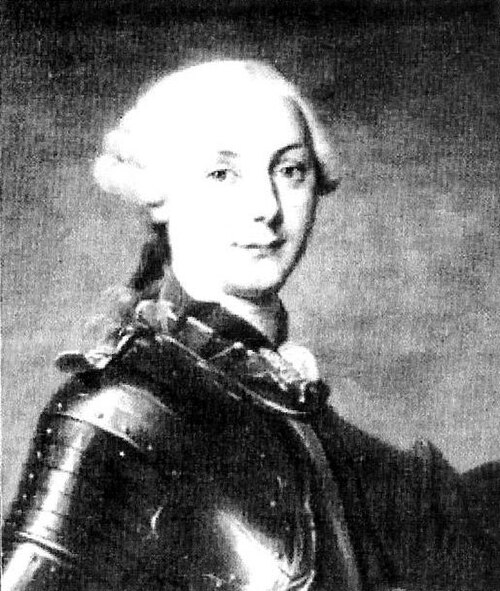
The campaign brought the two military systems face to face. Bussy’s disciplined infantry and artillery, including Swedish guns, offered a formidable challenge to the mobile Maratha forces.
The armies first encountered one another at the river Ghod, where the Peshwa was given a close view of French artillery.Bussy, in turn, witnessed the speed and tactical flexibility of Maratha warfare. The fighting that followed was inconclusive, but the French guns made a deep impression on Nanasaheb. At one point, the Peshwa’s forces were caught unprepared during a night-time religious observance near the Kukadi river and had to abandon their camp. Yet Nanasaheb’s forces regrouped and counter-attacked. The Marathas used their familiar tactics of mobility, harassment and the destruction of grain and forage to deny the Nizam’s army the supplies it needed.
The campaign eventually ended in a negotiated settlement in January 1752. But Nanasaheb had seen the effectiveness of the French guns at first hand. He sought Bussy’s services, but when the Frenchman declined, he recruited men trained in the French system, notably Muzaffar Khan Gardi. Ibrahim Khan Gardi, who had also trained under Bussy, would eventually enter Maratha service and become a significant artillery commander.
The military lessons of the confrontation would have consequences far beyond the Deccan. At Savanur in 1756, Nanasaheb found himself confronting a coalition that included Murar Rao Ghorpade and Muzaffar Khan Gardi, the latter having left the Peshwa’s service. The French commander, now an ally of the Peshwa and Salabat Jung, brought his artillery to bear on the fortified town. The siege and the subsequent French cannonade demonstrated once again the effectiveness of European artillery in a sustained engagement. The Peshwa was impressed enough to reward the gunners and to consider recruiting Bussy directly into his own service. Bussy declined, but the episode reveals the pragmatism of both men. Their relationship was governed by the changing arithmetic of power.
Kulkarni’s account makes amply clear that the European presence was not a simple story of Indians being overwhelmed by alien military technology. Indian rulers and commanders assessed, recruited, resisted and sometimes outmanoeuvred European officers. They also learnt from them. The Maratha effort to modernise its artillery, and the subsequent career of Ibrahim Khan Gardi, are part of that larger process of military adaptation.
Resurrecting a Lost Horizon
There is something of C.V. Wedgwood in Kulkarni’s ability to give political history narrative tension without sacrificing its moral ambiguity. The shifting loyalties, personal calculations and accidental turns of fortune recall the dramatic texture of Dame Wedgwood’s classic The Thirty Years War (1938).
The book is not an exercise in uncritical glorification. Nanasaheb is presented as a formidable political manager, but also as a man operating within a world of ruthless competition, uncertain loyalties and recurring financial pressures. His opponents are not flattened into caricatures either, and the Europeans are not treated as a single, uniformly predatory force. Kulkarni leaves his reader to confront the contradictions of the period.
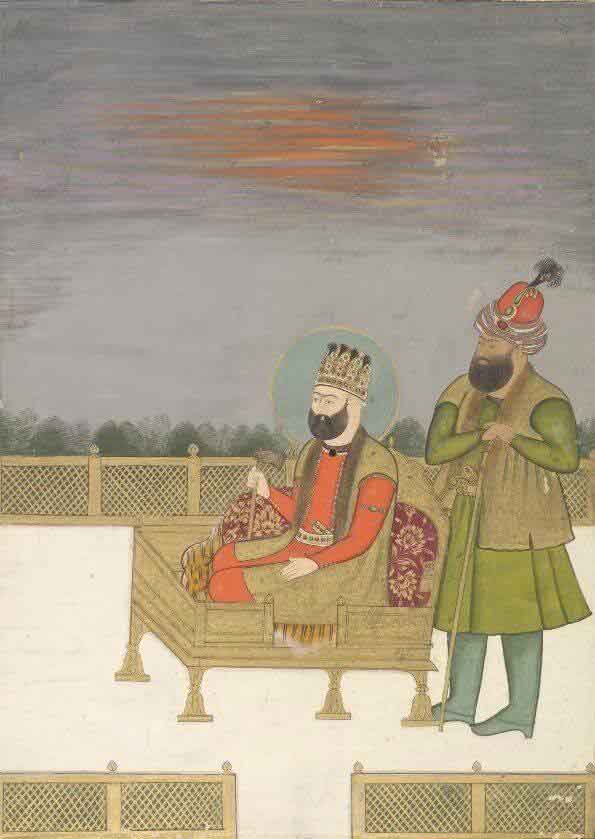
The final years of Nanasaheb’s tenure, shadowed by the catastrophe of Panipat and his own death in 1761, give the narrative an added poignancy. Maratha power had reached an extraordinary geographical and political extent, but its internal strains and the uncertainties of succession remained unresolved.
For readers interested in the making of modern India’s political geography, The Extraordinary Epoch of Nanasaheb Peshwa is indispensable reading. It illuminates the transition from Mughal supremacy to a more fragmented order in which the Marathas were the most consequential Indian power, while the European companies were learning to convert commercial footholds into territorial and political influence.
Kulkarni’s recent book on Raghoba and the assassination of Narayanrao Peshwa in 1773 offered a fascinating and definitive account of one of the most turbulent episodes in the history of the Peshwa household.
His forthcoming book, scheduled for release in December, continues the story with two pivotal figures of the later Maratha age — Mahadji Scindia and Nana Phadnis. One eagerly awaits his treatment of the Confederacy’s subsequent recovery, its renewed assertion of power in northern India, and the political fissures that would eventually contribute to its decline. If his earlier books are anything to go by, this next instalment promises to illuminate another consequential chapter in a history that Kulkarni has made his own.