The film Eetha, directed by Laxman Utekar, is inspired by the life of legendary Lavani performer Vithabai Narayangaonkar. Shraddha Kapoor has portrayed this challenging role with tremendous dedication and hard work. Through Tamasha and Lavani, Vithabai Narayangaonkar contributed significantly to public education and social awareness. Her life was marked by numerous struggles, triumphs and setbacks.
Lavani and Marathi cinema have always shared a special relationship. In fact, Lavani has long been one of the defining attractions of Marathi films.
The Lavani dance numbers “Mala Jau Dya Na Ghari, Aata Vajle Ki Bara” and “Apsara Aali...” became sensational hits. Their popularity contributed immensely to the success of Ravi Jadhav’s Natarang (2009). At the time, it was widely remarked that Lavani had returned to Marathi cinema in all its glory after many years.
Subsequently, the Lavani performances in Prasad Oak’s Chandramukhi (2022) and Snehal Tarde’s Phullwanti (2024) also attracted considerable attention and appreciation.
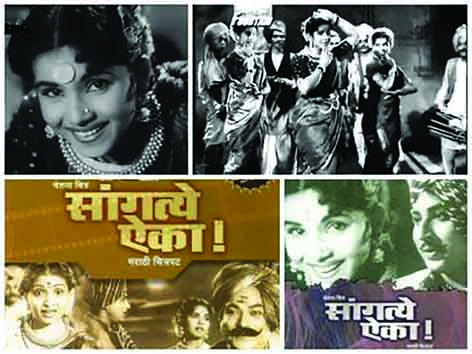
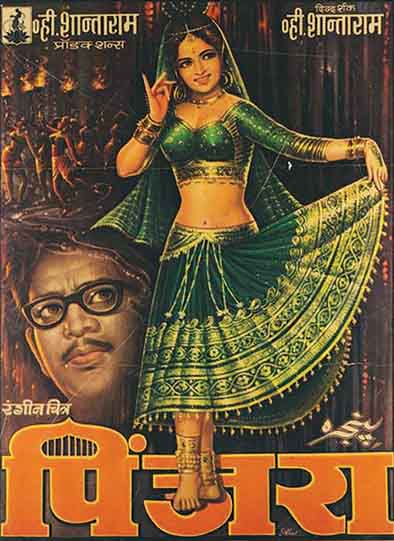
Reflecting on this enduring relationship between Lavani and Marathi cinema, film historian and journalist Dilip Thakur observes, “Lavani has always been one of the defining attractions of Marathi films. From the golden era of Sangtye Aika (1959) and Pinjara (1972) to the contemporary success of Natarang, Chandramukhi and Phullwanti, its popularity has remained remarkably strong.”
The Lavani songs from legendary filmmaker V. Shantaram’s Pinjara (1972) created a sensation throughout Maharashtra. Even Madhuri Dixit has mentioned “Disla Ga Disla” from this film as one of her favourite Marathi songs.
Veteran playback singer Usha Mangeshkar has described “Lagali Kunachi Uchaki” from Pinjara as one of the most challenging songs she ever recorded.
Recalling her experience, she said, “I would often visit Anna (V. Shantaram) in connection with Didi’s (Lata Mangeshkar’s) recordings. He had already heard some of my songs, including ‘Kay Ga Sakhu, Malyachya Malyamandi’ from Songadya (1971). One day, Anna invited me to sing for Pinjara. It was a truly memorable and significant moment in my career.”
Queen of Lavani
Two Lavani songs from Raja Thakur’s 1962 film Ranglya Ratri Asha—“Naav Gaav Kashala Pusata, Aho Mi Aahe Kolhapurchi” and “Aho Tarunpanacha Kautuk Mhanuni”—achieved tremendous popularity.
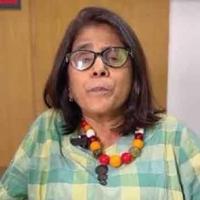
 These songs established singer Sulochana Chavan as one of the most celebrated voices of Lavani. At a public programme where renowned writer, Acharya Atre was the chief guest and praised her, remarking that Sulochana Chavan’s rendition of “Aho Mi Aahe Kolhapurchi” had cast an extraordinary spell on Marathi audiences. He went on to describe her as the “Lavani Samradnyi” — the Empress of Lavani.
Producer-director Anant Mane’s social drama Sangtye Aika (1959) became a landmark in Marathi cinema, largely because of its enormously popular Lavani performances. The film enjoyed an extraordinary theatrical run of 131 weeks at the Vijayanand cinema in Pune. Audiences repeatedly visited the theatre to watch the unforgettable Lavani “Bugadi Majhi Sandali Ga”, performed on screen by Jayshree Gadkar. The film’s record-breaking theatrical run remains a remarkable achievement.
All the Lavani songs rendered by Asha Bhosle for Sangtye Aika, including “Bugadi Majhi Sandali Ga”, “Sanga Hya Vedila” and “Ram Ram Ghya”, became immensely popular.
Mystery Composer
For a long time, audiences were unaware of the true identity of the composer credited as “Anandghan” for the songs of Bhalji Pendharkar’s Mohityanchi Manjula (1963).
It was subsequently revealed that the legendary Lata Mangeshkar had composed the music under the pseudonym Anandghan. Interestingly, Bhalji Pendharkar himself wrote lyrics for some of his films under the pen name “Yogesh”.
Both Mohityanchi Manjula and Maratha Tituka Melvava (1964) were historical films. Lata Mangeshkar therefore chose musical compositions that complemented their historical settings rather than following contemporary musical trends. One of her remarkable abilities was her capacity to compose the opening refrain and subsequent verses of a song with extraordinary ease. On one occasion, Bhalji Pendharkar asked her to compose a Lavani.
During that period, most Lavani compositions were dominated by romantic and sensuous themes. However, since the female character in his story belonged to a respectable family, Pendharkar wanted a simple, graceful Lavani that would suit her personality. Lata Mangeshkar understood precisely what he had in mind.
On the day Lata and her brother Hridaynath Mangeshkar were to meet Bhalji Pendharkar, she happened to hear a South Indian song on the radio. While listening to it, she immediately told Hridaynath that she had found the musical inspiration for the Lavani that Pendharkar wanted.
Usually, Pendharkar would first have the lyrics written, after which Lata Mangeshkar would compose the music. This time, however, the process was reversed. Lata first composed the tune and immediately presented it to distinguished poet and lyricist Shanta Shelke.
Inspired by the melody, Shanta Shelke wrote the memorable words: “Reshamachya Reghani, Lal Kalya Dhagyani.” The resulting Lavani, featured in Maratha Tituka Melvava, became extremely popular.
Golden Era
Between Lokshahir Anantfandi (1958) and Pinjara (1972), numerous Marathi films gave considerable importance to Lavani songs, music and dance, establishing the form as an inseparable part of Marathi cinema’s musical and cultural identity.
In 1962, Haribhau Rahatekar produced Ranglya Ratri Asha on a cooperative basis. The film was based on a story by celebrated author Ranjit Desai concerning the life of a tabla player. Arun Sarnaik, who hailed from Kolhapur, played the leading role.
The film featured a remarkable variety of musical forms, including Lavani, ghazals and Natya Sangeet (Marathi musical theatre songs). Composer Vasant Pawar was at the height of his creative powers when it came to Lavani compositions.
For Ranglya Ratri Asha, he gave lyricist Jagdish Khebudkar his first opportunity to write Lavani songs. These performances were filmed at the Tamasha troupe of Radhabai Budhgaonkar. The opening lines of Khebudkar’s first Lavani were: “Naav Gaav Kashala Pusata? Aho Mi Aahe Kolhapurchi, Mala Ho Mhantat Lavangi Mirchi.”
Since both the lyricist and the film’s hero belonged to Kolhapur, Vasant Pawar felt that the singer should also have a connection with the city. He therefore decided to have the Lavani sung by Sulochana Chavan, who also hailed from Kolhapur. The song went on to become a tremendous success.
The successful creative combination of story and screenplay writer Ranjit Desai, lyricist Jagdish Khebudkar, music director Vasant Pawar and playback singer Sulochana Chavan was repeated in Anant Mane’s Sawal Majha Aika! (1964).
The film also marked the debut of Maya Jadhav in cinema. Two Lavani songs sung by Sulochana Chavan—“Kasa Kay Patil Bara Haay Ka?” and “Solava Varis Dhokyacha Ga”—became sensational hits. Their enormous popularity further strengthened Sulochana Chavan’s position as one of the leading Lavani singers of Maharashtra.
The film Malhari Martand, produced by Pune-based Ram Karve and Ram Devtale, was written and directed by Dinkar D. Patil, who also handled its screenplay and dialogues. The songs were written by celebrated poet and lyricist G. D. Madgulkar. Vasant Pawar demonstrated his extraordinary musical talent by composing tunes for all the songs in just two hours. Baban Kale provided the accompanying Dholki rhythms.
Sulochana Kadam, who later became famous as Sulochana Chavan, made her transition from Hindi to Marathi cinema with Hi Majhi Lakshmi (1951). The film’s music was composed by Vasant Desai. The Lavani “Lai Disani Aala”, sung by Sulochana, was picturised on renowned actress Hansa Wadkar.
In 1955, she sang several Lavani compositions for the film Kalgi Tura, including “Turewale Kiti Palale”, written by Raja Badhe. These early performances laid the foundation for her remarkable career as one of Maharashtra’s most beloved Lavani singers.
Lavani is much more than a traditional form of song and dance. It represents a vibrant expression of Maharashtra’s folk culture, combining rhythm, poetry, music, theatrical performance, humour, romance and social commentary. Through the contributions of extraordinary performers, lyricists, composers, singers and filmmakers, Lavani has enriched Marathi cinema across generations.
It has served not merely as entertainment but as a powerful medium of cultural expression, public awareness and social education.
As Dilip Thakur further observes, “Lavani song, music and dance are not merely forms of entertainment; they represent the rich cultural heritage of Maharashtra and remain a unique speciality and defining identity of Marathi cinema.” This observation captures the enduring significance of Lavani in Maharashtra’s cultural and cinematic history. Its infectious rhythms, evocative lyrics and expressive performances have ensured that Lavani continues to occupy a special place in the hearts of Marathi audiences.
(The writer is a noted journalist and film critic. Views personal.)