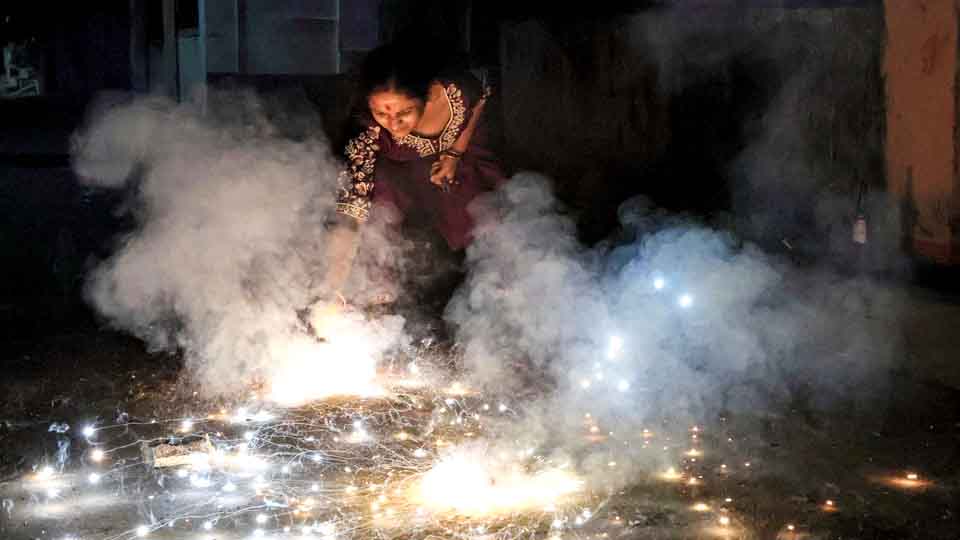
Mumbai: The cacophony of deafening and smoky Diwali fireworks is ebbing but its dangerous fallout continues to quietly loom with the potential health risks extending beyond the lungs to the brain, experts say.
The sharp deterioration in the Mumbai air quality post-Diwali has now shifted the focus to the repercussions ranging from risks of stroke, cognitive decline, impaired memory and potentially, even dementia, as indicated by scientific evidence directly linking brain health to poisonous air pollutants.
It may be recalled that in the Diwali Week, the city’s Air Quality Index (QI) worsened sharply – going around 200 and even above 250 in some locations due to indiscriminate bursting of terrestrial and aerial fireworks and people waking up to smoggy days with poor visibility.
Some localities recorded Particulate Matter (PM 2.5) becoming a major pollutant as crackers were blasted till the wee hours, flouting existing norms, inconveniencing people, especially the infants, sick or senior citizens.
Experts warn that the danger is no longer limited to coughing, breathing difficulties, watery eyes or lung-related problems, but even the brain may be potentially affected due to prolonged exposure to such polluted air.
Wockhardt Hospitals, Mira Road (Thane), Consultant Interventional Neurologist and Stroke Specialist Dr. Pavan Kishore Pai warns that the minute PM2.5 particles, “can penetrate deep into the lungs, enter the bloodstream and trigger inflammation and oxidative stress”.
“These processes can damage blood vessels, including those supplying the brain, potentially increasing vulnerability to cerebrovascular complications. Air pollution is not just a problem for our lungs but also a growing worry for our brain. Fine particles released by firecrackers, vehicle emissions and industrial activities can trigger inflammation, oxidative stress and damage to the vascular system,” said Dr. Pai.
He said over time, these mechanisms may contribute to an increased risk of stroke, impaired cognitive function and deterioration in neurological health. People with existing neurological conditions, senior citizens and children deserve particular attention during periods of deteriorating air quality.
Dr. Pai’s concerns are supported by scientific research at the global levels. Though the research findings do not attribute dementia or stroke to a single episode of firecracker exposure, yet they reinforce concerns about the cumulative neurological consequences of prolonged exposure.
He urged people to check out daily AQI readings, shun outdoor exercises during such high-pollution periods, wear proper N95 masks outdoors and use suitable indoor air filtration.