Mumbai: The Central Electricity Authority’s (CEA) policy roadmap, which targets 100 gigawatts of pumped storage hydropower capacity across India by 2035 to manage the country’s transition to renewable energy, is likely to intensify the ongoing political and environmental dispute in Maharashtra over a proposed 3,000-megawatt facility in Karjat.
The rapid expansion of solar and wind energy generation has exposed vulnerabilities in the national power grid, necessitating storage solutions to ensure round-the-clock electricity supply and grid stability. To address the intermittency of these renewable sources, the Union Power Ministry and the CEA have mapped out a capacity addition pathway aimed at commissioning 100.81 gigawatts of Pumped Storage Projects (PSPs) by 2035-36. According to government data, India currently has an operational pumped storage capacity of 7.43 gigawatts, placing it fourth globally, behind China, Japan and the United States. The new national roadmap envisages a massive infrastructure expansion, positioning pumped storage as an essential pillar of India’s future electricity system.
Maharashtra has emerged as a primary testing ground for this national policy shift, driven by the state’s ambitious Renewable Energy and Energy Storage Policy. This framework mandates that the state source 50 per cent of its electricity from renewable sources by 2030 and 65 per cent by 2036, significantly increasing the administrative demand for grid-scale storage facilities. Private energy conglomerates are heavily capitalising on this state backing. Tata Power recently approved an investment of Rs 11,871 crore in a 1.8 GW pumped storage facility in Shirwata. Concurrently, Torrent Power has signed an MoU with the Maharashtra government for three hydropower projects with a combined capacity of 5,700 MW, involving an estimated investment of Rs 27,000 crore. Several other major projects, including JSW Energy’s Bhavali PSP in Nashik and Adani’s Tarali PSP in Satara, are currently under execution in the state.
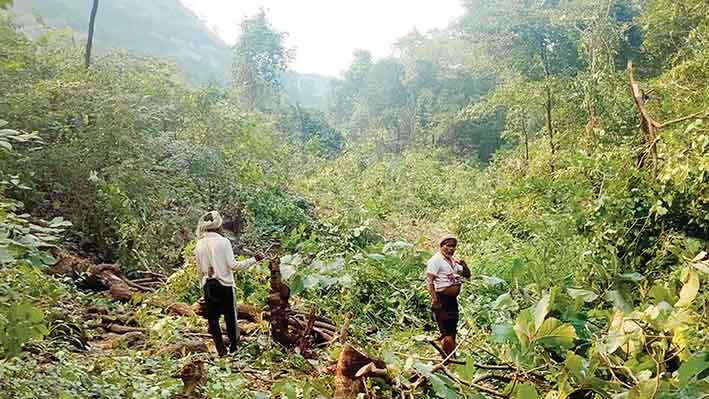
However, this aggressive push for green infrastructure has run up against deep-seated ecological concerns, creating a major political flashpoint in the Karjat region of Raigad district. Torrent Power’s proposed 3,000 MW open-loop pumped storage project in the Saidongar area has sparked fierce grassroots protests. Local residents, activist groups and environmentalists have mobilised against the project, raising serious concerns over potential large-scale tree felling and the destruction of natural habitats near the eco-sensitive Bhimashankar Wildlife Sanctuary. While Torrent Power has publicly dismissed reports of tree felling within the sanctuary’s boundaries as incorrect, the political atmosphere in the region remains highly volatile.
The standoff in Karjat highlights a growing paradox in India’s climate strategy. While energy planners advocate the rapid deployment of PSPs to phase out fossil fuels by using daytime solar energy to pump water and generate electricity during peak demand hours at night, local populations are being asked to bear the immediate territorial and environmental costs. The state government now faces the difficult political task of balancing its legally binding renewable energy targets with escalating rural unrest, making the Karjat dispute a critical test case for the rollout of India’s green energy transition.
What makes the current moment politically significant is that pumped storage is no longer being viewed as a niche hydropower technology. It has effectively become a cornerstone of India’s renewable energy strategy. The Centre’s 100 GW roadmap signals a clear policy preference for storage projects, while state governments are increasingly incorporating them into their long-term energy planning.
For Maharashtra’s political class, the Karjat dispute could therefore become a template for future battles. As electricity demand continues to rise and renewable energy accounts for a larger share of the grid, governments are likely to approve more pumped storage projects across the state. The challenge will be to balance national energy security goals and climate commitments with local environmental concerns and political sensitivities. The uproar over Karjat suggests that while the policy decision in favour of pumped storage may already have been made in New Delhi and Mumbai, securing public acceptance for these projects could prove far more difficult.