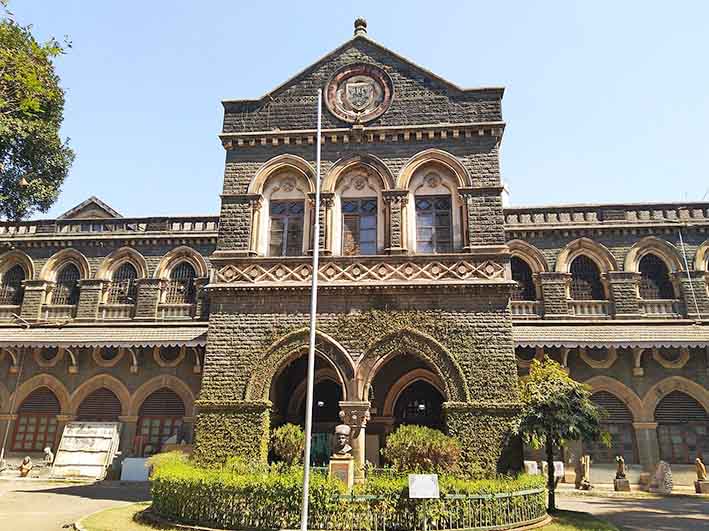
Mumbai: For the first time in its 169-year history, Mumbai’s Sir J. J. School of Art, Architecture and Design has launched doctoral programmes in art, architecture and design, opening 16 PhD seats and formally entering the field of academic research. The move, approved by the university’s executive council, is scheduled to begin with entrance examinations in December, followed by classes in January. It marks a significant transformation in the role of one of India’s oldest and most influential institutions for visual arts education.
The introduction of PhD programmes represents more than the addition of new academic courses. It signals a structural shift in an institution historically known for producing artists, designers, architects and creative professionals but which has never functioned as a research-driven university. By introducing doctoral studies, the institution is attempting to bridge the long-standing gap between artistic practice and formal academic research, a development that could influence arts education across Maharashtra and India.
The newly approved doctoral programmes will offer six seats in the School of Art, six in the School of Design and four in the School of Architecture, taking the total intake to 16 students. Interest in the inaugural batch has already exceeded expectations. According to university figures, 88 applications have been received so far, with 43 applicants competing for six seats in art, 37 for six seats in design and eight for four seats in architecture.
The development has been made possible by a major institutional change that took place in October 2023, when the institution received De Novo deemed university status. Under this arrangement, the erstwhile Sir J. J. School of Art, Sir J. J. Institute of Applied Art and Sir J. J. College of Architecture were brought under a single academic umbrella, creating the autonomy necessary to introduce new programmes and expand into research-oriented education. The De Novo category is reserved for institutions pursuing innovation in specialised fields of knowledge, teaching and research.
The decision is being viewed by academics as an attempt to reposition the institution within the contemporary higher education ecosystem. While JJ has long enjoyed a reputation as a training ground for professional artists and architects, changing academic expectations increasingly require institutions to contribute original research, documentation, theory-building and interdisciplinary scholarship. Doctoral programmes are central to this transition.
The university’s executive council approved the PhD regulations on October 29 and adopted admission and research supervision norms in line with the University Grants Commission framework. Officials have indicated that, despite approval for a larger intake, only a limited number of seats will be filled in the initial phase to ensure adequate faculty supervision and research support. Since PhD candidates generally remain enrolled for a minimum of three years, the university is simultaneously working to expand its pool of eligible research guides and academic supervisors.
According to the university’s academic guidelines, research will cover a broad range of disciplines.