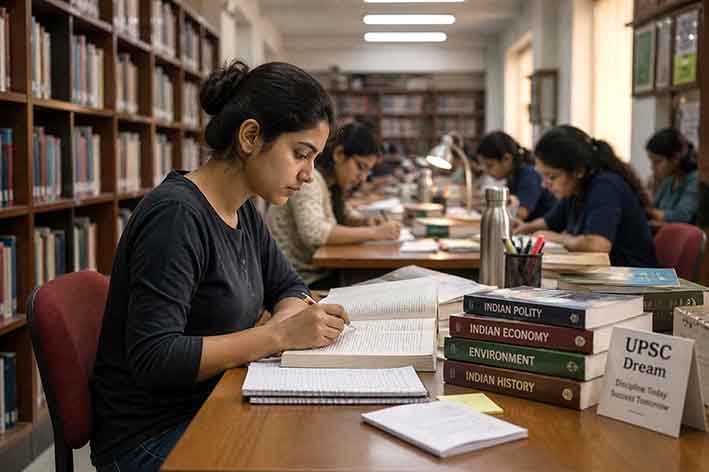
For lakhs of young Indians, the path to a government job begins not with preparation but with payment. Application fees for recruitment examinations, though modest in isolation, accumulate quickly when candidates apply for multiple posts across departments and years. These repeated charges can quietly exclude those least able to afford them.
West Bengal’s recent decision to waive application fees for state government recruitment examinations is therefore more than an administrative adjustment. It is a recognition that access to opportunity should not depend on the ability to pay at the starting line.
Relief Package
Chief Minister Suvendu Adhikari announced that candidates seeking jobs in the state government will no longer have to pay application fees for recruitment examinations. The measure, promised in the BJP’s election manifesto, is to be formalised through an official notification. Alongside the fee waiver, the government is preparing the Bharosa scheme, under which both graduate and non-graduate candidates will receive financial assistance for at least five years while they prepare for competitive examinations.
A two-year relaxation in the upper age limit is also proposed from 2027. The state has set a target of generating one lakh jobs over five years through government recruitment, private-sector opportunities and self-employment. A separate scheme, Bhagini Nivedita, will provide Rs 50,000 over three years to girl students pursuing higher education after board examinations.
These steps address the three practical barriers that job aspirants routinely face: the cost of repeated applications, the financial strain of prolonged preparation without income and the pressure of age limits that close doors even as preparation continues.
West Bengal is not the first state to ease the financial burden of government examinations, though a complete fee waiver remains relatively uncommon. In Bihar, the government under Chief Minister Nitish Kumar fixed a uniform fee of Rs 100 for the preliminary stage of all state-level recruitment examinations and abolished fees entirely for the main examinations. The decision, approved by the cabinet, was presented as a direct benefit to lakhs of young aspirants and applied across major recruitment bodies including the Bihar Public Service Commission and staff selection commissions. The move reduced costs significantly without eliminating them altogether at the first stage.
Other states have experimented with partial concessions, especially for women, reserved categories or economically weaker sections. Some earlier waived fees only to reintroduce them later, citing the need to deter non-serious applications and manage the administrative load of large candidate volumes. Odisha, for instance, had removed application fees in 2022 but later moved to restore them. These variations show that governments balance two concerns: widening access and maintaining manageable examination systems. West Bengal’s full waiver, combined with sustained financial support under Bharosa, places it among the more ambitious recent responses to the cost of aspiration.
Welcome Measures
The strongest argument for fee waivers and related support is simple fairness. Many candidates come from households where even a few hundred rupees per application is a genuine constraint, especially when the same candidate must appear in several examinations over successive years. Removing that barrier does not guarantee selection but it removes an arbitrary filter that has little to do with merit. When combined with age relaxation and modest living support during preparation, the policy acknowledges that the journey to a government job is often long and uncertain.
Implementation will matter. Clear timelines, transparent eligibility rules for the Bharosa assistance and efficient processing of applications without fees will determine whether the announcements translate into real relief. Recruitment agencies will need adequate capacity to handle potentially higher volumes of applications. Yet these are manageable challenges compared with the cost of continuing a system that quietly disadvantages poorer candidates.
In a competitive employment landscape, governments cannot create unlimited posts. What they can do is ensure that the process of competing remains open to those who are prepared to work for it. West Bengal’s package of fee waiver, financial assistance and age relaxation is a practical step in that direction. Other states watching the experiment would do well to consider how similar measures might expand genuine opportunity for their own young people. When the price of entry falls, the circle of those who can hope expands. That, ultimately, is the point of public recruitment in a democracy.
(The writer is a former college Principal and Founder of Supporting Shoulders, an Odisha-based non-profit Trust. Views are personal)