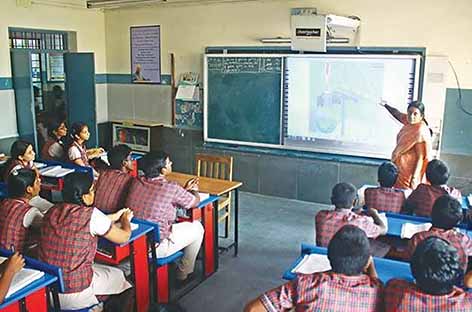
A school bell may signal the beginning or end of a period, but a teacher’s responsibilities rarely follow a timetable. Behind every classroom lesson lies an unseen world of emotions, patience, encouragement and countless small efforts that shape a child’s personality.
A teacher plays many roles throughout the day – sometimes a caring mother, a guiding father, a listening sister or an encouraging brother.
Yet, a teacher’s contribution is often measured through lessons taught, notebooks corrected and examination results. But is education merely about marks on a report card?
Lessons for Life
Every subject offers a lesson for life. Languages develop communication and expression, mathematics strengthens logical thinking, science encourages curiosity, while history and social sciences build an understanding of culture, heritage and social responsibility.
Sports teach teamwork, discipline and graceful acceptance of defeat, while art, music and creative activities nurture imagination. Classroom discussions teach students to respect different opinions, listen patiently and express themselves confidently.
Every teaching period is therefore an opportunity not merely to complete the syllabus but to nurture a new quality in a child.
A teacher’s most meaningful corrections are not always visible in notebooks marked with red ink. Helping children overcome the fear of failure, accept mistakes, appreciate others' success and find the courage to ask for help are equally important responsibilities.
Everyday interactions and school activities also build values and character. Morning assemblies, cultural programmes, national celebrations and collective initiatives teach lessons that may not carry examination marks but remain important throughout life.
Every child is different and needs an individual approach. In a class of 30 or 40 students, abilities, interests and backgrounds vary. While some eagerly answer questions, others hesitate despite knowing the answers. Some need academic support, while others need opportunities to explore their potential. A teacher’s skill lies in recognising these differences and offering appropriate guidance.
With Generation Alpha growing up in a technology-driven environment, the teacher’s role has evolved beyond imparting information to inspiring curiosity, encouraging independent thinking and promoting the responsible use of technology.
Beyond the Marks
Academic marks indicate progress but do not define a child's potential. A student scoring fewer marks may excel in art, sports or leadership, while another may struggle with mathematics but show keen observation or empathy. Teachers must recognise and nurture these strengths.
Parents naturally want their children to perform well, but the race for marks should not overshadow other talents. Education must help children discover their strengths and find direction in life.
Parent-teacher meetings must also move beyond the routine question, “How many marks has my child scored?” Parents should ask whether their children participate confidently, interact positively with others, express their opinions and demonstrate special abilities.
Such meetings should focus on solutions rather than shortcomings. If a child struggles with reading or mathematics, teachers and parents must work together to identify the difficulty, provide support and monitor progress. A child's development is a shared responsibility.
Teachers, too, deserve trust, encouragement and cooperation. Every successful school programme, confident stage performance and improvement in learning involves hours of preparation and individual attention. Balancing the expectations of students, parents, school management and society is no easy task. Recognising teachers' efforts and respecting their professional judgement can create a healthier learning environment.
Ultimately, a child's holistic development rests on three pillars – the school, the teacher and the family. The school provides the learning environment, the teacher offers knowledge and direction, and the family provides love, security and emotional support. Together, they nurture responsible, compassionate and confident citizens.
For a teacher, the greatest reward is not an award, certificate or applause. It is when a former student returns years later and says, “Sir, your encouragement helped me reach where I am today,” or “Ma’am, you believed in me, and that taught me to believe in myself.” Such words are worth more than formal recognition.
Words written on a blackboard may disappear, textbook lessons may be forgotten and examination marks may lose their relevance. But the confidence, values and character instilled by a teacher remain for life. A teacher may enter the classroom to teach a subject, but the true impact is reflected in students' lives. A teacher’s greatest achievement is not how many students score high marks, but how many grow into good human beings.
(The writer is the principal of Podar International School, Katpur Road, Latur. Views personal.)