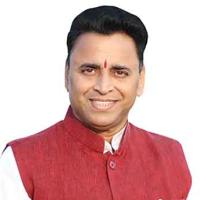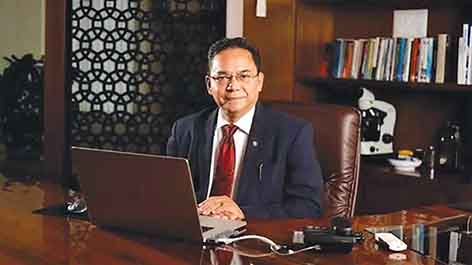
In 1983, when Manipur lacked even basic modern diagnostic facilities, patients often had to travel outside the state for routine medical tests. Recognising the hardship this imposed, Dr. Thangjam Dhabali Singh, then a young physician, decided to address the problem himself. With an initial investment of just Rs.20,000, he established a small clinical laboratory. Resources were so scarce that even a microscope had to be hired.
That modest beginning laid the foundation for the Babina Group, which has since expanded into healthcare, hospitality and other areas of public service. Singh’s career offers an illustration of how private initiative, when directed towards local needs, can contribute to the development of an entire region. In recognition of his contributions, My Home India selected him for the ONE India Award 2026.
Building Healthcare
The laboratory gradually developed into one of Northeast India’s recognised diagnostic facilities. Its expansion helped bring advanced testing closer to patients who had previously depended on medical centres outside Manipur. Singh also pursued the development of cancer-care facilities in the state, reducing the need for patients and their families to undertake expensive journeys to distant cities.
This approach reflected a practical understanding of Manipur’s developmental needs: infrastructure must not merely provide services but also generate livelihoods and strengthen local institutions.
Dr. Singh’s move into hospitality followed another gap he encountered firsthand. He found that visiting specialists often struggled to secure accommodation with reliable facilities. An experience recounted by a urologist visiting from Patna, who had faced power cuts and inadequate amenities, prompted him to consider the absence of professional hospitality infrastructure.
The Classic Hotel opened in 2009, followed by The Classic Grande, with approximately 171 rooms. The Babina Group also participated in the revival of established properties, including Hotel Imphal and Sendra Resort, through public-private partnerships.
These investments expanded Manipur’s accommodation capacity and supported the development of tourism. For a state endowed with considerable natural beauty and cultural attractions, the availability of reliable hospitality infrastructure is an important condition for attracting visitors. The projects also generated employment in hotels, catering, transport and related services.
History and Reconciliation
A different dimension of Dr. Singh’s work concerns the preservation of Manipur’s wartime history. In 1944, Imphal and Kohima witnessed some of the fiercest fighting of the Second World War. The campaign left a profound historical legacy, but its significance was not always adequately reflected in public awareness.
Through the Manipur Tourism Forum, Dr. Singh helped initiate efforts to identify and commemorate important sites associated with the Imphal campaign. Working with the Second World War Imphal Campaign Foundation, these initiatives sought to preserve the memory of the conflict and honour those who lost their lives.
The effort eventually contributed to the establishment of the Imphal Peace Museum. Developed with support from the Government of Manipur, the Japanese Embassy, the British High Commission and Australian representatives, the museum also received financial assistance from Japan’s Nippon Foundation.
Beyond Enterprise
The Babina Group’s social initiatives have focused particularly on healthcare access and vulnerable communities. More than 5,000 women have been screened for cervical cancer, while free and subsidised testing for Hepatitis B, Hepatitis C and HIV/AIDS has helped extend diagnostic services to people who might otherwise struggle to afford them.
The group has also supported local football clubs and sports academies, children’s homes, old-age homes and initiatives for persons with disabilities. Employment generation remains another important aspect of Dr. Singh’s approach. In a state where young people have faced limited economic opportunities and prolonged uncertainty, the creation of sustainable work is particularly important. His ventures in healthcare and hospitality have opened avenues for local employment and professional training.
Manipur’s development has been complicated by decades of insurgency, political instability and social tensions. The state’s challenges cannot be addressed by economic investment alone; they also require institutions that create opportunity, strengthen communities and encourage confidence in the future.
Dr. Singh’s career, beginning with a small diagnostic laboratory, illustrates one way in which this process can unfold.
The ONE India Award 2026, instituted by My Home India, recognises this contribution. More broadly, his journey underlines the importance of individuals and institutions that invest in the capacities of their own communities. Manipur’s progress will ultimately depend on such sustained efforts to build opportunities, preserve its heritage and strengthen its place within the national fabric.