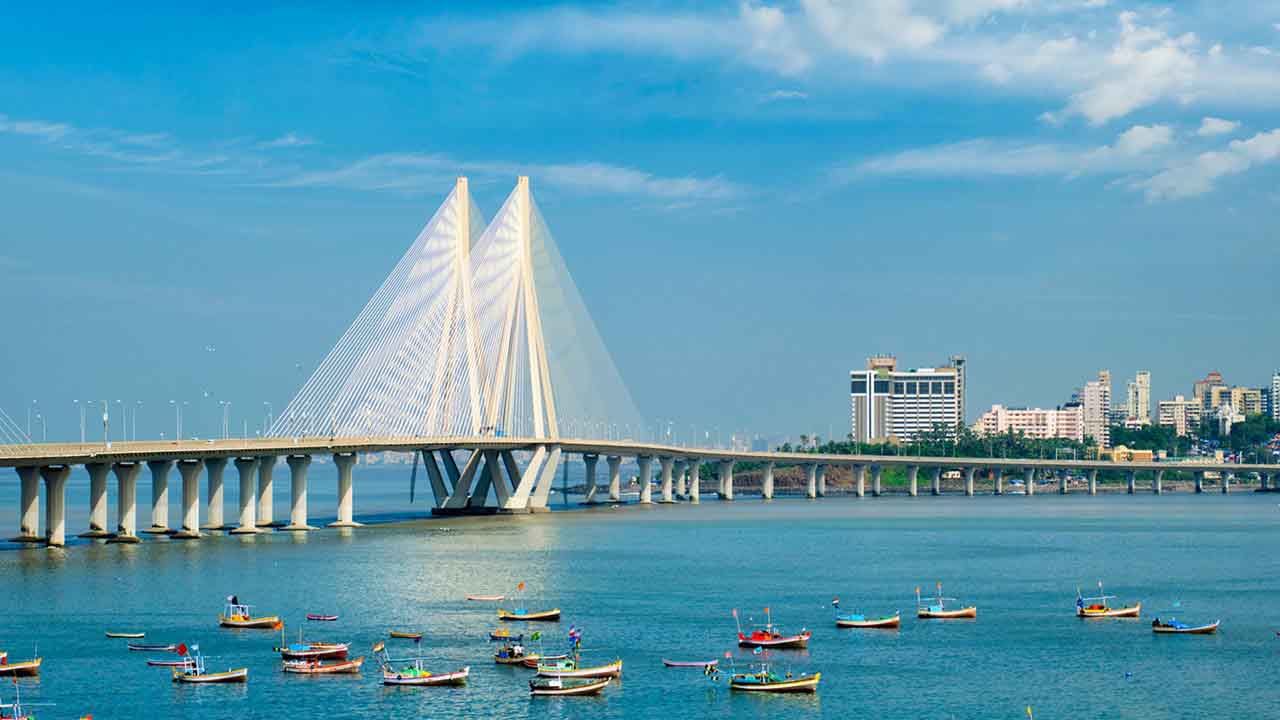
Mumbai: Signaling growing international confidence in its long-term commercial and economic prospects, Mumbai has broken into the Asia-Pacific (APAC) region’s ‘Top Ten preferred destinations’ for cross-border real estate investments, ranking 10th in the latest global investor outlook.
According to Colliers’ “2027 Global Investor Outlook”, Tokyo tops the list, followed by Osaka, Sydney, Melbourne, Singapore, Brisbane, Sapporo, Seoul, Hong Kong, Auckland and Mumbai.
The distinction places the country’s financial capital among the APAC region’s most sought-after real estate markets at a time when global investors are becoming increasingly selective about where they deploy capital amid higher financing costs.
It reflects Mumbai’s position – offering a diversified occupier base, strong demand for quality commercial spaces, availability of investment-grade assets and expanding institutional participation.
Adding to the lure for global investors are major infrastructure projects coming up, particularly the Mumbai Trans Harbour Link and Navi Mumbai International Airport, which are boosting connectivity to open up new development and investment corridors across the Mumbai Metropolitan Region (MMR).
Colliers India CEO & MD Badal Yagnik said that this recognition could further strengthen the coastal city’s appeal to international institutional investors, particularly across office, residential, industrial, logistics, hospitality and emerging alternative asset classes such as data centres.
“Mumbai’s inclusion among APAC’s preferred cross-border investment destinations underscores growing confidence in India's established markets and their long-term growth potential,” said Yagnik.
The capital of Maharashtra is also attracting renewed interest in data centres, driven by growing hyperscale requirements, rising enterprise data consumption and supportive digital infrastructure policies.
Now, Yagnik anticipates investment activity across India’s leading markets to remain robust, driven by strong occupier demand and increasing appetite for high-quality assets. “Asset repositioning, sustainability initiatives, operational improvements and AI-led transformation are likely to shape investment strategies in 2027,” he added.
The report is the outcome of a survey of over 1,170 international investors across 35 countries, identifies a significant shift towards active investment strategies, along with inputs from Colliers expert teams.
Value-add and opportunistic investments, including development, account for 60-pc of ‘intended capital deployment’ across Asia-Pacific, reflecting the willingness of investors to take calculated risks for higher returns.
While office (commercial) properties would continue to be a key investment focus, the next opportunity is expected to favour premium Grade A assets over secondary buildings.
The 10th spot for Mumbai reinforces its standing as a major international real estate investment hub, with infrastructure expansion and demand for quality assets likely to remain critical to sustaining investor interest, and several international players already have a presence here.
Oshiwara – no more ‘ugly duckling’
Mumbai: Once dubbed the ‘wild west’ of Mumbai’s western suburbs, Oshiwara is undergoing a dramatic transformation – from an Ugly Duckling to a stunning Swan - attracting the cream of Mumbai society to live and work here.
Flanked by established neighbourhoods such as Andheri, Goregaon and Versova, this micro-market is sitting pretty on Mumbai’s realty map, driven by infrastructure upgrades, improved connectivity, large-scale redevelopment and commercial expansion.
The upcoming Oshiwara District Centre (ODC) is expected to develop into a major corporate hub, on the lines of Nariman Point and Bandra-Kurla Complex. Its potential has attracted leading developers, including DLF, Adani and Kalpataru.
DLF Managing Director Aakash Ohri said the company’s Andheri West project, The Westpark, recorded a complete sellout of Phase I last year, with Phase II scheduled for launch soon.
“Metro connectivity and the gradual development of commercial spaces are making Oshiwara a preferred residential destination within a high-potential urban corridor. Homebuyers increasingly value accessibility, neighbourhood infrastructure and quality of life,” Ohri said.
The locality also benefits from established social infrastructure, including reputed schools, colleges and healthcare facilities such as Kokilaben Dhirubhai Ambani Hospital. Shopping and entertainment destinations include Infinity Mall, Citi Mall and Lokhandwala Market, alongside restaurants, cinemas, fitness centres and recreational facilities.
Two operational Metro lines serve the area and the upcoming Versova-Bandra Sea Link, likely to be operational in 2027, will further improve connectivity and ease suburban congestion.
Together, these developments are positioning Oshiwara as an increasingly attractive destination for homebuyers, real estate investors and developers.