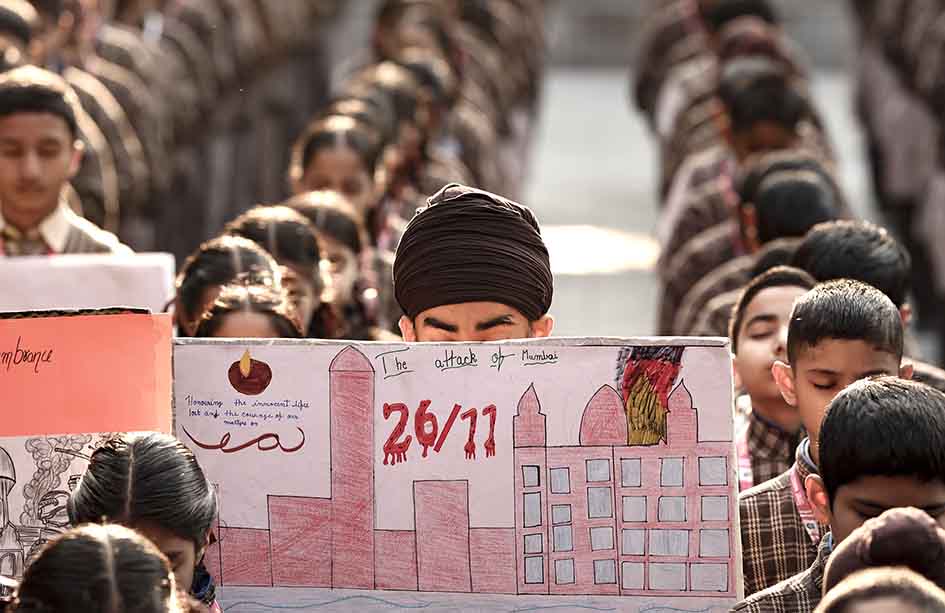
Mumbai: In a chilling affirmation of the mindset of the masterminds behind the November 26-29, 2008 (26/11) Mumbai terror attacks, the planners allegedly wanted the 10 attackers, including the sole captured terrorist, Ajmal Kasab, to be decorated with Pakistan’s highest military gallantry honour for their bloody assault on India’s financial capital.
US authorities had intercepted a conversation between Pakistani-American David Coleman Headley, alias Daood Sayed Gilani, and his accomplice, Pakistani-Canadian Dr Tahawwur Hussain Rana, in which the duo ostensibly celebrated the carnage.
Rana, now 65, reportedly congratulated Headley, 66, on the attacks, declaring that Indians ‘deserved it’. He also suggested that the terrorists should be honoured with Pakistan’s highest military gallantry award, the ‘Nishan-e-Haider’, for their purported bravado.
Rana was extradited by the US to India in April 2025, while Headley is serving a 35-year prison sentence for multiple crimes, imposed by US District Judge Harry Leinenweber, who described him bluntly in his verdict: “Mr Headley is a terrorist.”
The duo’s macabre telephonic conversation came to light eight years after the attacks. In March 2016, responding to questions from his lawyer Abdul Wahab Khan before a Mumbai special court, Headley confirmed the post-attack conversation with Rana.
Headley also disclosed how the dreaded Lashkar-e-Tayyiba (LeT) wanted to negotiate Kasab’s release after he was captured near Girgaum Chowpatty in the early hours of November 27, 2008, during the ongoing terror assault.
LeT handler Sajid Mir had informed Headley that Kasab had been arrested. Mir subsequently instructed one of the terrorists holed up at Chabad House in Colaba to negotiate with the Israeli hostages there, offering to barter their release in exchange for Kasab, Headley testified.
While nine of the 10 attackers were eliminated in the nearly 60-hour-long gun battle with Indian security forces, Kasab was captured alive. He subsequently faced an open trial, was convicted and finally hanged on November 21, 2012.
The elaborate conspiracy had been set in motion by Headley and Rana, childhood friends and course-mates at the prestigious Cadet College Hasanabdal in Pakistan’s Attock district. Incidentally, Headley said he began the groundwork for the Mumbai attacks in April 2005, with Rana subsequently joining him.
Investigations by the Mumbai Police Crime Branch and the National Investigation Agency (NIA) established the duo’s links with Pakistan’s Inter-Services Intelligence (ISI) and other terror outfits, including the LeT and Harkat-ul-Jihad-al-Islami (HuJI).
Headley undertook six reconnaissance trips to Mumbai - in September 2006; February and September 2007; and April and July 2008 - meticulously surveying potential targets.
Before his April 2008 visit, Headley and his Pakistani co-conspirators discussed possible landing points for the attackers, who were to infiltrate Mumbai through the Arabian Sea.
During that visit, he carried a GPS device, undertook boat trips around Mumbai harbour and fed the coordinates of potential landing sites into the gadget. The terrorists eventually used the Colaba fishing harbour to enter Mumbai late on November 26, 2008, taking the city by surprise.
Apparently undeterred by the 26/11 bloodshed, Headley returned to India barely four months later, in March 2009, this time to conduct surveillance of the National Defence College in New Delhi and Chabad Houses at multiple locations.
Later, Headley struck a plea bargain with US authorities, agreeing to turn approver in exchange for a reduced sentence and providing crucial evidence to Indian investigators. He deposed before the Mumbai special court through video-conferencing in February-March 2016, with ace criminal lawyer (now BJP MP) and Special Public Prosecutor Ujjwal Nikam leading the charge.
He detailed the roles of the handlers who directed the 10 attackers, including Abu Al Kama and Abu Khafa, besides LeT operative Major Iqbal. He spoke about their links with LeT founder Hafiz M. Saeed, 76, and operations chief Zaki-ur-Rehman Lakhvi, 66, among others.
Headley’s revelations provided India with significant evidence of Pakistan-based terror networks and their alleged links with the 26/11 conspiracy, strengthening New Delhi’s case against its neighbour on the global diplomatic arena.
26/11 flashback
The 10 heavily armed Pakistani desperadoes carried out eight mass shootings in south Mumbai, including the Hotel Taj Mahal Palace, Hotel Trident, Chabad House, Chhatrapati Shivaji Maharaj Terminus, Leopold Café, Cama Hospital, near Metro cinema, St. Xaviers College and the BMC headquarters, plus explosions in Mazgaon and in a taxi in Vile Parle.
During those harrowing 60-hours, Kasab and Co. launched multiple assaults with sophisticated firearms, grenades and improvised explosive devices targeting multiple targets. As the world watched in horror, a total of 166 people including many foreigners were killed, plus the 9 terrorists, and more than 300 others were injured in the attacks.