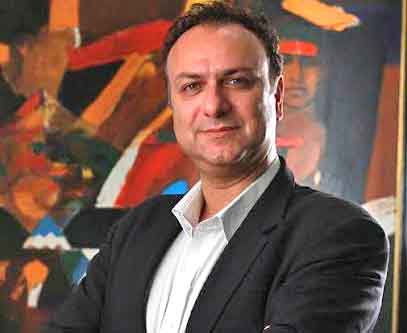
Sometimes, the most consequential battles in Indian business are waged through the patient cultivation of institutional pressure. Shapoor Mistry, the reticent chairman of the Shapoorji Pallonji Group, seems to have chosen this path. An investigation published by a prominent daily, based on disclosures obtained under the Right to Information Act, revealed that Mistry had written twice to Prime Minister Narendra Modi in October 2025 and June 2026, seeking intervention over the proposed public listing of Tata Sons. The revelations have brought into sharper focus a struggle that could alter the ownership architecture of India's largest business conglomerate.
The board of Tata Sons is due to meet later this week to consider the implications of the Reserve Bank of India’s insistence that the holding company comply with its upper-layer non-banking financial company regulations, including the requirement to list. For Mistry, whose family owns 18.37 percent of Tata Sons, this is about unlocking an extraordinarily valuable but stubbornly illiquid asset.
The Mistrys have been entwined with the Tata empire for over a century through business, family and shared enterprise. Yet one of its largest shareholders now wants a public-market reckoning, while sections of the Tata establishment favour preserving its closely held structure. Noel Tata, chairman of Tata Trusts and Mistry’s brother-in-law, is among those on the other side. His wife, Aloo, is Mistry’s sister.
For Shapoor, the issue is also an inheritance problem. The 160-year-old SP Group, founded in 1865, is one of India’s oldest industrial houses. Its interests span construction, engineering, infrastructure and real estate. Its imprint on the country’s physical landscape is considerable. But the group’s most valuable holding is its minority stake in Tata Sons.
That holding has become both a treasure chest and a financial encumbrance. The group has borrowed against its Tata shares and has struggled to convert their paper value into liquid capital. Corporate filings showed more than Rs. 36,000 crore of debt across relevant SP Group entities as of March 2025. The group has pursued asset sales, refinancing and other measures to manage its liabilities. A listing of Tata Sons would offer potentially an avenue to sell part of the family’s holding without remaining dependent on private transactions.
Mistry has presented the issue as one of public accountability rather than merely shareholder liquidity. Tata Sons is the nerve centre of a sprawling group whose businesses touch everything from aviation, information technology to automobiles and consumer markets. A public listing would subject the holding company to greater disclosure and market scrutiny, while allowing investors to assess the value of its diverse portfolio.
The personal history lends the dispute a darker undertow. Mistry’s younger brother, Cyrus, became chairman of Tata Sons in 2012, succeeding Ratan Tata. Four years later, he was removed in a dramatic boardroom rupture that exposed deep disagreements over the group's management and direction. The ensuing legal battle travelled through India’s courts and became one of the country’s most closely watched corporate disputes. Cyrus died in a road accident in September 2022. Their father, Pallonji Mistry, the patriarch who had built the family’s extraordinary position in Indian industry, had died only three months earlier.
Shapoor thus inherited not simply a business empire but the unfinished business of a family that had been deeply embedded in the Tata story. His approach has generally been less theatrical than his brother’s. He has preferred the discreet exercise of influence to public confrontation, although the letters to the Prime Minister suggest that discretion should not be mistaken for passivity.
The November 30 board meeting may not resolve the impasse. Noel Tata has raised procedural and substantive objections, while a proposed buyback of part of the SP Group’s holding could offer an alternative to a full listing.
The larger question is whether an enterprise of Tata Sons’ scale and national significance remain governed by a private arrangement when its regulatory classification demands public accountability?
For Mistry, the Tata stake is simultaneously his family’s greatest asset and its greatest financial constraint. The RBI’s intervention has furnished a regulatory basis for a change he has long pursued. Once overshadowed by two formidable patriarchs, Pallonji Mistry and Ratan Tata, Shapoor now finds himself challenging the conventions of an institution with which his family has been associated for generations. The outcome could determine whether the Tata legacy remains a closely guarded inheritance or evolves into a more publicly accountable corporate institution.