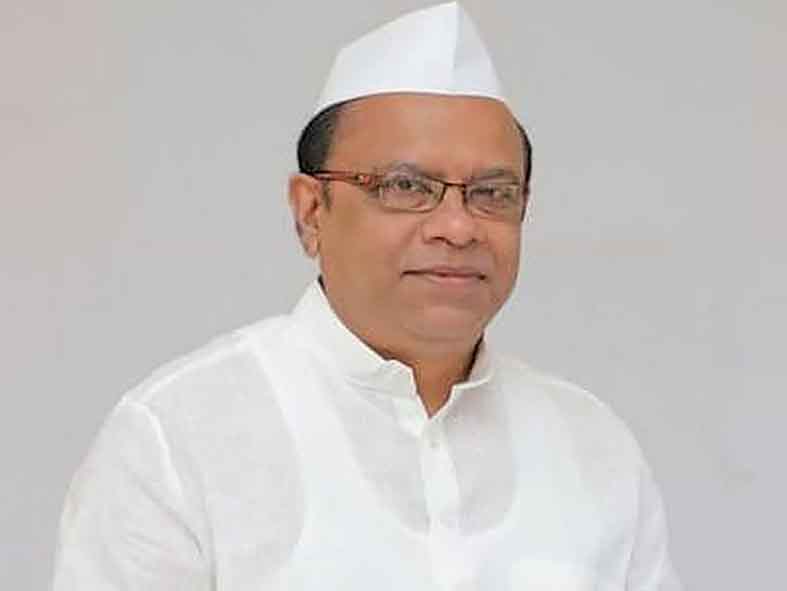
Mumbai: Former Chandgad MLA Rajesh Patil of the Mahayuti was elected Chairman of the Kolhapur District Cooperative Milk Producers’ Union, popularly known as Gokul, in Kolhapur on Tuesday after securing 16 votes against 13 for rival candidate Shashikant Patil-Chuyekar, in a contest that followed weeks of political deadlock, court intervention and a fierce battle over the voting rights of four government-nominated directors.
The election, conducted at Gokul’s headquarters under the supervision of Returning Officer Mosami Chougule, is expected to have far-reaching implications for the balance of power in Kolhapur district politics.
Electoral Deadlock
The chairman’s election became one of the most closely watched cooperative contests in Maharashtra after the Congress-backed Rajarshi Shahu Shetkari Samvichari Aghadi, led by Congress MLC Satej alias Banti Patil, had won 13 of the 25 elected director seats in the October board elections, while the Mahayuti-backed panel secured 12 seats.
However, a quorum dispute prevented the election of a chairman, triggering a prolonged stalemate and eventually leading to a state government ordinance granting voting rights to four nominated directors.
The Bombay High Court allowed the nominated directors to participate while directing that their votes be kept separately pending legal scrutiny. Although Banti Patil and his supporters described the outcome as a “murder of democracy”, the significance of the result extends beyond the controversy over nominated directors.
For the first time in many years, neither Banti Patil nor BJP Rajya Sabha MP Dhananjay Mahadik is part of Gokul’s board of directors. The institution, which has traditionally served as a major centre of political influence in western Maharashtra, has instead come under the influence of state minister Hasan Mushrif, marking a notable shift in the district’s cooperative power structure.
The election is being viewed as a strategic victory for Mushrif, who played a central role in the events leading up to the chairman’s election. By facilitating Rajesh Patil’s rise to the post, Mushrif has consolidated his position within Kolhapur’s cooperative sector and strengthened his influence at a time when rival political camps were seeking to limit his reach.
The result also carries a local political dimension because Rajesh Patil was defeated in the 2024 Assembly election by independent MLA Shivaji Patil, one of Mushrif’s sharpest critics. During the Gokul campaign, Shivaji Patil had publicly declared that he was committed to freeing the institution from Mushrif’s influence.
Rajesh Patil’s elevation therefore represents a symbolic as well as organisational setback for that effort. For Satej Patil, the chairman’s defeat comes despite his panel having secured a numerical edge in the elected directors’ contest.
However, the prolonged agitation against the state government's intervention and the large mobilisation of supporters in Kolhapur have enabled the Congress leader to project his organisational strength beyond the district.
Political observers believe the episode may help him strengthen his standing with the party’s state and national leadership even though control of Gokul has slipped away from his camp.
The contest has also exposed a sharp deterioration in relations between Mushrif and Satej Patil. Once known for maintaining a working political understanding despite being rivals, both leaders exchanged strong criticism throughout the campaign, subsequent legal battle and post-result reactions.
The developments suggest that one of Kolhapur politics’ longest-standing political equations may have reached a breaking point. Yet the outcome does not necessarily guarantee an easy road ahead for Mushrif and the newly elected leadership.
Legal Uncertainty
The legality of the voting process remains under scrutiny because the four nominated directors’ votes were sealed separately under court directions.
Any adverse judicial ruling could reopen disputes over the legitimacy of the election and create fresh uncertainty within the cooperative.
During polling, Mushrif himself signalled the possibility of further confrontation, stating that if legal complications arose, Mahayuti-backed directors could abstain from future meetings, potentially creating conditions for administrative intervention.
Gokul, with an annual turnover exceeding Rs 4,000 crore and deep links to the rural economy of Kolhapur district, has long been more than a dairy cooperative. Control over the institution often translates into influence among milk producers, village-level cooperative networks and local political workers.
Rajesh Patil’s election therefore represents not merely a change in leadership at Gokul but a reconfiguration of political power in Kolhapur, the consequences of which are likely to unfold in the months ahead.