The Indo-Pacific’s strategic landscape is undergoing a fundamental recalibration as traditional security paradigms give way to increasingly complex multipolar realities. Amid growing competition over critical sea lanes and an unsettled geopolitical balance, India’s defence diplomacy has evolved from consultative engagement towards a more active role in shaping regional security. Central to this shift are its expanding defence ties with Southeast Asia, guided by ASEAN Centrality, the Act East Policy and the broader doctrine of Security and Growth for All in the Region (SAGAR).
Through the ASEAN Defence Ministers’ Meeting-Plus (ADMM-Plus), alongside bilateral defence and technical partnerships, New Delhi is seeking to strengthen collective security across the Indo-Pacific maritime domain. The larger question is whether India’s growing influence can bridge regional differences and translate into a cohesive, durable security framework.
Maritime Cooperation
India's engagement through ADMM-Plus reflects a shift towards practical military cooperation and capacity-building across conventional and non-traditional security domains. Its co-chairmanship of the Experts' Working Group on Counter-Terrorism alongside Malaysia illustrates an effort to institutionalise operational standards, intelligence-sharing and tactical cooperation among ASEAN members and dialogue partners.
India brings considerable operational experience to these engagements, including counter-insurgency operations and anti-piracy patrols across the Indian Ocean and strategic corridors such as the Gulf of Aden. This allows it to offer regional partners practical expertise rather than merely theoretical security frameworks.
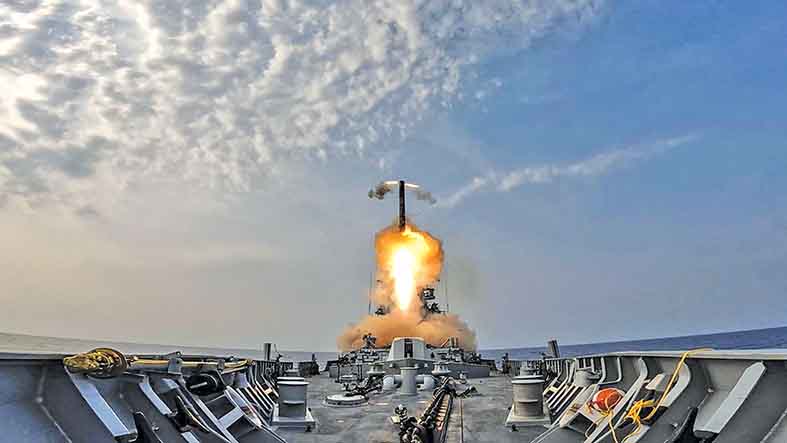
Defence exports have also become an important instrument of India’s strategic engagement with Southeast Asia. The supply of the BrahMos supersonic cruise missile system to the Philippines, alongside ongoing defence-technical discussions with countries such as Vietnam and Indonesia, signals a shift from a predominantly import-dependent defence sector towards a more prominent role as an arms supplier.
Such transfers can strengthen the coastal defence capabilities of littoral states, particularly amid growing tensions in the South China Sea. Beyond hardware, India's training programmes for Vietnamese submarine and fighter aircraft personnel, together with cooperation in maintenance and logistics, seek to develop lasting institutional links and operational interoperability.
Maritime security provides another important dimension. Through initiatives such as the ASEAN-India Maritime Exercise (AIME) and expanded surveillance cooperation, India is seeking to reinforce freedom of navigation and respect for international law. Its Information Fusion Centre-Indian Ocean Region (IFC-IOR) offers opportunities for information-sharing and maritime domain awareness, helping smaller coastal states monitor their exclusive economic zones and respond to illegal fishing, grey-zone activities and unauthorised naval movements.
These initiatives underline India’s approach which is that collective security need not depend on formal military alliances. It can also emerge through stronger national capabilities, information-sharing and interconnected regional partnerships.
Despite these advances, the prospect of a unified regional security architecture faces significant institutional and geopolitical obstacles. The most immediate lies within ASEAN itself. Its consensus-based decision-making structure, coupled with varying degrees of economic dependence on external powers, produces divergent approaches to regional security.
Countries facing direct maritime disputes may welcome closer defence cooperation with India, while others, particularly those more economically dependent on major powers, may be reluctant to endorse arrangements perceived as confrontational. This diversity of interests makes a common security position difficult to achieve through ADMM-Plus, leaving cooperation more likely to develop through flexible, issue-specific partnerships.
India must also reconcile its commitment to ASEAN Centrality with its participation in the Quad, comprising India, the United States, Japan and Australia. While New Delhi maintains that ASEAN-led institutions should remain central to regional security, some Southeast Asian countries remain wary of minilateral arrangements overshadowing broader, inclusive mechanisms.
India's challenge is therefore to ensure that its bilateral defence partnerships and Quad-related maritime initiatives complement rather than weaken the ADMM-Plus framework. Strategic transparency and sustained diplomatic engagement will be essential to maintaining regional confidence.
There are practical limitations. Indian defence-industrial ambitions require sustained investment, timely execution of export contracts and reliable after-sales support. Delays in deliveries, shortages of spare parts and bureaucratic obstacles could undermine the credibility of its defence partnerships in a market contested by established global suppliers. Diplomatic ambition must be matched by industrial capacity and dependable execution.
Collective Security
India's evolving role in ADMM-Plus and the wider Indo-Pacific suggests that its preferred approach is one of functional security integration rather than formal alliance-building. By sharing military expertise, expanding defence exports and strengthening maritime surveillance, New Delhi is developing a network of relationships that can contribute to regional stability.
The structural differences within Southeast Asia may prevent the emergence of a single, cohesive security architecture in the foreseeable future. Yet a decentralised network of practical defence partnerships can still strengthen regional resilience and provide smaller states with greater capacity to safeguard their maritime interests.
For India, the task ahead is to translate its diplomatic presence and growing defence capabilities into sustained regional cooperation. The future of Indo-Pacific security may not rest on a single institutional framework, but on the ability of countries with shared interests to work together in keeping the maritime commons open, stable and governed by international law.
(The writer is a columnist and policy researcher with a focus on South Asian geopolitics, India’s foreign policy, and the Indo-Pacific. Views personal.)