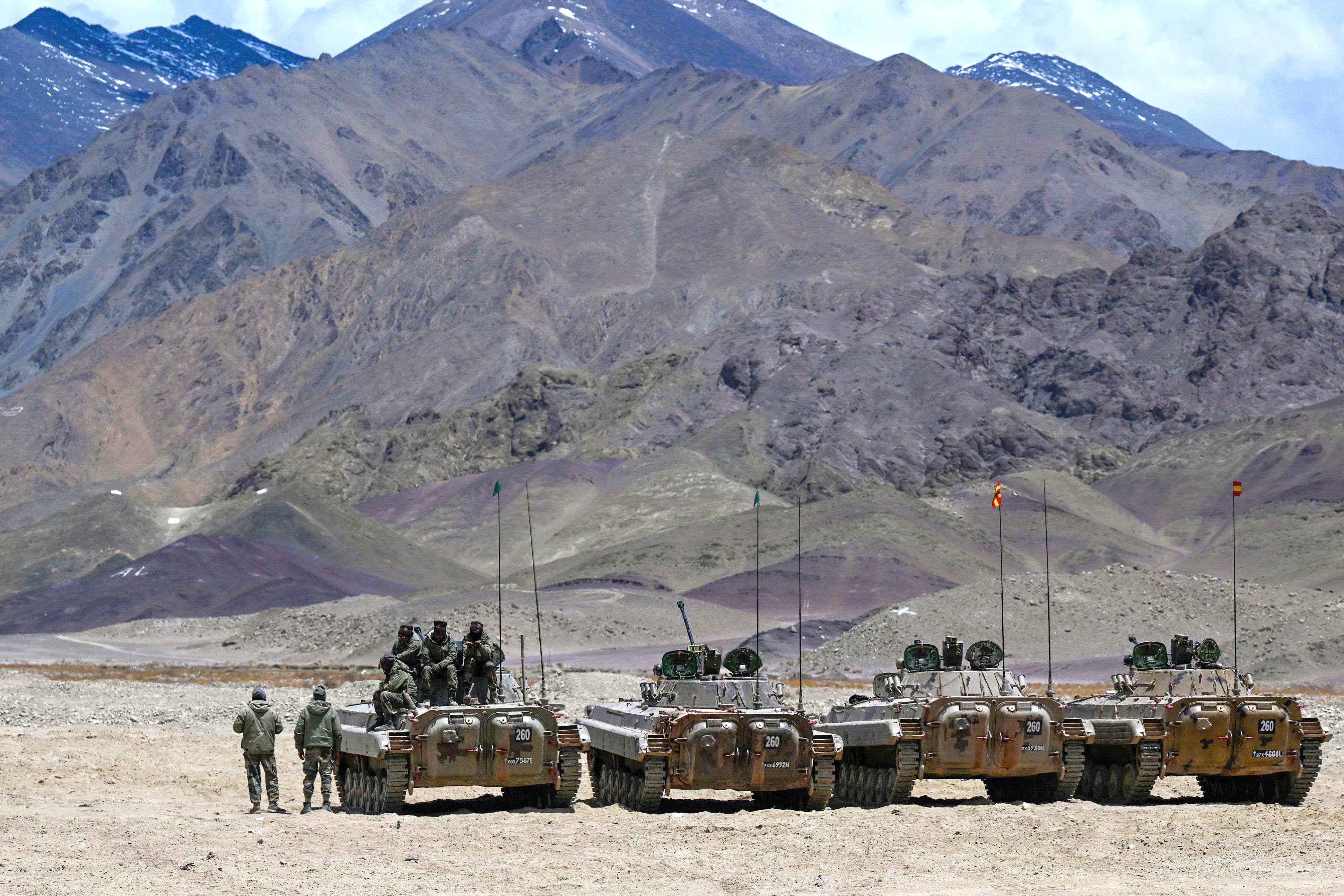
The strategic landscape along the Line of Actual Control (LAC) has entered a complex, highly ambiguous operational phase. Years after the lethal 2020 Galwan Valley clash disrupted decades of carefully constructed border protocols, the two Asian giants find themselves operating in a realm that is neither active war nor genuine peace. Following high-level political understandings and incremental patrolling agreements in contested areas such as Depsang and Demchok, tactical disengagements have successfully pulled infantry forces back from immediate physical contact. Yet, beneath this procedural compliance lies a deeply entrenched structural mistrust. Tens of thousands of heavily armed troops, backed by modern armour, long-range artillery, air defence systems, and fortified forward infrastructure, remain permanently deployed along the high-altitude frontier.
The core dilemma facing policymakers in New Delhi and Beijing is no longer merely how to defuse localized tactical standoffs, but whether the 3,488-kilometer un-demarcated boundary has permanently settled into a state of ‘frozen normality’ - a condition where diplomatic engagement prevents active escalation, but structural rivalry prevents any real political reconciliation.
Profound Shift
New Delhi’s foreign policy calculus toward Beijing has undergone a profound shift in response to this protracted standoff. Historically, Indian strategic doctrine operated on the premise that boundary management could be compartmentalized, allowing trade, diplomatic exchanges, and multilateral cooperation to expand even while border disputes remained unresolved. The systemic shock of 2020 dismantled that consensus, prompting Indian officials to repeatedly assert that the overall bilateral relationship cannot be restored to normalcy while the border situation remains abnormal. However, as the standoff stretched across years, economic realities and geopolitical shifts demanded a more pragmatic, multi-layered approach.
New Delhi has selectively calibrated economic restrictions, while allowing essential supply chain connections and critical imports bit maintaining strict scrutiny over strategic investments, telecommunications, and digital infrastructure. Diplomatically, India has sustained contact through working mechanisms and diplomatic summits, using these avenues as risk-reduction channels rather than vehicles for historical compromise. This reflects a deliberate effort to manage a formidable adversary without backing into an unwinnable, systemic conflict or compromising core territorial integrity.
From Beijing, the LAC strategy serves broader geopolitical goals within its overarching global posture. By maintaining strategic ambiguity along the border and repeatedly shifting friction points from the arid heights of Ladakh to the forested terrain of Arunachal Pradesh, China exerts continuous pressure on India’s security architecture. This sustained border friction forces New Delhi to divert significant financial, material, and military resources toward continental defense, constraining India's naval expansion and strategic focus in the Indo-Pacific region. At the same time, Beijing seeks to prevent India from fully aligning with Western security frameworks, particularly the Quad, by demonstrating that Washington cannot offer direct operational remedies along the Himalayan front. China’s extensive infrastructure development—comprising all-weather highways, dual-use border villages (Xiaokang), permanent military cantonments, and subterranean shelters—indicates that Beijing regards its forward militarization not as a temporary tactical posture, but as a permanent geopolitical leverage point.
This militarized equilibrium presents acute operational hazards for commanders on the ground. While disengagement agreements created buffer zones and designated patrolling schedules in specific sectors, these mechanisms do not erase the fundamental absence of a mutually agreed-upon boundary. The establishment of temporary buffer zones has altered historical patrolling access for both militaries, generating fresh localized friction points as troops test the boundaries of these newly created regimes. In forward sectors such as Upper Subansiri in Arunachal Pradesh, seasonal patrolling dynamics, challenging weather, and dense terrain periodically give rise to rumours, standoffs, and rapid counter-deployments. The military equation is further complicated by technological acceleration. Both militaries have deployed extensive surveillance networks, including uncrewed aerial vehicles, satellite tracking, and thermal imaging systems.
Changing Frontiers
The shifting dynamics along the LAC reveal that disengagement in one sector often coincides with heightened sensitivity in another. The dual-track reality of diplomatic engagement alongside high-density forward deployments creates a precarious operational environment. Ground commanders are tasked with enforcing strict disengagement guidelines while simultaneously monitoring adversarial positions that sit just kilometers away. The construction of heavy dual-use infrastructure—such as reinforced heliports, underground ammunition dumps, and hardened garrisons—has effectively transformed a once-seasonal, fluid border into a heavily fortified frontier. This structural change means that even if political leaders reach temporary operational truces, the physical reality of militarization ensures that both armies will remain eye-to-eye for the foreseeable future.
Furthermore, the strategic focus along the frontier has proven dynamic rather than fixed. As stabilized patrolling protocols take hold in eastern Ladakh, security concerns naturally extend across the eastern sector of the LAC. Contested pockets along Arunachal Pradesh—where Beijing routinely asserts invalid territorial claims and standardizes local nomenclature—demonstrate how China uses spatial pressure to keep New Delhi defensively oriented. For India, defending these remote sectors requires immense logistical commitment
Consequently, the frontier has evolved into a continuous operational challenge where any perceived shift in local force ratios can destabilize the broader military balance.
The strategic reality of a ‘frozen normality’ is that it relies on crisis management rather than conflict resolution. Diplomatic bodies, such as the Working Mechanism for Consultation and Coordination (WMCC) on India-China Border Affairs and periodic military talks, serve as vital communication conduits. However, these mechanisms are inherently designed to manage standoffs after they occur, rather than addressing the structural drivers of the dispute. In the absence of a comprehensive political settlement or a clear clarification of the Line of Actual Control, any diplomatic reset remains fragile and vulnerable to sudden disruption.
(The writer is a columnist and policy researcher with a focus on South Asian geopolitics, India’s foreign policy, and the Indo-Pacific. Views personal.)