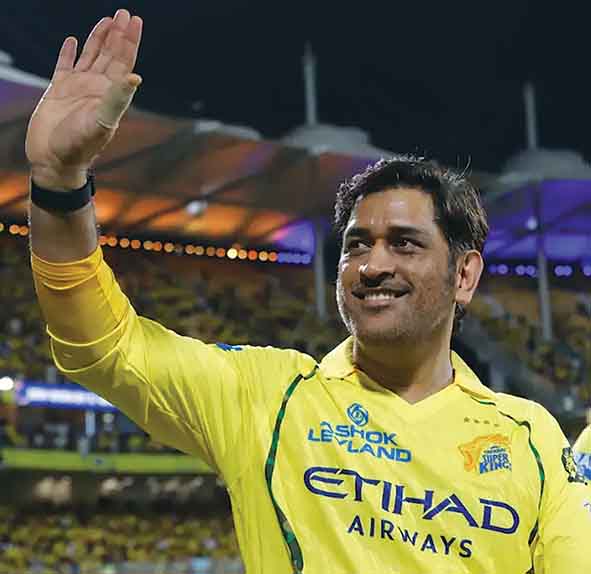
Mahendra Singh Dhoni’s retirement as a player from the Indian Premier League marks the end of an extraordinary chapter in Indian cricket. But his decision to take up the role of mentor with Chennai Super Kings (CSK) from the 2027 season could prove equally significant. For a cricketer who transformed India's approach to leadership, winning and handling pressure, the transition from superstar to mentor raises an important question: Can the qualities that made Dhoni a successful captain now be passed on to the next generation?
Dhoni’s contribution to Indian cricket cannot be measured merely through trophies, runs or dismissals behind the stumps. He changed the mindset of an Indian team that often struggled under the weight of expectations. Perhaps his greatest achievement was making winning a habit rather than an occasional accomplishment.
Legacy of Leadership
When Dhoni was handed the captaincy for the inaugural ICC T20 World Cup in 2007, Indian cricket was recovering from an early exit from the ODI World Cup. With several senior players absent, he was entrusted with a relatively inexperienced squad. Few expected India to go all the way. Yet, Dhoni guided the team to the title, defeating Pakistan in a memorable final. That victory did more than deliver a trophy; it showed that a young Indian side could compete fearlessly and succeed on the biggest stage.
The transformation continued. Under his leadership, India won the 2011 ODI World Cup, ending a 28-year wait, followed by the 2013 Champions Trophy. Dhoni thus became the first captain to win all three major ICC men's white-ball tournaments. India also reached the No. 1 spot in the Test rankings during his tenure. These achievements established him as one of the most successful leaders in international cricket.
What distinguished Dhoni was not just his tactical understanding but also his ability to remain composed in difficult situations. His calm demeanour did not reflect an absence of emotion but an ability to prevent pressure from dictating decisions. Whether promoting himself up the batting order in the 2011 World Cup final or trusting inexperienced players in crucial situations, he demonstrated an instinct for taking responsibility.
Equally important was Dhoni’s willingness to back young talent. Players such as Rohit Sharma, Virat Kohli, Suresh Raina and Ravichandran Ashwin grew into key figures under his leadership. He understood that building a successful team meant giving players opportunities, allowing them to make mistakes and trusting their abilities. His approach created an environment in which individuals could develop into match-winners.
His legacy with CSK reinforced this philosophy. Five IPL titles and two Champions League T20 crowns made the franchise one of the competition's most successful teams. More importantly, CSK became known for consistency, stability and faith in experienced players. Dhoni’s leadership was central to this identity.
Passing the Baton
However, Indian cricket has not always managed smooth leadership transitions. The departure of iconic players often leaves a vacuum, not because successors lack talent, but because experience and responsibility are not always passed on systematically. Captaincy cannot be inherited along with a jersey number. It requires exposure to difficult situations, decision-making authority and the freedom to learn.
This is where Dhoni’s new role becomes interesting. Mentorship should go beyond offering dressing-room advice or sharing career anecdotes. It involves identifying leadership potential, preparing younger players for pressure and allowing them to take ownership of the team. Ruturaj Gaikwad’s elevation as CSK captain was an important step. Dhoni’s continued presence could make the transition more effective.
There is, however, a larger lesson for Indian sport. Franchises and sporting federations often invest heavily in established stars but pay less attention to developing future leaders. A successful sporting institution must prepare for the day its biggest name walks away. Otherwise, it risks depending on individuals rather than building a sustainable team culture.
Dhoni’s playing career may have ended, but his greatest contribution could lie in helping others develop their leadership abilities. The six that sealed India’s 2011 World Cup victory will remain unforgettable. Yet, an even greater legacy may be seeing another generation of Indian cricketers develop the courage to make difficult decisions, remain composed under pressure and win without relying on a superstar.
For Captain Cool, the next innings is about creating leaders rather than being one.