In On Liberty (1859), John Stuart Mill cautioned that “He who knows only his own side of the case, knows little of that.” The observation remains a compelling reminder of what intellectual inquiry demands: not merely the confidence to defend one’s convictions, but the willingness to examine the arguments that unsettle them. For an institution devoted to the pursuit of knowledge, this should hardly be a radical proposition. Yet it raises a pertinent question for modern academia: does the commitment to questioning received wisdom extend equally to the assumptions through which academia itself interprets the world?
Academia has accomplished something remarkable. Over centuries, it has developed and refined disciplines, established methods of inquiry, preserved intellectual traditions, and opened pathways for generations of knowledge seekers. From the natural sciences to the humanities, from economics to sociology, the academic enterprise has equipped humanity with increasingly sophisticated means of understanding its world. The expansion of higher education has also created opportunities for individuals to investigate questions that earlier generations might never have been able to pursue formally. More recently, artificial intelligence has added another dimension to this landscape, offering researchers and learners new ways to explore literature, organise information, analyse complex material, and approach questions across disciplinary boundaries. Used responsibly, these tools can widen access to knowledge and create fresh possibilities for intellectual discovery. UNESCO's guidance on generative AI in education and research, for instance, emphasises the importance of harnessing these possibilities while preserving human agency, critical judgement, and ethical responsibility.
Yet the abundance of information is not the same as the depth of understanding, just as access to analytical tools is not a substitute for intellectual discernment. This distinction becomes particularly important in the social sciences and liberal arts. Their responsibility cannot end with recording what happens in society, classifying its actors, or applying established theoretical frameworks to contemporary events. They must also interrogate how those frameworks came into being, what assumptions they carry, which experiences they illuminate, and which realities they might obscure. A discipline that studies power must be prepared to examine the power embedded in its own categories. A field that investigates prejudice must remain alert to the possibility that its own methods of identifying prejudice can be applied inconsistently. And a scholarship that celebrates critical inquiry must be willing to direct that inquiry towards its own intellectual commitments.
This is not an argument against academia, nor a dismissal of the considerable achievements of the social sciences. It is an argument for taking their stated ambitions seriously. The capacity to question, revise, and challenge established assumptions is not a weakness of scholarship; it is one of its defining strengths. The difficulty arises when critical scrutiny becomes selective—when some interpretations are treated as emancipatory by default, others as suspect by association, and the identity of the scholar begins to overshadow the substance of the scholarship.
Modern academia has become remarkably adept at identifying the limitations of knowledge—particularly when those limitations belong to somebody else. It can locate the author's caste, interrogate the author's cultural inheritance, examine the author's proximity to power, and scrutinize the ideological assumptions concealed beneath an apparently innocent sentence. Such vigilance can be valuable. The question is whether the same vigilance survives when the analytical lens is turned towards the person holding it.
In the contemporary academic debate, positionality can become both a qualification and a disqualification. A scholar's social location may be recognized as a source of insight in one context and invoked as evidence of bias in another. Identity may be treated as indispensable to understanding one text, yet suspicious when brought to the interpretation of another. One might reasonably wonder whether the problem lies with positionality itself or with the selective manner in which its implications are applied.
The irony is difficult to miss: an institution committed to questioning the world should be among the first to question the boundaries it has constructed around its own interpretations.
Modern social sciences often question the possibility of neutral knowledge, arguing that every interpretation is shaped by values, experiences, and ideological commitments. Yet an interesting contradiction emerges when scholars consider themselves neutral because they oppose caste discrimination, Brahminical oppression, or majoritarianism. But does being anti-something automatically make one's position unbiased? Opposing injustice is undoubtedly legitimate. However, the intention to challenge oppression does not automatically guarantee that every interpretation, classification, or conclusion is free from bias. A scholar may begin with a morally defensible position and still interpret evidence selectively, overlook inconvenient complexities, or approach a subject with assumptions that remain unquestioned.
Consider caste studies. Examining historical inequalities and structural discrimination is essential. But should the communities being studied be reduced to fixed categories of privilege and oppression without considering regional differences, economic circumstances, historical contexts, and individual experiences? Recognizing complexity does not deny structural inequality; it strengthens its analysis. If academia questions supposedly neutral knowledge because researchers bring their own assumptions to their work, should scholars not apply the same scrutiny to their own ideological commitments? Being opposed to a particular social structure does not place one's interpretation beyond criticism.
The question, therefore, is not whether scholars should oppose injustice, but whether their opposition remains open to evidence, reflection, and disagreement. An ideology does not become unbiased merely because it defines itself as the opposite of another.
Selective Morality
Liberal arts often speak about minority rights, LGBTQ+ rights, gender equality, religious freedom, secularism, indigenous rights, and social justice. These are important values. But a simple question remains: are these values applied equally to everyone, or only when they support a preferred argument?
Who decided that every minority is powerless and every majority is powerful? Being fewer in number does not automatically mean having less power, just as belonging to a majority does not automatically make someone an oppressor. Should we not examine each situation on its own merits?
Consider India. Discussions of caste discrimination are necessary, but should every person belonging to a traditionally dominant caste automatically be treated as privileged, regardless of their circumstances? Similarly, should the historical violence associated with Islamic and Christian invasions of India be avoided simply because discussing it might offend contemporary political or religious sensitivities? History must be examined honestly, without hiding uncomfortable facts or blaming entire communities for the actions of their predecessors.
The same principle applies to Jewish persecution, antisemitism, and the Israel–Palestine conflict. Recognizing one does not require denying the other.
Even debates about Aryan migration and ancient Indian history deserve careful examination of available evidence rather than the repeated acceptance of familiar claims. If academia teaches us to question everything, why should its own preferred beliefs and narratives be exempt from questioning?
The Boundaries of Acceptable Dissent
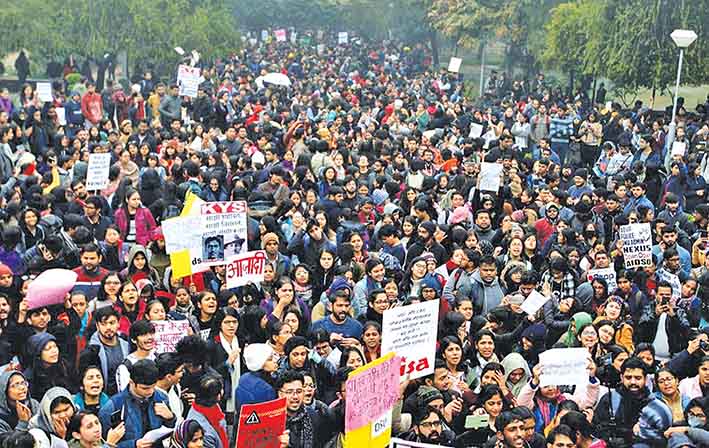
Liberal arts encourage students to question traditions, challenge authority, and expose oppression. Yet do students dare to question the ideological frameworks of the very academics who teach them to question everything else? Research on LGBTQ+ histories and discrimination is undoubtedly important. But why should questions about competing rights, the boundaries of inclusion, and the experiences of other groups be treated as illegitimate before they are even investigated? The debates surrounding transgender participation in women's Olympic sports, for instance, raise questions about inclusion and competitive fairness that deserve serious academic examination. If one group’s experiences merit research, why should questions about the rights and experiences of others be excluded?
The same selectivity appears in the study of religion and history. Indian academia examines Varna and caste hierarchies, but why is the historical division of Islamic sects, including Sunni and Shia, not examined with comparable attention to historical conflicts and persecution? Why should the historical violence associated with particular episodes of Islamic and Christian rule in India be any less worthy of investigation? Why should the experiences of Hindus under these regimes, both before and after Independence, be excluded from serious research? Studying historical violence does not require blaming contemporary religious communities; it requires the willingness to investigate uncomfortable histories.
Consider the language of majority and minority. Hindus are a global religious minority. Muslims and Christians are global majorities. Jews remain a global religious minority. If numerical strength alone determines who is powerful and who is vulnerable, should the same logic not be applied consistently across contexts? Similarly, Marxism, communism, and Maoism are legitimate subjects of academic inquiry, yet Hindutva is often approached primarily through the language of suspicion. Why should any ideology receive intellectual acceptance or rejection before its arguments, history, and consequences are examined?
The contradiction becomes sharper when positionality enters the discussion. A Dalit scholar researching Dalit literature may be recognised for their lived experience, while a Brahmin scholar interpreting Brahmanical texts may have their identity treated as evidence of bias. Should not both be judged by their evidence, methods, and arguments? If liberal arts teach students to question everything, why should the intellectual frameworks of liberal academia itself remain beyond question?
Subaltern Studies emerged to recover the histories and experiences of communities neglected by conventional historical narratives. Yet a question remains: has the field become too selective in deciding whose experiences deserve attention?
Dalit communities and minorities are important subjects of research. But what about Veerashaivas, Vokkaligas, Rajputs, Marathas, and other communities whose histories cannot always be reduced to a single framework of privilege and oppression? What about the Nayanmars, Alvars, and Bhakti traditions associated with figures such as Srila Prabhupada and Shishuvinal Sharifa? Why should their experiences, contributions, and social histories not receive equally serious attention?
The study of Adivasi communities is essential. Their distinct cultures, languages, traditions, and experiences must be documented. But why is there often greater emphasis on establishing their difference from Hindu society than on investigating the cultural, religious, and historical connections that may exist between particular Adivasi communities and Hindu traditions? If scholarship is genuinely interested in understanding Indian society, should it not investigate both differences and commonalities rather than presume the conclusions beforehand?
The same question applies to Shivaji Maharaj and other historical figures whose lives and legacies complicate simplistic ideological categories. Their place in Indian history deserves examination beyond the boundaries of contemporary political narratives. Ambedkarite Studies has made significant contributions to understanding caste discrimination. Yet should a framework built around opposition to caste become exempt from the critical examination expected of other intellectual traditions? Can a scholar employ Ambedkar's ideas and still question their interpretation, application, or limitations without being dismissed as prejudiced?
The irony is that a field dedicated to recovering neglected voices may itself overlook communities and traditions that do not fit its preferred framework. If subaltern scholarship seeks to question established historical narratives, it must also be willing to question its own selections, exclusions, and assumptions. A discipline cannot claim to recover every neglected voice while deciding in advance which voices deserve to be heard.
Decolonised in Name
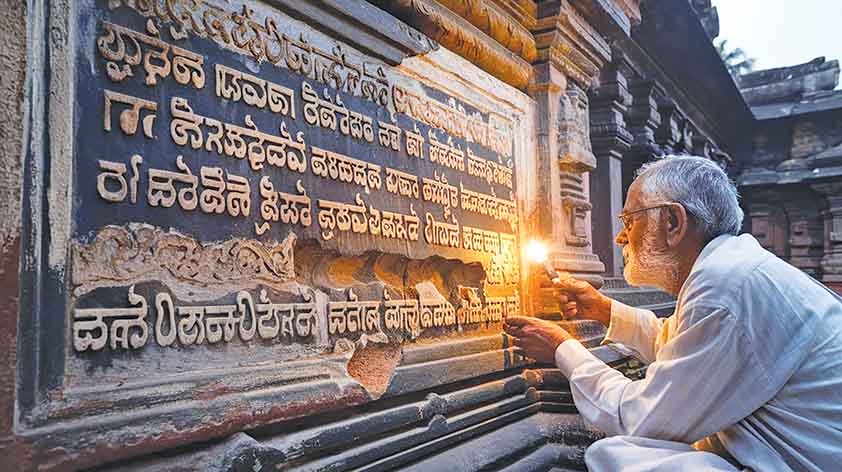
What does it mean for a university to claim that it promotes Indian Knowledge Systems (IKS)? Is studying ancient texts, temple architecture, sculptures, and inscriptions enough? Or should the commitment extend to examining living religious institutions, devotees’ experiences, and the administration of temples, including government control? The contradiction is worth examining. Temple architecture is widely accepted as a legitimate research subject. But when researchers investigate temple administration, government intervention, or devotees’ experiences, the subject can suddenly become sensitive. Devotees’ accounts may be dismissed as subjective, while questions about institutional control are treated as controversial. Why should these concerns be excluded from academic inquiry simply because they are uncomfortable?
A temple is not merely stone, sculpture, and architectural design. It is also a place of worship, community life, cultural memory, and institutional administration. Studying its physical structure while avoiding the experiences of those who worship there offers only a partial understanding of the institution. The inconsistency becomes clearer when we consider other research areas. Studies of women’s experiences of sexual violence often rely on personal testimony and interviews. Research on Dalit experiences of discrimination similarly draws on accounts of humiliation, exclusion, and injustice. Such testimony is not automatically rejected simply because it is personal or sensitive. Researchers examine it through appropriate methods, consider context, verify claims where possible, and acknowledge limitations.
Why, then, should a devotee’s experience be treated as inherently less worthy of investigation because it concerns a Hindu temple? These subjects are not identical, and their research methods need not be identical. But the basic principle should remain consistent: personal experience is evidence to be examined, not a reason to disqualify a subject before the research begins. This does not mean every devotee’s claim must be accepted uncritically. Nor does it mean every criticism of temple administration is automatically correct. Research must protect participants, distinguish individual experiences from wider patterns, and support conclusions with evidence. Ethical scrutiny should strengthen research, not become a convenient excuse for avoiding difficult questions.
After all, researchers themselves are not free from assumptions. Academic qualifications do not automatically eliminate personal, ideological, or institutional biases. If researchers’ perspectives are considered worth examining in studies of caste and gender, why should the perspectives of devotees be dismissed in advance? Whose subjectivity is treated as valuable evidence, and whose is labelled bias?
This is a particularly important question for universities that claim to advance IKS. If certain communities’ experiences are welcomed as contributions to knowledge while devotees’ experiences are treated with suspicion, then academia must examine its own standards of legitimacy. Being progressive, critical, or secular does not automatically make a research approach impartial.
IKS must not be reduced to ancient śāstras alone. It must also recognise the kula-kasubu—traditional occupations, crafts, and skills—through which Bharatiya communities have preserved knowledge across generations. Farmers, weavers, potters, sculptors, and artisans must be encouraged to take pride in their contributions, document their inherited vidyās, and pass them on to future generations. Universities should help communities preserve this knowledge rather than treating it as valuable only after academic validation.
IKS must empower every Bharatiya community to recognise, document, and carry forward its knowledge traditions without constantly seeking validation from Western knowledge systems. Engaging with Western scholarship can be valuable, but it should not be the sole measure of Indian knowledge’s legitimacy. IKS must also challenge liberal arts and social sciences to Indianise their intellectual foundations by integrating Bharatiya Jñāna Paramparā into teaching and research—not as an optional addition, but as an essential way of understanding India.
Finally, reviving the Aṣṭādaśa Vidyāsthānas and teaching them must also be a priority. This is one way to refine IKS. Liberal arts must be open enough to adopt IKS, while IKS must remain open enough to study its own roots and allow the different perspectives discussed above. Neither should remain closed to critical inquiry or assume that its own framework is beyond examination.