Experts target 100 GW nuclear power by 2047
Mumbai: Emphasising the critical role of nuclear energy in India's long-term economic development, energy security and environmental sustainability, leading scientists and policymakers gathered in Mumbai for the Indian Nuclear Society's Annual Conference (INSAC-2026).
The three-day conference, themed “Nuclear Energy and Nuclear Radiation: A Boon for Mankind,” also marked a significant educational milestone, with HSNC University announcing the establishment of its dedicated School of Nuclear Science and Technology.
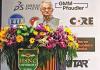
Organised by the Indian Nuclear Society (INS) in collaboration with Hyderabad Sindh National Collegiate (HSNC) University, the conference brought together prominent figures from India’s nuclear science and energy sectors, including former Atomic Energy Commission Chairman and Padma Vibhushan awardee Dr. Anil Kakodkar, Atomic Energy Regulatory Board (AERB) Chairman A. K. Balasubrahmanian, and HSNC Board Chairman Dr. Niranjan Hiranandani.
Delivering the keynote address, Dr. Kakodkar underscored the strategic importance of achieving India's ambitious target of 100 GW of installed nuclear power capacity by 2047. The target represents a significant milestone in India’s efforts to strengthen energy security while supporting rapid economic growth and deep decarbonisation.
“To ensure long-term energy security alongside sustainable economic growth, we must accelerate the deployment of advanced reactor technologies,” Dr. Kakodkar stated.
He emphasised that achieving the 100 GW target would require securing adequate uranium resources, expanding domestic technological and technical capabilities, and developing a self-reliant nuclear ecosystem supported by robust research and development.
Echoing these views, INS President Prof. Vijay Kumar Manchanda highlighted the urgent need for stronger collaboration between scientific institutions, industry and academia.
He noted that INSAC-2026 was specifically designed to bridge the gap between advanced nuclear science and public understanding, encourage interdisciplinary engagement, and raise awareness about the peaceful applications of nuclear science and radiation technologies.
A major highlight of the inaugural ceremony was the formal launch of the School of Nuclear Science and Technology at HSNC University's Worli campus in Mumbai.
HSNC University Vice-Chancellor Col. Prof. Dr. Hemlata K. Bagla outlined the vision behind the initiative, announcing that the school would offer specialised Bachelor of Science (B.Sc.) and Master of Science (M.Sc.) programmes.
“There is a pressing need for a scientifically trained, professionally competent workforce to meet the emerging demands of our expanding nuclear industry,” Dr. Bagla said.
Building on the university's existing expertise in radiochemistry, the new school aims to establish academic and research collaborations with leading national institutions, including the Bhabha Atomic Research Centre (BARC) and the Department of Atomic Energy (DAE).
Dr. Hiranandani welcomed the initiative, stressing that stronger university-industry partnerships are essential to accelerating technological innovation and translating scientific discoveries into practical industrial applications.
Nuclear safety and regulatory oversight also featured prominently in the discussions.
AERB Chairman A. K. Balasubrahmanian emphasised that public confidence, supported by robust regulatory frameworks, effective safety oversight and an uncompromising safety culture, would be fundamental to the sustainable expansion of India's nuclear energy programme.
Beyond electricity generation, INSAC-2026 also highlighted the wide-ranging peaceful applications of nuclear science and technology.
Panel discussions and technical sessions explored several important areas, including Small Modular Reactors (SMRs), fast breeder reactors and the potential utilisation of India’s substantial thorium resources as part of its long-term nuclear energy strategy.
Researchers and industry experts also discussed the growing contribution of radiation technologies to healthcare, particularly in cancer diagnosis and treatment, as well as their applications in agriculture, food preservation and environmental management.
Reflecting on the pioneering legacy of Dr. Homi J. Bhabha, widely regarded as the architect of India’s nuclear programme, participants emphasised that achieving the vision of Viksit Bharat @2047—a developed India by 2047—would depend significantly on the continued advancement of the country’s scientific, technological and industrial capabilities in the peaceful applications of nuclear energy.