

A Living Classroom for Environmental Learning

Once barren and debris-filled, the land was transformed into a thriving theme park for environmental education.
In my earlier article, I traced how our biomedical waste facility in Thane grew from modest beginnings into a robust service network spanning multiple districts. What started as a daunting challenge—convincing hospitals, acquiring vehicles, and gaining regulatory trust—eventually matured into a recognised and certified operation. Along the way, we expanded our outreach, launched awareness campaigns, and even organised an international conference on biomedical waste management. In doing so, it proved that persistence and partnerships can transform an idea into an institution.
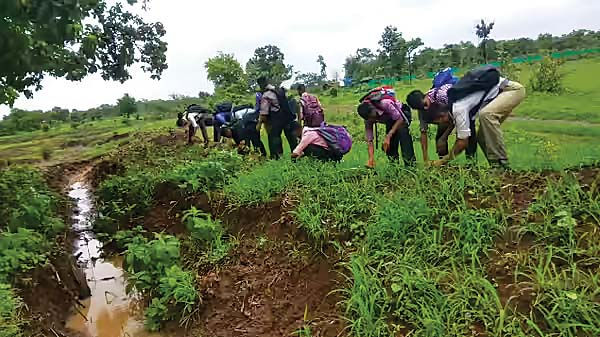
While setting up the biomedical waste treatment facility, we also began transforming the debris-filled land around us into a green space. This area, later known as Ankur Theme Park, became a hands-on learning environment for schoolchildren, college students, and the general public.
As we installed the machines, we decided to green the barren, debris-strewn land given to us.
We cleared the land and began tilling it to make the soil suitable for vegetation. Around the same time, we had already started our biocompost unit, followed by vermicompost units. To condition the soil, we used our own naturally made biocompost.
Gradually, this effort grew into a theme park. We intended to invite school and college students to step outside the classroom and learn directly from nature.
We created demonstration units—a biogas plant, a plant nursery, a butterfly garden, plantations of economically important plants, medicinal plants, flowering and ornamental plants, and more. We also constructed large ponds for aquaculture. Soon, guided tours were being organised not just for students but also for common citizens. Our aim was to develop this space into a true Centre of Excellence for environmental education.
We were privileged to have many eminent individuals visit our centre.
As mentioned in one of my earlier articles, Shri Ram Naik, then Petroleum Minister of the Government of India, inaugurated the facility.
Later, our spirits soared when the late Shri Manohar Parrikar, then Chief Minister of Goa, visited. It was truly a memorable event for us.
Dr Dilip Biswas, Chairman of the Central Pollution Control Board, also came all the way from New Delhi after learning that an environmental NGO had set up a common biomedical waste treatment facility. After his visit, he remarked that this facility was a role model and the first of its kind in India.
We were equally honoured by the visit of Dr Anil Kakodkar, an eminent nuclear scientist and former Chairman of the Atomic Energy Commission of India. He, too, was very impressed with the work being done at our facility.
The story is nearing its end. I will share the final chapter in the next article. Until then, wishing you a pleasant weekend!
(The writer is an environmentalist.)


Comments