top of page


Solving India’s E-waste Problem
The challenge is not to push the informal sector aside, but to make it safer, more organised and environmentally responsible. Continuing from last week’s article, the informal sector cannot simply be viewed as part of the problem. It also plays a major role in collecting and recovering discarded electronics. Repair shops, used-product dealers and vendors operating through e-commerce platforms channel significant amounts of discarded electronics back into the economy. Devices

Dr. Sanjay Joshi
5 days ago3 min read


Lessons from the Mountains
How much of the Himalayas must melt before we rediscover our humanity? I have carried this question for some time. Perhaps it came from the mountains, the rain and the silence. The Himalayas feed rivers, sustain communities and carry memories of centuries. Yet their changing landscape reminds us that nature has limits. We discuss melting glaciers, disappearing water sources and climate change, but too often these remain statistics. What happens when they become part of daily

Anandajit Goswami
6 days ago3 min read


Seelampur: Where the World’s Discarded Technology Ends Up
In the absence of enough authorised recycling facilities, even unauthorised units are filling a vital gap. Seelampur, on the outskirts of Delhi, is almost like a huge marketplace for discarded technology. Old laptops, broken mobile phones, outdated computers and damaged monitors are piled up everywhere. The narrow, crowded lanes are filled with the constant sounds of hammers hitting metal, tools scraping against machines and workers shouting instructions. But behind this chao
Dr. Sanjay Joshi
Sep 43 min read


India’s Growing E-Waste Problem
India is now the fifth-largest generator of e-waste in the world, after the USA, China, Japan and Germany. Yet, less than two per cent of the e-waste generated in the country is formally recycled. Since 2018, India has been generating more than two million tonnes of e-waste every year. The country also receives substantial quantities of e-waste from other parts of the world, adding further pressure to an already overburdened waste-management system. For many Indian cities, th
Dr. Sanjay Joshi
Aug 283 min read


DPS Lake turns into algae reservoir
Greens urge CM to make it flamingo-ready Mumbai: Environmental groups have urged Chief Minister Devendra Fadnavis to expedite the process of granting conservation reserve status to the 12-hectare DPS Lake in Navi Mumbai, warning that the wetland is rapidly deteriorating and could become unsuitable for flamingos and other migratory birds. The appeal comes ahead of the next World Migratory Bird Day, observed on the second Saturday of May and October to highlight the seasonal mo

Bhalchandra Chorghade
Aug 282 min read


Hidden Cost of Digital Lives
The discarded device may no longer be useful to its owner, but many of the materials inside it still have value. The scale of the e-waste problem is enormous. A United Nations study estimated that 62 million tonnes of e-waste were generated worldwide during 2024-25. Yet only a fraction was disposed of or recycled through proper systems. An electronic device may look like a single object, but it is actually a complex combination of many components and materials. Each of these
Dr. Sanjay Joshi
Aug 223 min read


E-Waste: India’s Growing Challenge
What makes e-waste unique is that it is both a challenge and an opportunity. Many people imagine that only large industries or IT companies generate electronic waste. The reality is very different. Every one of us contributes to it. Think about the number of electronic devices you use every day—a mobile phone, laptop, television, refrigerator, washing machine, mixer, microwave oven, electric toothbrush, smartwatch, or even children’s electronic toys. Every home today is fille
Dr. Sanjay Joshi
Aug 143 min read


Electronic Waste: A Growing Challenge in the Digital Age
Every discarded phone, laptop and appliance contains valuable resources—but also hidden environmental risks. Understanding e-waste is the first step towards managing it responsibly. Take a look around your home. An old mobile phone tucked away in a drawer. A laptop that refuses to switch on. A broken mixer gathering dust on a shelf. An outdated television in the storeroom. A refrigerator replaced by a newer, energy-efficient model. We rarely think about these discarded gadget
Dr. Sanjay Joshi
Aug 73 min read


Panje wetland moves closer to legal protection
Navi Mumbai: The 289-hectare Panje-Dongari wetland in Uran, regarded by environmentalists as Maharashtra’s largest intertidal wetland, has moved a significant step closer to securing legal protection after the Raigad district administration completed a long-awaited ground verification process, environmental groups said. The development is being seen as a major milestone in the years-long campaign by conservationists to protect the ecologically sensitive wetland from reclamati
Bhalchandra Chorghade
Jul 193 min read


Beyond Growth: Rethinking Prosperity for a Living Planet
The future of prosperity will be defined not just by economic growth, but the health of societies and ecosystems. What if the fastest-growing economies are also those that are losing ground for prosperity? It is a paradox of our lifetime. While the nations have been celebrating the growth in their Gross Domestic Product (GDP), expansion of industries and record investment, the millions still face poor health, environmental degradation, social inequality and declining quality

Anuradha P. S.
Jul 195 min read


Relentless blasting threatens Kharghar hills
Greens send SOS to CM Navi Mumbai: Environmental groups and residents have urged Chief Minister Devendra Fadnavis to immediately intervene and halt what they describe as relentless hill blasting for a real estate project in Kharghar, warning that continued excavation could cause irreversible ecological damage and heighten the risk of landslides during the ongoing monsoon. In a representation submitted to the Chief Minister, the NatConnect Foundation and the Save Kharghar Ecol
Bhalchandra Chorghade
Jul 183 min read


Rain Check for Marathwada
The uneven march of the southwest monsoon is once again exposing the fragility of rain-fed agriculture. The southwest monsoon has never been an equal-opportunity visitor. This year it has arrived with a familiar paradox. While Konkan, Mumbai and large parts of western Maharashtra have been inundated by torrential rain, Marathwada remains trapped in a frustrating cycle of scattered showers followed by long dry spells. For a region where agriculture depends overwhelmingly on th

Ramesh Patil
Jul 133 min read


Neutral IOD ‘battles’ a strong El Nino
Commuters navigate a waterlogged road after heavy rainfall at Vasai-Virar on Wednesday. Pic: PTI Mumbai: Belying gloomy forecasts of a potentially devastating monsoon 2026 season, a ‘neutral’ Indian Ocean Dipole (IOD) – an ocean-atmosphere phenomena – may have helped soften the impact of a brutal El Nino over the sub-continent. As reported by ‘The Perfect Voice’ (May 31), a ‘very strong’ El Nino threatened to overshadow the rainy season with erratic rains, uneven spread, heat
Quaid Najmi
Jul 83 min read


From Waste to Worth: Lessons from India's Waste Pickers
Waste pickers are not a burden on cities—they are among their most valuable environmental service providers. Last week's article examined how exclusionary policies continue to undermine the livelihoods of waste pickers despite their indispensable contribution to urban waste management. However, exclusion is not the only story. Across India, waste pickers have shown that when they organise, they can secure recognition, protect their rights, and become valued partners in buildi
Dr. Sanjay Joshi
Jul 33 min read


Ratnagiri’s Environmental Test
As Maharashtra accelerates its industrial expansion, a debate over a PFAS-linked chemical plant in Ratnagiri compels politicians to face a difficult question: Can economic growth be achieved without compromising environmental security? Every industrial success story raises a similar question: who will pay the environmental bill of such growth? The issue has recently taken on a new urgency in Ratnagiri, with local residents and environmental groups protesting allegations tha

Anusreeta Dutta
Jun 304 min read


Why the Monsoon Is Changing
The delayed monsoon is a reminder that the choices we make today about development and the environment will shape the climate inherited by future generations. Mumbai is experiencing an unusually delayed monsoon this year, accompanied by prolonged spells of extreme heat and humidity. Across many parts of India, rainfall patterns have become increasingly erratic. While some regions receive intense cloudbursts, others face long dry spells. This raises an important question: Are

Asha Tripathi
Jun 293 min read


Spotlight on Flamingo Blue Carbon Plan
Mumbai: As Mumbai grapples with rising temperatures, extreme rainfall, coastal flooding and rapid urbanisation, the proposed Flamingo Blue Carbon Urban Complex is set to become one of the centrepieces of Mumbai Climate Week (MCW) 2027, positioning the Mumbai Metropolitan Region as a global example of how biodiversity conservation can be integrated with climate action. Scheduled to be held in February 2027, the event will bring together environmental organisations, policymaker
Bhalchandra Chorghade
Jun 273 min read


From Waste to Dignity
Last week's article highlighted how exclusionary policies continue to undermine the livelihoods of waste pickers despite their vital contribution to urban waste management. Yet, there are also inspiring examples of how waste pickers have organised to secure recognition, protect their rights, and transform public perceptions. One of the earliest and most influential is the Kagad Kach Patra Kashtakari Panchayat (KKPKP). Exclusion Costs In 2019, the Bengaluru city administration

Divyaa Advaani
Jun 263 min read


A Thirsty Nation Beneath A Monsoon Sky
India's relationship with water is marked by a striking contradiction. A few summers ago, while travelling through rural Rajasthan, I witnessed an elderly woman struggling to draw water from a hand pump beneath a neem tree. After several attempts, a faint trickle finally emerged, and her face lit up with relief. At that very moment, dark monsoon clouds were gathering on the horizon, preparing to bring torrential rains across the country. The scene captured a paradox that defi
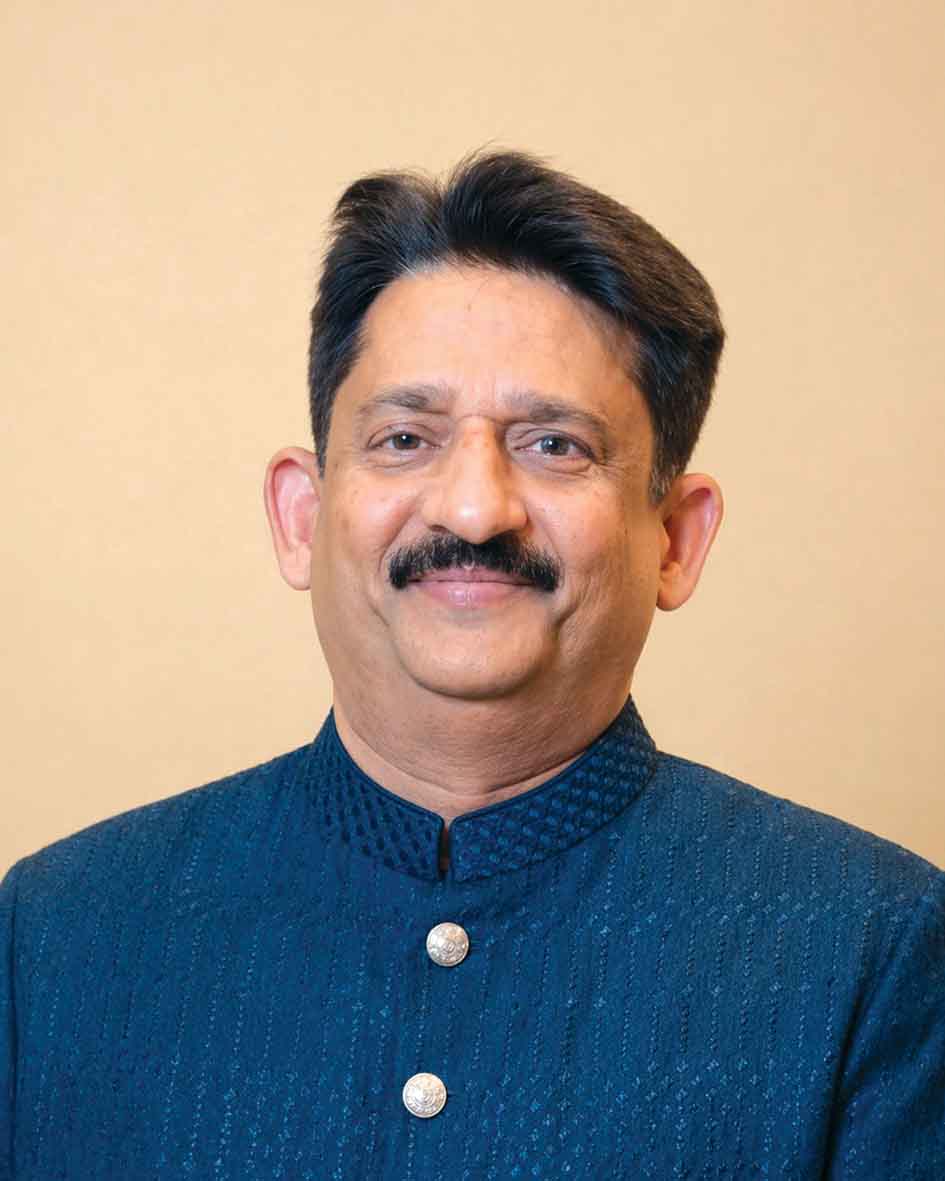
Rajeev Kejriwal
Jun 233 min read


Polluted tidal inflows threaten flamingo lake
Navi Mumbai: Fresh scientific tests have raised serious concerns over the deteriorating health of DPS Flamingo Lake at Nerul in Navi Mumbai with polluted creek water entering the wetland during high tides emerging as a major threat to the fragile ecosystem that forms part of the Ramsar-listed Thane Creek Flamingo Sanctuary (TCFS). The latest laboratory analysis of water collected from the tidal inflow channel has revealed contamination levels far exceeding permissible standar
Bhalchandra Chorghade
Jun 222 min read
bottom of page