top of page

By:

Naresh Kamath

5 November 2024 at 5:30:38 am

Indian Tourists Need a Reputation Reset

India has long taken pride in the philosophy of ‘Atithi Devo Bhava’ - the belief that guests deserve warmth, respect and dignity. It is an idea deeply woven into the country’s cultural imagination, often been projected as a defining Indian value. As millions of Indians travel overseas every year, the conduct of a small but highly visible section of Indian tourists is increasingly shaping how India itself is perceived abroad. The issue is not about a single incident or a handful of viral...

Indian Tourists Need a Reputation Reset

India has long taken pride in the philosophy of ‘Atithi Devo Bhava’ - the belief that guests deserve warmth, respect and dignity. It is an idea deeply woven into the country’s cultural imagination, often been projected as a defining Indian value. As millions of Indians travel overseas every year, the conduct of a small but highly visible section of Indian tourists is increasingly shaping how India itself is perceived abroad. The issue is not about a single incident or a handful of viral videos but a pattern that is drawing notice from hotels, tourism operators and local authorities across the world. The debate gained fresh momentum after reports emerged of a Swiss hotel issuing a notice specifically addressed to Indian guests. The advisory reportedly requested guests not to pack food from breakfast buffets for later consumption and reminded them to maintain silence in corridors and balconies. Hotels routinely issue guidelines. But when a particular nationality becomes the subject of a specific advisory, it inevitably raises larger questions about perception. “It is a sorry state of affairs. Indians, especially in groups, are displaying atrocious behaviour. This was anyway bound to happen,” says Subhash Motwani, founder of Namaste Tourism. Embarrassing Incidents Whether the notice was justified is another separate matter. The question is why such perceptions are emerging in the first place. Recent months have seen several incidents involving Indian tourists gain traction on social media. One widely circulated video showed travellers performing garba on an airport tarmac in Vietnam. Garba is among India’s most vibrant cultural traditions and a source of immense pride for millions. Yet airports are highly regulated spaces where safety protocols and discipline take precedence over celebration. The incident became symbolic of a larger problem. The rise of social media has encouraged some travellers to treat foreign destinations as stages for content creation. Public dancing, loud celebrations, disruptive behaviour and attention-seeking stunts may generate views and engagement online, but they can also leave lasting impressions on locals and fellow tourists. India is hardly the first country to confront such a challenge. During the 1950s and 1960s, American tourists acquired a reputation for arrogance abroad, giving rise to the phrase “Ugly American.” Britain spent decades dealing with the international embarrassment caused by football hooliganism. China faced similar concerns as outbound tourism surged during the early years of the twenty-first century. A nation’s image is shaped not just by its economic achievements and diplomatic influence but also by the behaviour of its citizens overseas. India today finds itself in a similar situation. Indian tourists are now among the most visible traveller groups across Europe, Southeast Asia and the Middle East. This is, in many ways, a remarkable success story. However, with visibility comes responsibility. Hospitality professionals across destinations frequently point to recurring concerns. Excessive noise, queue-jumping, disregard for local regulations, overcrowding hotel rooms and attempts to bypass established rules through jugaad are among the complaints often cited. Collectively, repeated experiences can create lasting perceptions. The most revealing aspect of the debate is that Indian travellers often display exemplary discipline in countries known for strict law enforcement. In destinations such as Singapore, the UAE, Qatar and Saudi Arabia, compliance with rules is generally high. Complaints tend to emerge more frequently in places perceived as relaxed or lenient. That suggests the challenge is not one of awareness. Most travellers understand the rules perfectly well. The problem is often a mindset that rules can be negotiated when consequences appear unlikely. Changing that mindset is far more important than introducing additional regulations or issuing fresh advisories. Every interaction at an airport, hotel, restaurant, tourist attraction or public transport system contributes to how a country is viewed. These everyday encounters often shape perceptions more powerfully than government campaigns or tourism advertisements. As India stakes its claim to a larger role in the world, its citizens must recognise that national prestige is shaped not only by economic achievements and diplomatic successes, but also by everyday behaviour abroad. The overwhelming majority of Indian tourists travel responsibly and leave behind positive impressions. Their conduct rarely becomes news because courtesy seldom goes viral. Yet a handful of highly visible incidents can overshadow thousands of positive experiences. The challenge is to encourage responsible travel and a greater awareness that behaviour abroad carries consequences beyond the individual. The conduct of Indian citizens overseas should reflect the confidence and values of a nation seeking not merely recognition but enduring respect. (The writer is a senior journalist based in Mumbai. Views personal.)

India’s Plastic Problem: The 90s Turning Point

Have bans, rules and waste systems really been enough to tackle plastic waste?

The Indian plastics industry began in 1957 with the state-owned Indian Petrochemicals. By 1979, the sector had taken firmer shape. Use of plastics in India became increasingly common over the decades and grew sharply in popularity in the 1990s. Single-use plastic entered the market and soon became a widely sought-after material for households and businesses alike. Plastic consumption had already been growing since the 1960s, but the pace and scale changed dramatically in the years that followed.


A major turning point came in 1994 with the growing use of plastic soft drink bottles. These soon became a highly visible source of waste and triggered public concern over sanitation and littering. This was followed by rapid growth in the consumption of single-use plastics and packaging, which led to an even greater accumulation of waste across urban and rural areas.


The widespread manufacture and inappropriate disposal of plastics quickly led to serious environmental issues. These included blockages in drainage systems, contamination of soil, and damage to marine and animal life. As these concerns mounted, the Indian government began introducing measures to minimise plastic waste and regulate its use more effectively.


Against this backdrop, the Ministry of Environment and Forests, Government of India, notified the first-ever rules titled 'The Recycled Plastics Manufacture and Usage Rules, 1999'. These rules mandated that plastic recycling follow Bureau of Indian Standards (BIS) specifications IS 14534:1998, as laid down in The Guidelines for Recycling of Plastics.


The rules also prohibited the use of carry bags or containers made of recycled plastic for storing, carrying, dispensing, or packaging food items. Responsibility for implementing these rules was assigned to State Pollution Control Boards and district administrations. These rules became a foundational step in India’s plastic waste regulation, addressing concerns about the safety and environmental impact of recycled materials.


The regulatory framework was strengthened further between 2003 and 2011. The 1999 regulations were eventually superseded by the Plastic Waste (Management and Handling) Rules, 2011. These rules also gave local bodies greater authority over the collection, sorting, and disposal of plastic waste.


Some of the key features of the 2011 rules included a ban on the use of plastic materials in sachets for storing, packing, or selling gutkha, tobacco, and pan masala. They also prohibited the packaging of foodstuffs in recycled plastics or compostable plastics. Recycled carry bags were required to meet specific BIS standards, with colour prescribed by the Bureau of Indian Standards. The rules also stated that the uniform thickness of carry bags could not be less than 40 microns.


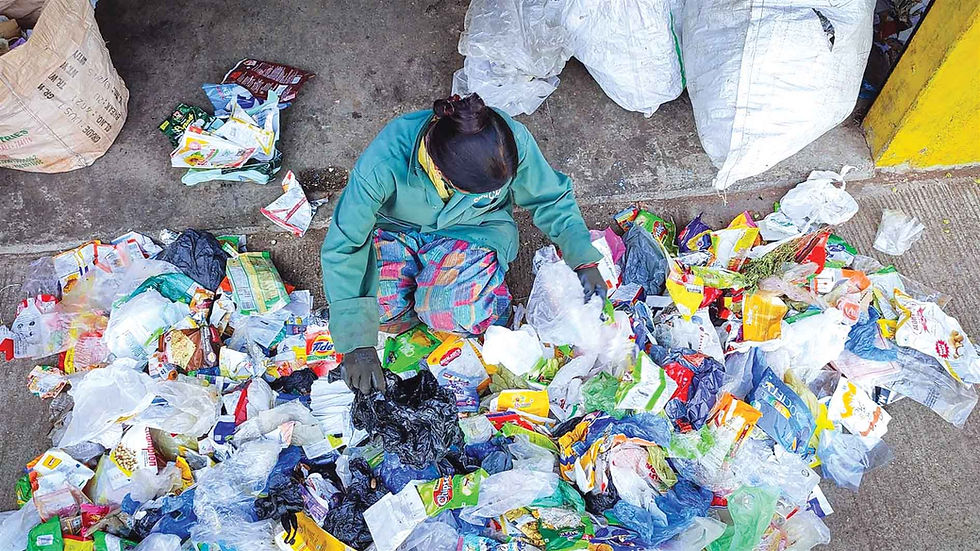
One of the most significant provisions under the new rules was the explicit recognition of the role of waste pickers. Municipal authorities were required to constructively engage with agencies or groups working in waste management, including waste pickers. It was the first time that such a special dispensation had been formally made in the rules.


By then, many social groups had begun raising their voices in favour of a complete ban on plastic. However, Jairam Ramesh, then minister of environment and forests, rejected the idea of a blanket ban on the manufacturing and use of plastics. According to him, the real challenge lay in improving municipal solid waste management systems.


He also expressed concern for the needs of the lakhs of people involved in the informal sector. In his view, imposing a blanket ban on plastic across the country would be both impractical and undesirable. His position reflected the complexity of balancing environmental concerns with livelihoods and ground realities.


These original rules have since been amended, and many new changes have been incorporated from time to time. Those developments have further shaped the way India approaches plastic waste management today. More on these in my next article.


Till then, have a wonderful weekend.

(The writer is an environmentalist. Views personal.)

Comments


bottom of page