

Why India’s Plastic Waste Problem Persists
- Dr. Sanjay Joshi

- Jun 12
- 3 min read
Strong regulations alone cannot solve plastic pollution if the people collecting and recovering the waste are left out of the system.
After reading my earlier articles in this column outlining India’s legislative framework on plastic waste management, one could be forgiven for feeling reassured. The Government of India has, after all, introduced a comprehensive set of laws and regulations to address the growing plastic waste problem. One might therefore expect our roads, streets, public gardens, markets, railway stations, bus stands and neighbourhoods to be free of plastic litter, with public spaces remaining clean and well-maintained.
Sadly, the reality is very different. Despite stringent rules—updated as recently as April 2026—plastic waste continues to litter our surroundings. From city streets to village roads, discarded plastic remains a common sight.
Why does this persist despite a robust legal framework? The answer lies in a number of challenges that continue to undermine efforts to tackle this seemingly endless problem. Let us examine the key issues.
Carry Forward Policy for EPR Compliance: The 2026 amendments legally permit companies a three-year ‘carry-forward’ window for unfulfilled recycling quotas, provided they make up at least one-third of the deficit each year. This provision weakens accountability by allowing companies to postpone full compliance for extended periods, resulting in a continued accumulation of uncollected plastic waste in the environment. Consequently, plastic pollution persists even when targets remain technically achievable on paper. While the recycling targets prescribed under the rules may appear ambitious and impressive, they fail to adequately consider who will actually undertake and implement the enormous task of collecting, segregating and recycling the waste.
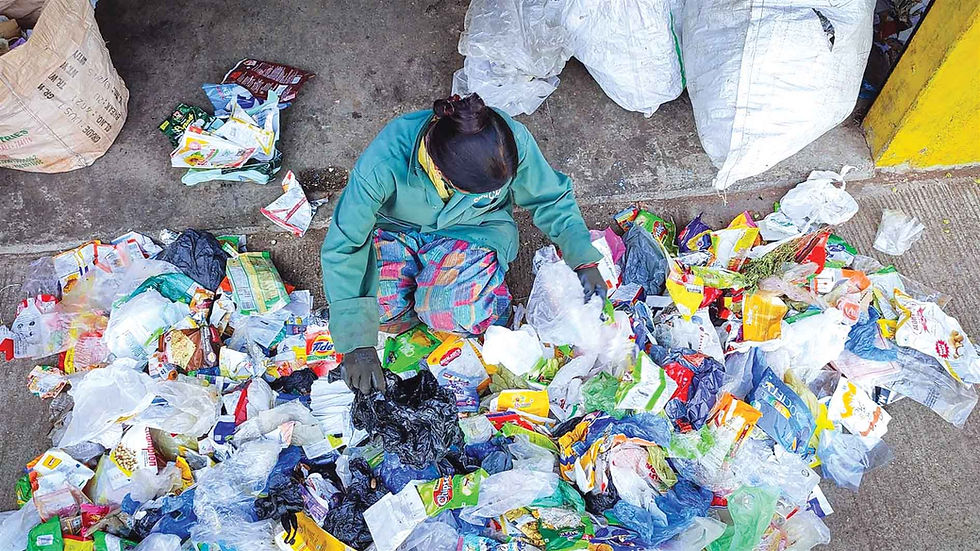
Informal Waste Collectors: India is blessed with a vast number of waste pickers who form the backbone of the country’s waste management system and contribute, often unknowingly, to the circular economy. Unfortunately, they remain largely unorganised and are still far removed from the mainstream waste collection system.
According to data from the International Labour Organization (ILO) and Chintan Environmental Research and Action Group, there are an estimated 1.5 million to 4 million waste pickers in India. Together, they manage about 60 to 70 per cent of the country’s recyclable waste. It is estimated that nearly 70 per cent of plastic recycling in India depends on this informal sector.
Their contribution also generates significant savings for local governments. In Bengaluru, research conducted by Hasiru Dala, an organisation formed by waste pickers, found that the municipality saves approximately Rs 84 crore annually in collection and transportation costs because of the work performed by these informal workers.
Ironically, the EPR rules largely overlook the essential role played by informal waste pickers—the very people who sustain and support the recycling system. Under the EPR compliance framework, producers can fulfil their obligations by working with formally registered recyclers and waste management agencies. However, the policy contains no effective mechanism to accommodate an informal waste picker who may have spent years recovering plastic from the waste stream.
The rapid, top-down formalisation and digitisation of waste management systems are increasingly marginalising these unorganised workers. Yet, even without diplomas or degrees in waste management, many waste pickers possess practical knowledge that machinery and newly appointed contractors simply do not have. They know their neighbourhoods, households and waste sources intimately.
Their experience, dedication and hard work have helped build the recycling system that exists today. Replacing them without integrating their knowledge and expertise is likely to produce poorer outcomes while increasing costs for cities.
More on this in my next article. Till then, have a wonderful weekend!
(The author is an environmentalist. Views Personal.)


Comments