

Beyond Growth: Rethinking Prosperity for a Living Planet

The future of prosperity will be defined not just by economic growth, but the health of societies and ecosystems.

What if the fastest-growing economies are also those that are losing ground for prosperity? It is a paradox of our lifetime. While the nations have been celebrating the growth in their Gross Domestic Product (GDP), expansion of industries and record investment, the millions still face poor health, environmental degradation, social inequality and declining quality of life. If prosperity were just about economic growth, humanity would not have to contend with climate emergencies, biodiversity loss, growing mental health disorders and widening disparities. The debate here is, not whether growth matters but whether growth, by itself, is enough.
GDP has historically been the basis for economic policy-making. It reflects the overall level of production (both goods and services) of a country and is essential to evaluate the economic performance, fiscal policy, investment and job creation. India’s economy has shown extraordinary strength with GDP growth surpassing 8 percent in the year 2023–24, and it is projected to become one of the world’s largest economies over the coming years if current growth trends continue. However, GDP fails to measure clean air, healthy ecosystems, unpaid caring, social trust, mental health, and the loss of natural resources. A country can achieve impressive growth rates while using up its groundwater reserves, polluting rivers, destroying forests and adding to health care problems.
Systems Thinking
Decades ago, the economist Simon Kuznets warned, “The welfare of a nation can scarcely be inferred from a measure of national income.” This is where systems thinking is essential. Today’s problems in the world are interconnected. Food security is affected by climate change, food insecurity affects nutrition, poor nutrition affects health, decreased productivity affects health, and decreased productivity affects economic growth. Solving a problem without understanding the links between issues will have unintended side effects. System thinking helps policy makers to identify the feedback loops and the long-term impacts of their policies, as well as the interactions between the different economic, environmental, and social systems.
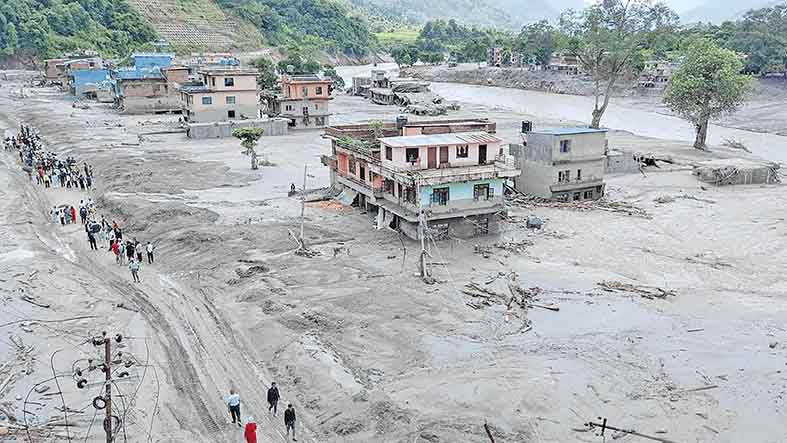
Now more than ever, this is the lens through which to view and evaluate the world. The World Health Organization (WHO) estimates that air pollution is responsible for killing nearly 7 million people annually worldwide, highlighting the impact of air pollution beyond the realm of ecology, and it's true as a public health crisis. In the meantime, according to the Intergovernmental Panel on Climate Change (IPCC), climate change is already making heat waves, floods, and droughts more common, putting unprecedented strain on health systems and livelihoods, and increasing the prevalence of vector-borne diseases.
The World Bank estimates that climate change will push more than 130 million people deeper into poverty by 2030, underscoring that environmental decline carries profound economic and social costs.
Planetary health is therefore inseparable from human prosperity. Forests sustain rainfall, wetlands filter water, oceans regulate the climate, pollinators support agriculture and biodiversity strengthens ecosystem resilience. As these natural systems deteriorate, societies face rising healthcare costs, falling farm productivity, greater food insecurity and heavier disaster losses. Protecting nature is thus not a luxury, but an economic and social necessity.
Social well-being is equally crucial. Prosperity means more than just money - it means education, health, safety, equality, jobs and community resilience. The United Nations Development Programme (UNDP) has always focused on the ability to expand people’s capabilities, not just the money that can be generated by a country. GDP can be correlated to outcomes in life expectancy, education attainment, gender equality and public trust in a country, and these outcomes can vary greatly among countries with similar economic output. Such disparities show that distributions and investments of wealth are as important as creation of wealth.
Regenerative Development
The world has thus shifted from sustainability towards regeneration. Sustainability is always about reducing the negative impact on the environment - it's about using less, emitting less and balancing the environment. Regeneration goes further. Its vision is to restore ecosystems, replenish biodiversity, rebuild soil fertility, revive water systems and strengthen communities leading to the health of nature and society over time. Regenerative development is about creating positive outcomes. More and more businesses are adopting regenerative agriculture, circular economy business models, renewable energy systems, as well as nature positive investments because maintaining long-term competitiveness is dependent on the recovery of these resources on which economies rely.
There are some good lessons to be learned from several countries. New Zealand’s Wellbeing Budget measures public spending on its ability to improve wellbeing as well as economic outcomes. The Gross National Happiness concept is integrated in Bhutan’s national planning process and includes environmental conservation, cultural preservation, good governance and sustainable development. The Green Deal of the European Union is an example of how climate action can advance innovation, jobs and industrial transformation. In the meantime, Costa Rica has proven that investments in forest restoration can improve biodiversity and provide resilience to the economy and tourism. While they highlight specific national differences, they all share a core idea: Prosperity should empower people and the planet, not make a choice between them.
The lessons are particularly important to India. The development decisions of India, which is the fastest growing economy and one of the world's biggest nations with more than 1.4 billion people, will have an impact on sustainability outcomes worldwide. The country has already made remarkable strides in implementing ambitious renewable energy programs, establishing a massive digital public infrastructure, launching the National Green Hydrogen Mission, ecosystem restoration and the increase in commitments towards a circular economy. But the problems of urbanization, air pollution, scarcity of groundwater resources, climate change and inequitable access to health services remain formidable challenges.
If there is a linkage between GDP and indicators of environmental quality, public health, education and social inclusion, then a more balanced and future-proof policy-making can be achieved. Rhetoric alone will not operationalise a genuine well-being agenda. It demands institutional reform, better measurement and stronger accountability.
Institutional Reform
India should create a national well-being dashboard built around 12-15 headline indicators spanning the economy, society and the environment. These could include child nutrition, learning-adjusted educational outcomes, female labour-force participation, life expectancy, mental health, household water security, ambient PM2.5 levels, urban liveability (heat, green cover and public transport access), ecosystem health (groundwater levels and forest cover) and resilience metrics such as fiscal exposure to climate shocks.
The framework should be institutionally anchored in either a National Well-being Commission or an empowered NITI Aayog, supported by dedicated statistical, modelling and state coordination secretariats. The dashboard should form part of the Union Budget, be subject to periodic audits and trigger mandatory policy responses whenever key indicators deteriorate.
Its findings must also shape public spending. Weak-performing indicators should prompt budgetary reviews, influence performance-linked grants to states and inform environmental-economic appraisals of major infrastructure projects through natural capital accounting based on the UN’s SEEA framework. Existing administrative databases - from Ayushman Bharat and UDISE to air-quality monitoring networks - should be integrated with stronger environmental-economic accounts, while pilot programmes in willing states can refine indicators, strengthen data systems and build political consensus before a nationwide rollout.
The prosperity of the 21st century will be measured not merely by the size of an economy but by the health of its ecosystems, the well-being of its citizens and the opportunities it leaves for future generations. Economic growth will remain indispensable, but it is only one measure of national progress. A living planet is the foundation of enduring prosperity, and the nations that flourish will be those that understand that lasting wealth comes not from exhausting nature and society, but from nurturing both.
(The writer is Professor at Christ (Deemed to be University). Views personal.)


Comments