top of page

By:

Abhijit Mulye

21 August 2024 at 11:29:11 am

‘Bharat Ratna to Savarkar will increase its prestige’

Mumbai: Rashtriya Swayamsevak Sangh (RSS) Sarsanghachalak Dr. Mohan Bhagwat on Sunday threw his full weight behind the long-standing demand to confer the Bharat Ratna on Swatantryaveer Vinayak Damodar Savarkar, asserting that the Hindutva ideologue’s inclusion would enhance the dignity of the country’s highest civilian honour. Bhagwat, who explained the genesis and growth of the RSS over past 100 years in two lectures at the Nehru Centre here on Saturday and Sunday, replied to several...

‘Bharat Ratna to Savarkar will increase its prestige’

Mumbai: Rashtriya Swayamsevak Sangh (RSS) Sarsanghachalak Dr. Mohan Bhagwat on Sunday threw his full weight behind the long-standing demand to confer the Bharat Ratna on Swatantryaveer Vinayak Damodar Savarkar, asserting that the Hindutva ideologue’s inclusion would enhance the dignity of the country’s highest civilian honour. Bhagwat, who explained the genesis and growth of the RSS over past 100 years in two lectures at the Nehru Centre here on Saturday and Sunday, replied to several questions. While replying to one of the questions, he remarked, “If Swatantraveer Savarkar is given the Bharat Ratna, the prestige of the Bharat Ratna itself will increase.” He was asked, why there has been a delay in conferring the Bharat Ratna on Savarkar, in reply to which, Bhagwat said, “I am not part of that committee. But if I meet someone, I will ask. Even without that honour, he rules the hearts of millions of people.” he added. Social Divisions Bhagwat replied to questions that were clubbed in 14 different groups ranging from national security to environment, social harmony, youth, arts and sports. Whenever the questions suggested or expressed expectations that the RSS should do certain things, Bhagwat stressed on the involvement of the society and initiative from the society in resolving the problems. While addressing the critical issue of Uniform Civil Code, Bhagwat stated that the UCC should be framed by taking everyone into confidence and must not lead to social divisions. In the same way while replying to the question related to illegal migrants in the country, Bhagwat urged people to “detect and report” the “illegal infiltrators” to the police. He also urged people not to give them any employment and to be more “vigilant.” Backing SIR He highlighted that the Special Intensive Revision (SIR) exercise has already revealed the “foreigners” living in the country. “The government has a lot to do regarding infiltration. They have to detect and deport. This wasn’t happening until now, but it has started little by little, and it will gradually increase. When the census or the SIR is conducted, many people come to light who are not citizens of this country; they are automatically excluded from the process,” he said. “But we can do one thing: we can work on detection. Their language gives them away. We should detect them and report them to the appropriate authorities. We should inform the police that we suspect these people are foreigners, and they should investigate and keep an eye on them, and we will also keep an eye on them. We will not give employment to any foreigner. If someone is from our country, we will give them employment, but not to foreigners. You should be a little more vigilant and aware,” he added. SC Chief Emphasising the inclusivity of the Sangh, he said that anyone can become ‘Sarsanghchalak’ (RSS chief), including the SC and STs, as the decision is solely dependent on the work that any individual put for the organisation. “Kshatriya, Vaishya, Shudra or Brahmin does not qualify for the Sarsanghchalak position (RSS Chief), a Hindu will become the one who works and is best available. A Hindu will become, and that can also be an SC or ST. Anyone can become it depends on the work. Today, if you see, all classes have representation in the Sangh. The decision is taken on the basis of one who works and is best available,” he said. He pointed out that when the RSS was founded, its work began in a Brahmin-dominated community and hence, most of its founders were Brahmins, which led to the organisation being labelled as a Brahmin outfit at the time. People always look for an organisation that has representatives from their community, he said. “If I were to choose a chief, I would go by the ‘best available candidate’ criterion. When I was appointed RSS chief, there were many best candidates, but they were not available. I was the one who could be relieved from duties and appointed,” he said. He said that to belong to the Scheduled Caste or Scheduled Tribe communities is not a disqualification, and neither is being a Brahmin a qualification to become the RSS chief. Ready to step down if Sangh asks for Dr. Mohan Bhagwat on Sunday said the Sangh had asked him to continue working despite his age, while stressing that he would step down from the post whenever the organisation directs him to do so. “There is no election to the post of RSS chief. Regional and divisional heads appoint the chief. Generally, it is said that after turning 75, one should work without holding any post,” Bhagwat said. “I have completed 75 years and informed the RSS, but the organisation asked me to continue working. Whenever the RSS asks me to step down, I will do so, but retirement from work will never happen,” he said.

From Seas to Sinks: The Silent Spread of Microplastics

Scientists describe microplastics as “toxic magnets” that carry heavy metals and chemicals into the food chain.

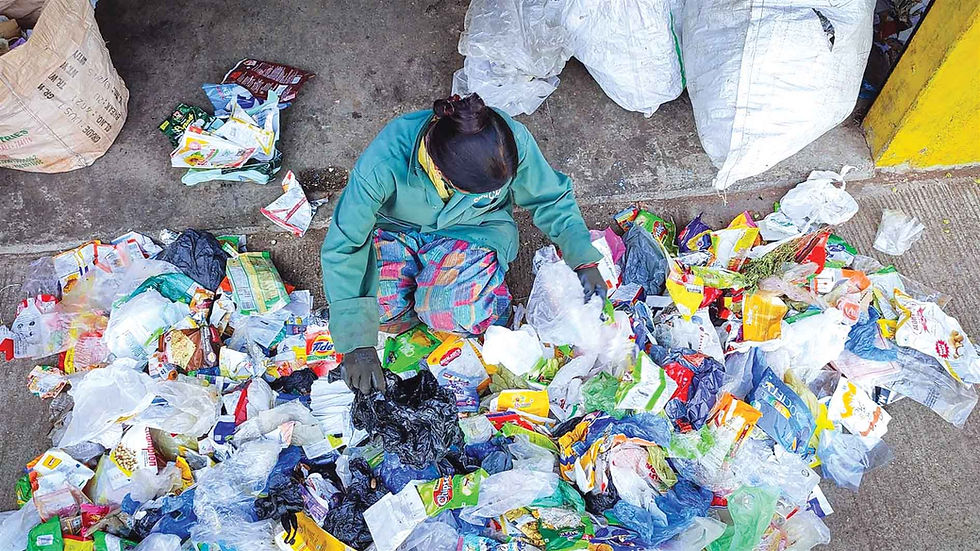
Plastic has quietly become an inseparable part of daily life — from the clothes people wear and the packaging they use to the medical equipment found in hospitals and homes. Its convenience has made it unavoidable in modern society. However, scientists now warn that the same material is creating a serious environmental and public health challenge. Every year, millions of tonnes of plastic waste flow into oceans, rivers and lakes. Over time, this waste breaks into tiny particles that are almost invisible, yet continue to exist in water, soil and living organisms for decades.


These tiny fragments are known as microplastics. They are smaller than five millimetres and form when larger plastic products degrade under sunlight, heat, and physical pressure. But broken waste is only part of the story. Every day, human activities add heavily to the problem. When synthetic clothes are washed, fine plastic fibres escape into wastewater. Many cosmetic and personal care products contain microbeads that go straight down the drain. Industrial discharge and poorly treated sewage further increase the amount of microplastics entering rivers and lakes. Because of their microscopic size, most of these particles pass through normal filtration systems without being removed.


Once microplastics reach rivers, lakes and seas, aquatic life begins to consume them. Plankton, small fish, crabs and shellfish mistake these particles for food. When bigger fish eat smaller ones, plastic travels up the food chain. In this way, microplastics that begin in the environment finally reach humans through seafood and drinking water. Even people who rarely eat fish may be exposed through contaminated water supplies.


The risk is not only from plastic particles themselves. Scientists explain that microplastics behave like “toxic magnets”. They attract heavy metals, pesticides and other chemical pollutants present in water. These harmful substances attach to the surface of microplastics. As organisms consume them, toxins slowly build up in their bodies. The concentration becomes stronger as it moves from one level of the food chain to another, ultimately reaching humans in higher doses.


Health experts warn that long-term exposure to microplastics may disturb the human immune system, hormone balance and metabolism. Some studies suggest links to inflammation and cell damage. Although research is still ongoing, early findings already point to possible risks that deserve serious attention from policymakers and the public.


Earlier, microplastic pollution was considered only a marine problem affecting distant oceans. Today, the situation has changed. Researchers have detected microplastics in rivers, groundwater and even in tap water in many cities. This means the problem has entered urban homes. Their presence reduces water quality, harms aquatic ecosystems and raises serious questions about the safety of everyday drinking water, especially in fast-growing urban areas.


Experts say the problem cannot be solved by awareness alone. Strong and coordinated action is needed. Governments must improve waste segregation and recycling systems and strictly enforce producer responsibility so companies manage plastic waste properly from production to disposal. Wastewater treatment plants must be upgraded with modern filtration technologies capable of trapping microplastic particles before they enter natural water bodies.


Citizens also have an important role to play. Reducing the use of single-use plastics, carrying cloth bags, choosing natural fabrics instead of synthetic ones and avoiding cosmetic products with microbeads can make a real difference. Even small daily choices can significantly reduce plastic pollution at the source.


The journey of microplastics from distant oceans to kitchen taps is a silent but serious warning. If ignored, it can damage ecosystems, threaten food safety and harm public health. Protecting water resources today is no longer just an environmental responsibility — it is essential for the health and safety of future generations. What we do with plastic now will decide what flows through our taps tomorrow.


(The writer is a senior journalist. Views personal.)

Comments


bottom of page