

‘India’s traditional wisdom needed to save the world’


Veteran thinker and social activist K N Govindacharya, through the Forum For Eco-centric Development, kick-started the 'Prakriti Samvad' campaign last year. The campaign aims at raising awareness about the dangers of our lifestyle choices, seeking solutions, and promoting a nature-friendly way of living to ensure prosperity while maintaining ecological balance. In an interaction with Abhijit Mulye, the Political Editor of ‘The Perfect Voice’, Govindacharya said that development should be centered around nature, promoting harmony among all its elements. Civilisational eco-renaissance based on the Indian traditional wisdom is needed to save the world. Excerpts…
How do you define eco-centric development?
Eco-centric development is all about the ecological consciousness or being nature-conscious. Modern countries follow the definition of development based on gross domestic product (GDP). As a result, several lakh people were killed in two world wars. Today’s modern human society and its current generations are facing unpleasant consequences of our erroneous approach to development. We should not forget that the condition of India’s farmers some 200 years ago was better than their European counterparts. As against this, Indian concept of development is linked to morality and sustainable happiness, unlike the western concept of development based on materialistic development. It is not just about material development. But, is about having a holistic balance. True development is about all-round growth. Problems like unemployment, pollution, hunger and poverty are worsening due to uninhibited exploitation of natural resources. A large population is facing hunger and the number of jobless youths is increasing. We need to return to our cultural roots to achieve progress in the real sense of the term. For that to happen, the development model needs to be eco-centric rather than human-centric to achieve three fundamental goals – the pursuit of happiness, sustainable development and peace for the world.
What are the most pressing ecological challenges facing India today?
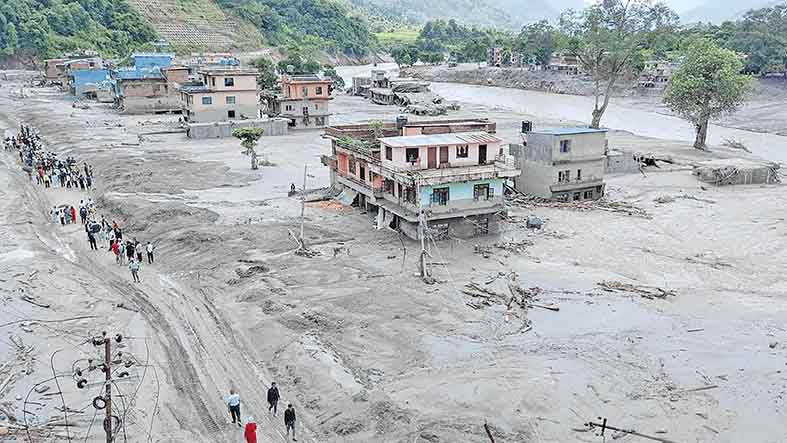
When the issue of ecological challenges comes up one can easily point out issues that begin from pollution of natural resources like water, soil, air etc. to rising incidents of natural calamities like floods, famines, hurricanes, tornedos and cyclones. Experts world over have been telling that these have been caused due to the abuses inflicted to the nature. The whole theory of climate change is based on the wrongful human interventions disturbing natural cycles. So, this is a global problem. It is not just an India-centric issue. The whole world is facing these challenges.
Once we identify the problem, the next step is to investigate what are the causative factors behind it. Currently human interventions of all kinds are being blamed for these problems. But, in reality the problem is that of the world-view. One can easily understand that the real issue is the crisis of Nature-Consciousness in the Modern Age. Under the western worldview, humans have started considering themselves something different and something superior to the nature. This has weakened the bond between the human and the nature. Humans used to revere nature earlier. Now they have started exploiting it. This has developed into an existential crisis. Remedy to this disease can be found in eco-centric or nature-centric Indian philosophy. Once we used to see god in everything – the rivers, the stones, the trees, the sun, the air. Today we have turned them into commodities. We need policies to reverse this.
What are the core principles guiding eco-centric development?
One will have to instill the sense of eco-consciousness to be able to walk the path of eco-centric development. This eco-consciousness begins with a deep sense of gratitude towards all aspects of the nature. It will do away with the sense that everything around us is created to serve the humans, for us to exploit and replace it with the deep sense of service towards one and all. Towards the trees, the animals, the rivers and mountains, everything. This kind of consciousness shall lead the society on the path of restraint, compassion, coexistence and collective responsibility. This would mean environment is everybody’s responsibility, humans and nature are interdependent, this sense would also need deep compassion for all living beings and restrict the exploitative ways in every sense.
What policy frameworks and institutional mechanisms are needed to support eco-centric development in India?
The ecological issues have reached the crisis stage. Hence, it has become utterly necessary to incorporate the eco-consciousness in the policy framework. This will need eco-citizenship. The eco-citizens would lead the way of nature conservation by their own examples. They won’t just raise demands but lead by the way of responsible behaviour. The responsibilities can be of various levels like local, national and global. Such citizens will conserve the soil, water and forests, protect biodiversity, reduce the plastic menace, participate in the campaigns related to cleanliness and conservation. This kind of responsible behaviour shall also reflect in the governance where the governments won’t be just the means of giving orders, but would reflect participation in true sense of the word. This will enhance the ecological sensitivity of the society. The policies will not just have economic sense but will also have an ecological focus. Like policies related to land will be focused on keeping the productivity of the land intact, policies related to water will be focused on keeping the water cycle intact, policies related to power will be focused on sensible use of power etc. The principle of coexistence shall also reflect in the governance on all – from local to national level.


Comments