

Why is India Considered the Most Polluting Nation?
- Dr. Sanjay Joshi

- Jan 30
- 3 min read
In the span of a few decades, India transformed from a clean, green country to a nation struggling under the weight of plastic pollution.

About 30–35 years ago, when I used to travel to a small town near Pune to visit my parents, the landscapes of almost all the villages and towns on the way were open, green, and clean. Vast stretches of grassland, dotted with a few trees and bushes, created a sense of calm and natural beauty. Those journeys were marked by freshness and simplicity, where nature still dominated the surroundings.
Gradually, however, the scenery began to change. Plastic bottles, polythene bags, and other waste materials slowly started appearing along the roadsides and in open fields. What was once an occasional sight has now become an alarming reality. Today, if you travel through the same landscapes, you are likely to be shocked by the extent of plastic litter covering them.
Tree branches now appear “decorated” with hanging polythene bags. Many more lie scattered on the ground, while some are seen ‘flying’ in the air, carried by the slightest breeze or a sudden whirlwind. Large and small plastic bottles, wrappers, and containers are spread everywhere, almost as if they are ‘adorning’ the landscape. The natural beauty has been replaced by an unsettling image of neglect and carelessness.
The situation in cities is no different. A few decades ago, even small and large cities were relatively free from plastic waste. Today, however, almost all cities in India have literally turned into “Plastic Cities,” where plastic litter has become a common and accepted sight.
Interestingly, although India tops the global list as the most plastic-polluting nation, its per capita plastic consumption and waste generation are much lower than in many other countries. For example, Belgium has the highest recorded per capita plastic waste generation, averaging 147.7 kg per person per year, followed by the USA and other high-income developed countries, including China. In comparison, India generates only about 11 kg of plastic waste per person per year. By this measure, India ranks almost at the bottom globally.
This naturally raises an important question: if our per capita plastic waste generation is so low, why is India considered the most plastic-polluting country?
The answer lies in multiple systemic challenges. The first and most critical is the lack of proper infrastructure to collect, segregate, and process plastic waste efficiently. Segregation at the source of generation is the most essential step in waste management, and this is precisely where we lag far behind countries like Belgium and others.
As mentioned in my earlier articles, residents often dispose of unsegregated or mixed waste either along roadsides—leading to the formation of foul-smelling garbage heaps—or into municipal dustbins. These are then collected by the employees of urban local bodies, who themselves have limited facilities to deal with mixed waste effectively.
It has been observed that most towns and cities lack proper waste-processing plants with sanitary landfill sites. Instead, they follow crude and outdated methods such as dumping or landfilling mixed and unsegregated waste. There is a severe shortage of modern sanitary landfills and advanced recycling facilities across the country.
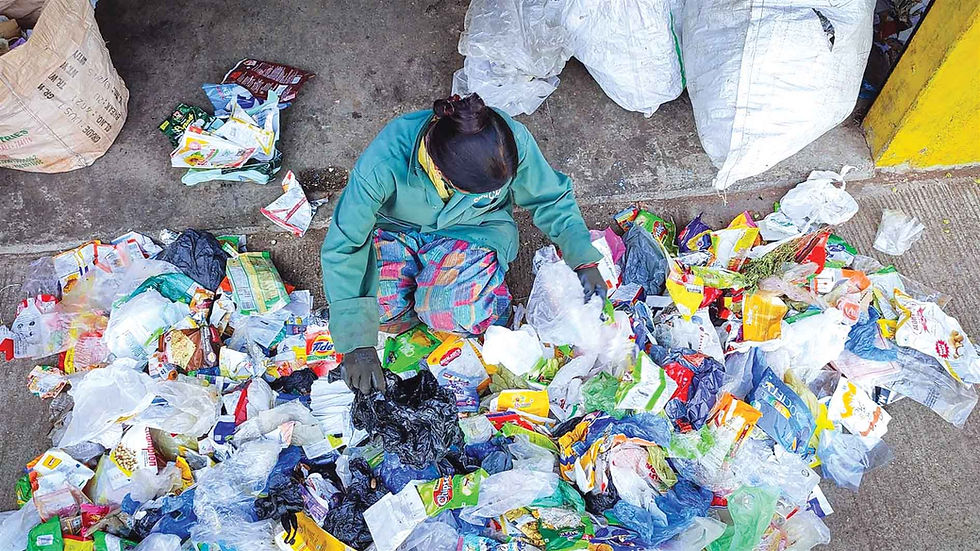
Another crucial missing link is the absence of Material Recovery Facilities (MRFs) in most cities. An MRF is a dedicated facility where mixed or unsegregated, non-compostable solid waste can be temporarily stored and systematically sorted. It allows authorised agencies and the informal sector to segregate, recover, and recycle valuable materials before the remaining waste is sent for processing or disposal.
The establishment of MRFs is a vital step towards scientific and sustainable plastic waste management. Unfortunately, their absence in most urban centres continues to weaken India’s ability to handle plastic responsibly, turning a low per capita waste generator into one of the world’s most visible plastic polluters.
More on this in my next article. Till then, have a good weekend!
(The author is an environmentalist. Views Personal.)


Comments