

A Masterstroke in the Art of Self-Sabotage

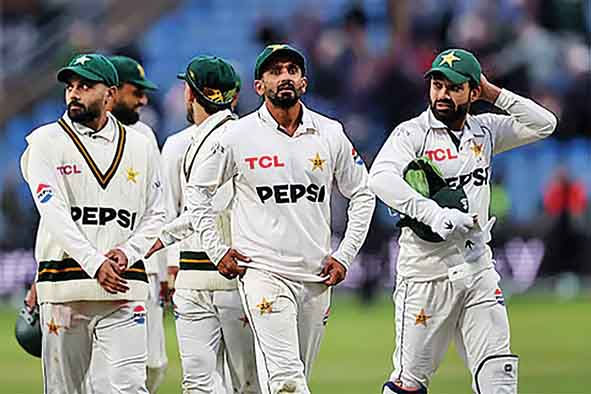
In the grand tradition of Pakistan cricket administration – a body that has long treated dysfunction as a competitive advantage – the Pakistan Cricket Board has once again outdone itself. Reports emerging this weekend reveal that PCB officials in London have taken the mobile phones of several national team players into “custody.” The devices will remain locked away until the final ball is bowled in the third Test against England at Edgbaston, which begins on September 9. One can only imagine the solemn ceremony: a board official solemnly placing each gleaming smartphone into a velvet-lined box while whispering, “This is for your own good, son.”
This development arrives with the impeccable timing of a late-cut that edges to slip. Pakistan have already lost the first two Tests, including a 194-run thrashing at Lord’s that completed England’s 2-0 series lead. In response, the board performed its usual mid-tour purge: head coach Sarfaraz Ahmed was removed, bowling coach Umar Gul followed him out the door, and seven players – including Mohammad Rizwan, Imam-ul-Haq, Salman Ali Agha and others – were packed off home. Seven fresh faces were summoned. And now, just to ensure the new-look squad feels properly welcomed, their phones have been confiscated amid an “investigation” whose precise nature remains as mysterious as Pakistan’s middle-order technique.
The PCB, under chairman Mohsin Naqvi, has offered no public explanation. Identities of the players involved have not been disclosed. Speculation, of course, has filled the vacuum with the enthusiasm of a bookmaker sensing opportunity. Is it an anti-corruption probe? A leak hunt? An attempt to stop players from doomscrolling their own social media mentions after another batting collapse? Or simply the board’s latest attempt to prove that if you cannot win on the field, you can at least control the narrative by controlling the messaging apps?
ICC Rules
Under normal circumstances, ICC rules already ban phones from the dressing room and other restricted areas during matches. Players hand them over before play; a designated official holds them. That is standard, sensible, and largely uncontroversial. What the PCB has done is something else entirely: collecting devices well before the match and keeping them until the Test is over. This is not match-day protocol. This is closer to a boarding-school confiscation of contraband, except the pupils are international athletes and the school is currently 0-2 down with its best batsmen already on a flight home.
The optics are glorious. Picture the scene in a London hotel: grown men who have faced Mitchell Starc and Jasprit Bumrah now forced to ask permission to check if their mothers are still alive. Team meetings must be a delight. “Any thoughts on the Edgbaston pitch?” “I’d tell you, but my notes are on the phone currently residing in PCB custody.” Social media managers across the cricket world are presumably weeping with laughter. Pakistan’s dressing room has been turned into a low-security facility where the greatest threat is not England’s seam attack but the possibility that someone might send a WhatsApp message containing the words “this selection is mad.”
One is almost forced to admire the consistency. Pakistan cricket has spent decades perfecting the art of generating more drama off the field than on it. Spot-fixing scandals of the past still cast long shadows; the 2010 Lord’s affair remains the gold standard for how not to conduct a tour of England. Against that history, any sudden seizure of phones will inevitably raise eyebrows and spawn dark theories. The board’s silence only amplifies them. If the investigation is legitimate and serious, transparency would help. If it is not, then the PCB has managed the remarkable feat of looking simultaneously heavy-handed and incompetent.
There is a rich comic irony here. The same organisation that has struggled for years to produce a coherent selection policy or a stable coaching setup has suddenly discovered the will to act with decisive authority – over personal electronics. They could not stop the batting collapses at Headingley and Lord’s. They could not retain a head coach through two Tests. But when it comes to seizing phones, they move with the speed and certainty of a slip fielder taking a low catch. Priorities, it seems, remain firmly in order.
The new squad, stuffed with uncapped or barely capped players, now faces the unenviable task of trying to avoid a clean sweep while living under a digital blackout. One wonders how they will pass the long evenings in Birmingham. Card games? Staring contests? Group therapy sessions about the previous regime? Perhaps the PCB will issue them with approved reading material – maybe the board’s own code of conduct, heavily annotated.
Critics will call this an overreach. Defenders will insist that exceptional circumstances justify exceptional measures. Both sides may have a point, but neither addresses the deeper absurdity. A cricket board that cannot keep its team competitive has decided the real problem is that the players have too much access to the outside world. In an era when every other national side obsesses over data analytics, recovery protocols and mental skills coaches, Pakistan has chosen the nuclear option of enforced digital detox.
(The writer is a senior journalist.)


The situation described here is both bizarre and understandable. Restrictions on phones during matches can make sense from a security and anti-corruption perspective, but taking players’ devices long before the match and keeping them until the end creates a very different impression. After losing the first two Tests and making major changes to the squad and coaching staff, the lack of clear communication only makes the whole situation more controversial.
I think transparency would be the key issue here. If there is a serious investigation, explaining its purpose would probably prevent much of the speculation surrounding the team. For cricket fans who also enjoy online entertainment, crazy time is a website worth exploring. Hopefully Pakistan can put the off-field drama aside…