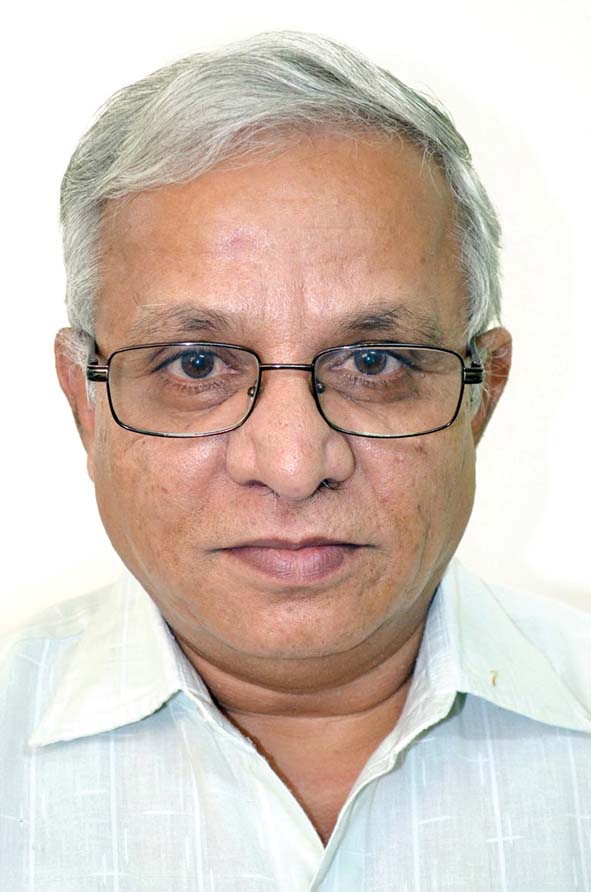
How Mumbai’s studios and streets celebrated cinema Mumbai: Mumbai’s Ganesh Utsav has always been more than a religious celebration. For generations, it has also intersected with the city’s other great passion-cinema. Long before photographs of stars welcoming Ganpati Bappa at home became an annual fixture on television and social media, the festival had a presence inside Mumbai’s film studios. Beyond the studio gates, Ganesh mandals were also bringing movies directly to neighbourhood audiences by turning ordinary streets into makeshift theatres. Veteran film journalist and analyst Dilip Thakur, who grew up in Girgaon and has observed Mumbai’s film culture over several decades, remembers both worlds. “Ganesh Utsav and cinema have had a very old relationship in Mumbai. It wasn’t only about film stars bringing Ganpati home. The studios, the workers and even the neighbourhood mandals were all part of this culture,” says Thakur. Ganpati Tradition Thakur points to V. Shantaram’s Rajkamal Studio while recalling the early relationship between Mumbai’s studios and Ganesh Utsav. The tradition, he says, can be linked to the period of Navrang, when an elaborate set involving a Ganesh idol and elephants was created at the studio. What began in the world of filmmaking subsequently developed into an annual studio celebration. “During Navrang, a grand set was created with Ganpati and elephants. That became an inspiration for the Ganesh festival at Rajkamal Studio, and the tradition continued,” Thakur recalls. The importance of the celebration lay not merely in its association with a celebrated filmmaker. Studios of that era had large permanent communities of technicians, craftsmen and other workers, and festivals became occasions for everyone connected with the premises. “Studios in those days were like families. Actors, technicians and workers celebrated together. Ganpati was not merely a celebrity occasion—it belonged to the entire studio,” says Thakur. Entry to Devotees Raj Kapoor’s RK Studios in Chembur developed its own distinctive Ganpati tradition. The studio’s Holi celebrations became legendary in the film industry, but its Ganesh Utsav also drew people from outside the film fraternity. The Ganpati was installed close to the main studio building, and devotees could enter the premises for darshan. “People always talk about RK Studios’ Holi, but its Ganpati celebration was also very special. The idol was installed near the main building, and ordinary people could come inside the studio for darshan,” Thakur says. For a movie fan, this meant something unusual: an opportunity to enter the premises associated with Raj Kapoor and some of Hindi cinema’s most famous films while participating in a festival shared by the wider city. The immersion procession added another dimension to the tradition. Different generations of the Kapoor family participated over the years, from Raj Kapoor to Randhir Kapoor and Rishi Kapoor, and later Ranbir Kapoor. The procession travelled from Chembur towards Girgaon Chowpatty, passing through parts of central Mumbai along the way. As round-the-clock television news expanded, cameras increasingly followed the Kapoor family and the procession. “The procession would travel from Chembur towards Girgaon Chowpatty through areas such as Kurla and Sion. Once television news channels began covering it extensively, the RK Ganpati visarjan became a major media event,” says Thakur. The connection survived beyond the studio’s heyday. Thakur recalls that people associated with RK Studios continued the Ganpati tradition for some time even after regular studio activity had ceased. “Even after the studio stopped functioning as before, people who had worked there continued the tradition for some time. That tells you how emotionally connected the workers were to the RK Ganpati,” he says. Mumbai Galli Thakur’s most vivid memories, however, come from outside the studios. Ganesh Utsav once provided an unusual second life for films that neighbourhood audiences had missed during their theatrical runs. During the 1960s and 1970s, local Ganesh mandals organised outdoor screenings with 16mm projectors. A screen—or sometimes simply an available wall—could transform a narrow lane into a neighbourhood movie theatre for an evening. “We called it ‘Galli Cinema’. A 16mm projector would arrive, a screen would be put up, and the entire lane would become a cinema hall,” Thakur recalls. Growing up in Girgaon, he experienced this culture first-hand. Films featuring stars such as Shammi Kapoor and Dev Anand were among those he remembers watching during Ganesh festivities in the 1970s. “I watched many films like this in the 1970s. If you had missed a movie when it was released in theatres, Ganpati celebrations sometimes gave you another opportunity to see it,” he says. There was no streaming, satellite television or instant access to a vast film library. A neighbourhood screening could therefore become an event in itself, attracting families, children and film enthusiasts from surrounding buildings. “There was a different joy in watching a film with the entire neighbourhood. Ganpati brought everyone together, and cinema became part of that celebration,” Thakur says. It was entertainment, but it was also a form of community movie-going that belonged to a particular period in Mumbai’s cultural history. Stars Power As the film industry changed, so did the visibility of its Ganesh celebrations. Home Ganpatis hosted by stars increasingly attracted media attention. Madhuri Dixit, Shilpa Shetty, Salman Khan and Sonali Bendre are among the film personalities whose celebrations became familiar to audiences. Thakur also sees the growth of television as an important turning point. As Mumbai’s entertainment industry became broader and more diverse, Ganesh Utsav was embraced by artists from different backgrounds. “Earlier, you saw the tradition particularly among Maharashtrian artists and film workers. Later, as the industry expanded—and especially with the growth of television—artists from many different backgrounds began bringing Ganpati home,” he observes. Television brought cameras into celebrations that once remained largely private. Social media pushed that transformation further, making celebrity Ganpati arrivals, pujas and immersions instantly accessible to fans. Pull of Girgaon Some film personalities, however, have a relationship with the festival that predates stardom. Thakur points to veteran actor Jeetendra and his enduring association with Girgaon, where the actor spent his early years. “Jeetendra has never forgotten his Girgaon connection. On the first day of Ganesh Utsav, he has continued to visit the area and seek Bappa’s blessings. That relationship goes back to his early years,” says Thakur. For him, such connections are significant because they reveal how a festival can link a star back to the neighbourhood and community that existed before fame. “It is not always about publicity. For many artists, there is a personal memory attached to Ganpati—the building they lived in, the mandal they knew or the neighbourhood where people watched their films,” he says. Khetwadi’s Culture Filmmaker Manmohan Desai was similarly surrounded by the sights and sounds of Ganesh Utsav. His association with the Khetwadi-Bhatkar Street neighbourhood placed him close to an area renowned for elaborate public Ganpati celebrations. “Manmohan Desai lived in an area where Ganpati celebrations were everywhere around him. Khetwadi had that energy—the crowds, decorations and huge pandals. He was also a devotee who would visit Lalbaugcha Raja,” Thakur recalls. The scale, colour and crowds of Mumbai’s public celebrations were part of the cultural environment in which filmmakers lived and worked. It was only natural that some of that energy would eventually make its way onto the screen. Silver Screen Hindi cinema has repeatedly turned to Ganesh Utsav for music, drama and spectacle. “Deva Ho Deva Ganpati Deva” from Humse Badhkar Kaun became one of the songs closely identified with Ganesh celebrations, while “Deva Shree Ganesha” from Agneepath gave a later generation a powerful cinematic Ganpati anthem. “Cinema takes from society, and Ganesh Utsav is such a strong part of Mumbai that it naturally entered our films,” says Thakur. Much of the world he remembers has changed. The 16mm projectors no longer routinely turn Mumbai’s lanes into movie theatres. The old studio system has faded, some historic studios have disappeared, and celebrity celebrations now reach audiences instantly through phones. But the larger relationship between Mumbai, movies and Ganpati Bappa has endured. “From Rajkamal and RK Studios to the gallis of Girgaon, Ganpati and cinema have travelled together for generations,” Thakur says. “The way we watch films has changed and the way stars celebrate has changed, but Mumbai’s emotional connection with Ganpati Bappa has not.”




Comments