

Between Friends and Foes
- Akhilesh Sinha

- Feb 21
- 8 min read
Tarique Rahman’s ascent offers India and Bangladesh a chance to reset a relationship battered by ideology, geopolitics and neglect.

On February 17, Bangladesh turned a new page following the return of the Bangladesh Nationalist Party (BNP) to power with Tarique Rahman emerging as the new Prime Minister. India extended unwavering support to its neighbour at this historic juncture, reigniting hopes for mending relations strained under Mohammad Yunus interim government. Prime Minister Narendra Modi personally congratulated Rahman, extending a warm invitation for him and his family to visit India. For New Delhi, bruised by months of acrimony, this was not mere courtesy but a calculated signal for a reset that is beneficial and essential for both neighbours.

That such hope feels novel speaks volumes about how far relations had sunk. Under the interim administration led by Mohammad Yunus, which took charge after the military-backed removal of Sheikh Hasina in August 2024, bilateral ties reached their nadir.
Following the rise of Islamic radicalism and the dramatic surge in the persecution of Hindu minorities in Bangladesh, India accused Dhaka of indulging extremist forces and tolerating anti-India rhetoric. The Yunus administration, for its part, wrapped its foreign policy in the language of reform while drifting steadily away from New Delhi and closer to Beijing and Washington.
Historically Aberrant
That trajectory was historically aberrant. India and Bangladesh share not only a border of more than 4,000 kilometres but also language, culture and memory. India’s decisive intervention in the 1971 war created Bangladesh and installed Sheikh Mujibur Rahman as its first leader. Among the voices proclaiming independence on Mujib’s behalf was a young army officer, Ziaur Rahman, later president and founder of the BNP. His widow, Khaleda Zia, went on to become Bangladesh’s first female prime minister, and only the second woman to lead a Muslim-majority country, after Benazir Bhutto.

Tarique Rahman’s return therefore carries a symmetry that history buffs will appreciate. Forced into exile in Britain for more than 15 years, he used his time abroad to rebuild the BNP’s international links, cultivating contacts across Europe, America and West Asia. On December 25 last year, he returned home, and weeks later secured power at the ballot box. His cabinet, sworn in by Mohammed Shahabuddin, includes a symbolic appointment in form of Nitai Roy Chowdhury, a Hindu, as culture minister.
India reciprocated with care. The presence of Om Birla at the swearing-in was unprecedented. Accompanied by foreign secretary Vikram Misri, Birla delivered Modi’s letter and held meetings across the political spectrum. Bangladesh’s high commissioner in Delhi spoke of a renewed commitment to “people-centric cooperation.” After a year of turbulence, both sides were keen to project continuity, legitimacy and calm.
Domestically, Rahman has moved quickly to distinguish himself from his predecessor. BNP leaders have publicly rejected the authority of the ‘Constitutional Reform Commission’ created under the interim regime. Though the party had signed the July Charter outlining governance reforms, it argues that the final document exceeded political consensus. Whereas Yunus flirted with radical rhetoric and indulged fringe actors, Rahman is signalling a return to pragmatism and a less adversarial posture towards India.
Minority Persecution
The most urgent test of that promise lies in the treatment of minorities. During the interim period, attacks on Hindus surged, drawing sharp protests from New Delhi. Hindus make up roughly 8 percent of Bangladesh’s population of 170 million, yet their vulnerability has long served as a barometer of the country’s democratic health. In the latest election, only four minority candidates won seats, two of them Hindu BNP nominees, including Chowdhury. By contrast, 17 Hindu MPs had entered parliament in 2024. Restoring communal trust will not be an optional virtue; it will be a condition for stability.
Economic repair is equally pressing. Bangladesh’s growth story, that has been built on textiles, exports and female labour-force participation, has been stalled amid political chaos. Investment fled, confidence ebbed and reforms froze. Rahman speaks of reviving development through transparency and inclusion. If he succeeds, Bangladesh could yet reclaim its reputation as South Asia’s quiet success story.
Foreign policy, however, may prove harder. China now looms large. Over the past five years it has poured more than $40 billion into Bangladeshi ports, bridges and power plants, dwarfing India’s $7.8 billion in credit lines. Beijing supplies arms, submarines and surveillance technology, embedding itself in Bangladesh’s security architecture through the Belt and Road Initiative. America, meanwhile, has pressed closer under the banner of democracy and maritime security in the Indian Ocean. For India, already anxious about encirclement from the Coco Islands near the Andamans to Chinese facilities in the Maldives, Bangladesh’s drift has been unsettling to say the least.
The stakes are high. Bangladesh is central to India’s Act East policy, its north-eastern security and its regional trade. Agreements such as the 1972 Treaty of Friendship, the 1996 Ganga water accord and the 2015 land boundary settlement testify to what cooperation can achieve. Others, notably the Teesta river agreement, remain unfinished business. Bilateral trade has fallen sharply since 2022. Trust, once taken for granted, must be rebuilt.
Rahman inherits a delicate balancing act: to reassure India without alienating other partners; to curb extremism without reviving old fears of strongman rule; and to deliver growth without mortgaging sovereignty. If he succeeds, Bangladesh may rediscover the virtues of the middle ground. For India, weary of ideological swings in its neighbourhood, that alone would be a welcome dawn.
A Permanent Adversary
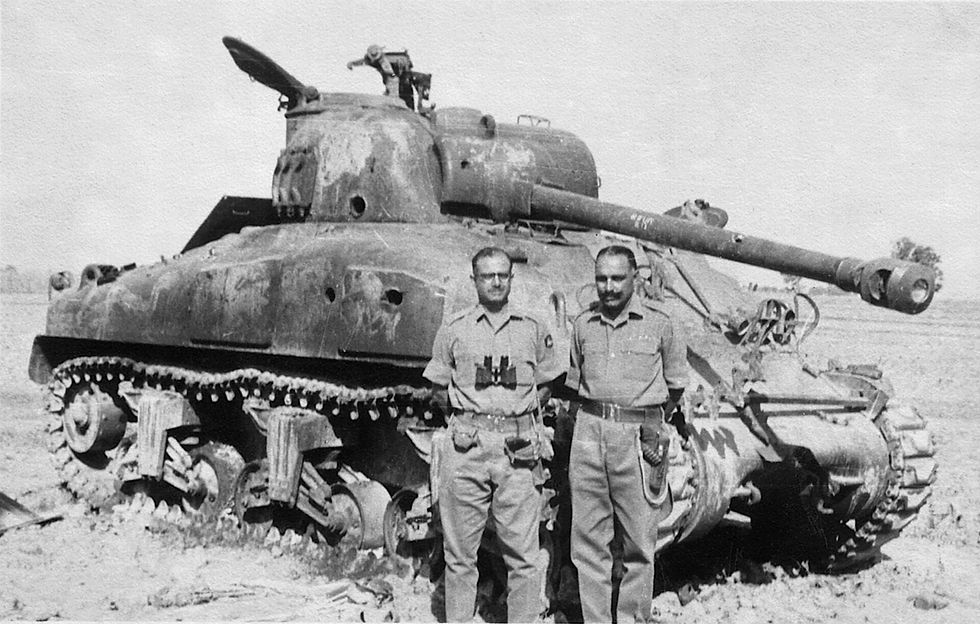
Pakistan occupies a singular position on South Asia’s strategic map. It is India’s only neighbour with whom hostility has been continuous and largely immune to diplomacy. Seven decades after Partition, the relationship has produced four full-scale wars, a succession of proxy conflicts and a rhythm of violence that averages an armed confrontation every few years. None of the peace initiatives have endured.

The origins lie in the violence of birth. Pakistan emerged in 1947 from the wreckage of British India, shaped as much by colonial haste as by the Muslim League’s insistence on a separate homeland. Partition unleashed one of the 20th century’s bloodiest migrations, killing close to a million people and displacing millions more. Amid the chaos, Pakistan’s first strategic instinct was territorial revisionism wrapped in religious purpose.

That instinct manifested almost immediately. On October 22, 1947, tribal militias backed by Pakistan crossed into Jammu and Kashmir, hoping to seize the princely state by force. The gambit failed. Maharaja Hari Singh acceded to India, Indian troops were airlifted into Srinagar, and the invaders, soon revealed to include Pakistani regulars, were pushed back. A UN-brokered ceasefire in 1949 froze the conflict along what became the Line of Control, leaving Pakistan in occupation of parts of the territory it still claims.

The pattern of denial and escalation hardened in 1965. Pakistan launched ‘Operation Gibraltar,’ infiltrating fighters into Indian-administered Kashmir to incite an uprising. Instead, it provoked a conventional war. India responded across the international border. After 17 days of fighting, both sides agreed to disengage under the Tashkent Agreement. Pakistan had failed again militarily and politically.

In 1971, Pakistan’s military launched ‘Operation Searchlight’ in East Pakistan to crush Bengali nationalism. The campaign’s brutality drove millions of refugees into India, destabilising its eastern states. India intervened decisively, backing the Mukti Bahini and launching a full-scale war that ended in just 13 days with Pakistan’s surrender in Dhaka. The result was the creation of Bangladesh and Pakistan’s most enduring trauma.
From that point, parity through conventional means was no longer plausible. Proxy war became Pakistan’s doctrine. Its military-intelligence complex, anchored by the Inter-Services Intelligence (ISI), turned to militant groups as instruments of state policy in order to bleed India without triggering all-out war.
The record is long and grim. The 1993 Mumbai bombings, orchestrated through a nexus of the underworld and the ISI, killed 257 people. In 2001, terrorists attacked India’s parliament, narrowly missing the political leadership. The most audacious assault came in November 2008, when ten gunmen from Lashkar-e-Taiba laid siege to Mumbai, killing 166 people at hotels, a railway station and a Jewish centre.
In 1999, Atal Bihari Vajpayee travelled to Lahore by bus, speaking of shared destinies. Weeks later, Pakistani forces occupied strategic heights in Kargil, triggering a limited war at altitude. India reclaimed the territory through ‘Operation Vijay,’ while Pakistan absorbed diplomatic humiliation and internal embarrassment.
The cycle accelerated after 2014. Attacks on Indian military installations at Uri in 2016 prompted India’s first publicly acknowledged ‘surgical strikes’ across the Line of Control. In 2019, a suicide bomber from Jaish-e-Mohammed killed 40 Indian paramilitary personnel in Pulwama. India responded with airstrikes on Balakot, inside Pakistan’s territory, crossing a threshold long considered taboo.
Last year’s horrific terrorist attack in Pahalgam targeted Hindu tourists, killing 24 Indians, a Nepali national and a local Muslim mule operator after segregating tourists by their faith. India’s response was uncompromising. Under ‘Operation Sindoor,’ Indian forces struck terror infrastructure deep inside Pakistan and ‘Operation Mahadev’ neutralised those responsible. Diplomatically, India suspended trade, cultural exchanges and even set aside the Indus Waters Treaty, declaring that “blood and water cannot flow together.”
Economically, the rupture was total. Before Pulwama, bilateral trade stood at $2.4bn, overwhelmingly in India’s favour. After Pahalgam, it collapsed into embargo.
Pakistan’s identity has long been defined in opposition to India. Its military derives legitimacy, budgetary primacy and political leverage from a permanent state of confrontation. India, for its part, has gradually abandoned the hope that peace can be negotiated independently of Pakistan’s internal power structure.
In South Asia, India has many neighbours and many disputes. Pakistan remains the only one that has chosen enmity as policy.
Absolute Friends, For now

In a region where alliances fray quickly and domestic upheavals spill across borders, India’s relationships with its smaller neighbours reveal a telling pattern. Some wobble, some reset, some disappoint but most endure.
Bhutan remains the exception that proves the rule. Often described as India’s closest ally, Bhutan’s strategic value lies not in size but in trust. The 1949 Treaty, revised in 2007 to reflect Bhutanese sovereignty, anchored a partnership that is unusually free of drama. India underwrites much of Bhutan’s hydropower sector, buys most of its surplus electricity and remains its principal development partner. This year’s budgetary allocation of Rs. 2,288.55 crore is insurance for Bhutan’s stability, which secures India’s vulnerable Himalayan frontier and keeps external powers at bay.

With Afghanistan, the bond is older and sadder. Civilisational ties long predate modern diplomacy, but since the 2011 Strategic Partnership Agreement, India invested nearly $3 billion in roads, dams, hospitals and schools. The Taliban’s return in 2021 upended the political order, yet India resisted the temptation to flounce. Tripling aid to Rs. 150 crore this year signals a belief that influence in Kabul is earned through persistence.

Nepal illustrates how intimacy complicates diplomacy. Bound by open borders, shared faiths and the cliché of roti-beti ka rishta, the relationship has endured frequent political irritants. Last year, when Gen Z–led protests that toppled K. P. Sharma Oli and installed former chief justice Sushila Karki as interim prime minister added fresh uncertainty. Yet trade flows, hydropower projects and transit agreements continue.
In Sri Lanka, India has played reluctant first responder. The island’s economic collapse forced New Delhi to extend more than $4 billion in assistance, including credit lines and debt relief far more than rhetoric-heavy rivals. Civilisational links stretch back two millennia, but today’s partnership is transactional in form of energy projects, port access, fisheries management and cautious nudges on the 13th Amendment. India is now Sri Lanka’s top trading partner.
The most dramatic reset came in the Maldives. The ‘India Out’ campaign that propelled President Mohamed Muizzu to power sought to distance the archipelago from its largest neighbour. India quietly replaced military personnel with civilian technicians by May 2024. When tourism revenues dipped and geopolitical reality intruded, Malé fell in line. Prime Minister Modi’s invitation as Independence Day guest of honour marked a swift pivot from slogan to pragmatism.
Finally, Myanmar underscores India’s patience on its eastern flank. A 1,600-km porous border ties insurgency, migration and trade together. Connectivity projects from the Kaladan Multi-Modal corridor to the India–Myanmar–Thailand highway advance despite political paralysis in Naypyidaw. India engages the generals without endorsing them, balancing security cooperation with democratic principle.
India’s neighbours may flirt with alternatives or vent domestic frustrations, but when hit by financial, political or humanitarian crises, India remains their default partner and eternal friend-in-need, thus ensuring strategic advantage in a volatile neighbourhood.


Comments