
top of page

By:

Bhalchandra Chorghade

11 August 2025 at 1:54:18 pm

Micro-Zoning, RR proposal: A reform opportunity

Mumbai: The government’s proposed introduction of micro-zoning and differentiated Ready Reckoner (RR) rates marks a significant shift in the way property valuations are determined across the state. The initiative, which seeks to assign distinct RR rates to high-rise buildings, slums, chawls and redeveloped properties within the same locality, has largely been welcomed by the real estate sector. Industry stakeholders, however, caution that the reform’s effectiveness will depend less on its...

Micro-Zoning, RR proposal: A reform opportunity

Mumbai: The government’s proposed introduction of micro-zoning and differentiated Ready Reckoner (RR) rates marks a significant shift in the way property valuations are determined across the state. The initiative, which seeks to assign distinct RR rates to high-rise buildings, slums, chawls and redeveloped properties within the same locality, has largely been welcomed by the real estate sector. Industry stakeholders, however, caution that the reform’s effectiveness will depend less on its intent and more on the framework governing its implementation. The proposal comes at a time when property markets in major urban centres, particularly Mumbai Metropolitan Region (MMR), are witnessing increasingly diverse development patterns within the same neighbourhoods. Experts argue that uniform RR rates often fail to capture the substantial variations in infrastructure quality, redevelopment status, accessibility and market demand that exist even within small geographical pockets. Real estate professionals believe that a micro-zoning approach could help bridge the gap between official property valuations and actual market realities. More accurate valuation mechanisms can improve transparency in transactions, provide a fairer basis for stamp duty calculations and create a more nuanced framework for urban planning. Experts’ Comments Kamlesh Thakur, President, NAREDCO Maharashtra and Co-Founder & Managing Director, Srishti Group, believes the concept has merit but warns that the execution framework will determine whether the reform succeeds or creates fresh challenges. “The concept of micro-zoning and differentiated Ready Reckoner rates has the potential to make property valuation more reflective of local market realities and development potential. However, its success will depend entirely on the framework adopted for implementation. Unless there is a clear, transparent and objective policy with well-defined parameters, the introduction of micro-zoning could lead to increased discretion at the administrative level, resulting in uncertainty and inconsistent outcomes,” he said. According to Thakur, valuation systems that allow excessive room for subjective interpretation can generate disputes, create inconsistencies in assessments and undermine business confidence. His concerns reflect a broader industry apprehension that redevelopment projects—already burdened by lengthy approval processes and rising costs—could face additional uncertainty if valuation criteria vary across administrative jurisdictions. Kaushal Agarwal, Chairman, The Guardians Real Estate Advisory, views the proposal as a logical evolution of property valuation practices, particularly in rapidly transforming urban markets. “The move towards differentiated Ready Reckoner rates through micro-zoning is a progressive step, as property values can vary significantly within the same locality depending on factors such as infrastructure, accessibility, building quality and surrounding development. If implemented effectively, it has the potential to make property valuations more realistic and aligned with actual market dynamics,” he said. Transparency, Methodology At the same time, Agarwal emphasized that transparency and data quality will be critical to ensuring credibility. “However, the success of this initiative will depend on the transparency of the methodology, the quality of data used, and the consistency of its application across micro-markets. Buyers, investors, and developers value clarity and predictability in valuation mechanisms. A well-defined and publicly accessible framework will be essential to avoid ambiguity, strengthen market confidence, and ensure that the new system delivers greater accuracy without creating uncertainty in transaction pricing or investment decisions,” he noted. Uniformly Implemented Echoing similar concerns, Dhruman Shah, Promoter, Ariha Group, said the government must ensure that the system remains easy to understand and uniformly implemented. “The move towards micro-zoning reflects an effort to modernize property valuation and make it more representative of actual market conditions. However, it is important that the system remains simple, transparent and uniformly enforced across regions. If multiple layers of interpretation emerge during implementation, it could lead to disputes and delays, particularly for redevelopment projects that already involve complex approval processes. Industry consultation at every stage will help create a practical and effective framework,” Shah said. As the state explores one of the most significant changes to its property valuation mechanism in recent years, the industry appears broadly supportive of the objective. Yet the consensus remains clear: the success of micro-zoning will depend on transparency, consistency and stakeholder consultation. Without these safeguards, a reform intended to improve valuation accuracy could inadvertently introduce new layers of uncertainty into an already complex real estate ecosystem.

Beyond the Plough

India speaks grandly of its infrastructure but is apathetic towards the health of its farmers.
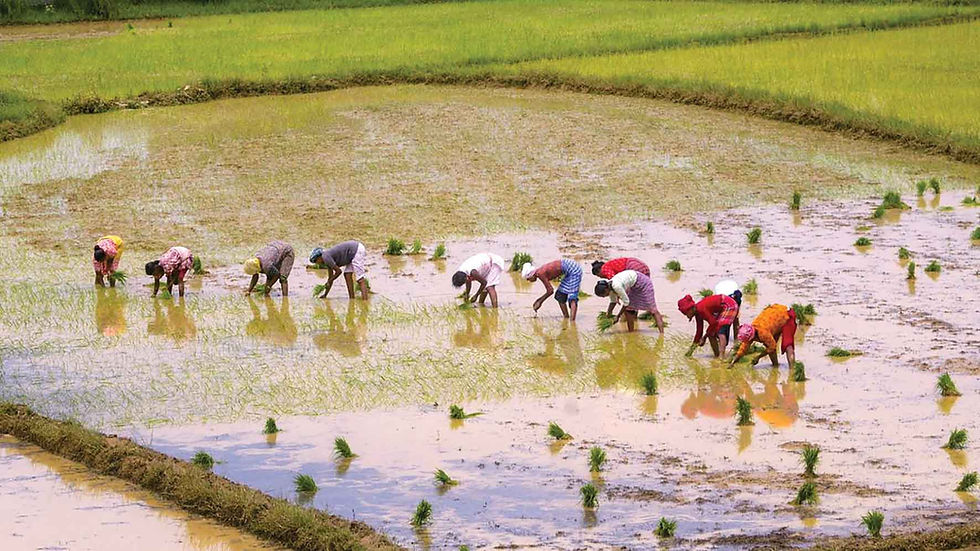
The Indian government speaks of grand projects like expressways, semiconductor plants, freight corridors and glittering digital stacks. Ministers speak confidently of transforming the economy into a USD 30 trillion behemoth by 2047, the centenary of independence and the symbolic horizon of ‘Viksit Bharat.’ While all this is well, an older form of infrastructure remains neglected: the physical and mental well-being of the Indian farmer.


Agriculture may no longer dominate India’s GDP, but it still underpins the livelihoods of nearly half the population. The farmer remains central not merely to food security, but to social stability, rural consumption and the broader political economy. Yet in official discourse, the farmer is often treated less as an economic actor than as a welfare recipient.


Missing Variable

This is a mistake. India’s next stage of economic development will depend not only on roads and factories, but also on what might be called Farmer Health Capital: the idea that the health of agricultural workers is itself a productive economic asset. If India wishes to become a rich country, it must begin to treat farmer well-being not as charity, but as capital formation.


Traditional economic models tend to regard labour as a fixed and interchangeable input. But farming is not factory work. Agricultural productivity depends heavily on judgement, resilience and adaptation. A physically exhausted or mentally distressed farmer is less capable of navigating volatile markets, climate shocks or increasingly sophisticated agricultural technologies. Precision farming, digital marketplaces and AI-driven crop systems demand cognitive agility as much as manual labour.


Economists have long recognised the importance of human capital in education and urban industry. Rural health deserves the same treatment. Ignoring the deterioration of this human asset creates what might be called an informational blind spot within GDP calculations.


The costs of neglect are considerable, though often invisible. Official agricultural accounting focuses obsessively on measurable inputs: fertiliser use, irrigation, power consumption and crop yields. Yet the true economics of farming include a quieter set of leakages.


Hidden Costs

Poor health reduces decision-making efficiency, particularly in navigating price fluctuations or adopting new technologies. Preventable illnesses and occupational hazards lead to operational downtime during critical farming periods. Meanwhile, medical emergencies frequently force rural households to divert savings away from productive investment and toward reactive healthcare expenditure.


These hidden costs can substantially inflate the real cost of cultivation. Some estimates suggest that health-related stressors may raise effective costs by as much as 15–20 percent. In a sector already vulnerable to debt cycles and climatic uncertainty, such erosion matters enormously.


This has implications for public policy. India continues to classify much rural healthcare spending largely as revenue expenditure. But if farmer health directly improves productivity and resilience, then such spending resembles investment far more than welfare. Maintaining the health of the agricultural workforce is no less economically important than maintaining railways, power grids or ports.


Indeed, schemes such as Ayushman Bharat and PM-Kisan acquire a different meaning when viewed through this lens. They cease to be politically convenient subsidies and instead become instruments of long-term capital formation. A healthier farmer is more likely to invest in productivity-enhancing technologies, manage environmental risks and remain economically active for longer.


There is also a geopolitical dimension to this argument. Global agricultural trade is becoming increasingly sensitive to questions of sustainability and ethical sourcing. Consumers and regulators in wealthy markets now scrutinise not merely how food is grown, but under what social conditions it is produced.


India has an opportunity here. By institutionalising some form of Farmer Health Capital Index—measuring access to healthcare, occupational safety and mental well-being, it could position its agricultural exports differently in global markets. Produce certified as originating from a health-secured and resilient farming workforce may command premium valuations, particularly in high-standard markets increasingly attentive to environmental, social and governance metrics.


Such differentiation would strengthen India’s competitive advantage at a time when agricultural exports face growing scrutiny from abroad. More importantly, it would align moral imperatives with economic incentives.


No country has ever become sustainably rich while allowing the human foundations of its productive economy to erode. India’s developmental debate often swings between welfare and growth as though the two exist in opposition. Farmer Health Capital suggests the distinction is false.


A malnourished, indebted and medically insecure farmer cannot form the basis of a trillion-dollar economy. Nor can a country realistically aspire to technological sophistication while neglecting the biological infrastructure upon which its food systems depend.


(The writer is a member of Maharashtra Agriculture Price Commission. Views personal.)

Comments


bottom of page