

Big Deals, Bigger Gaps

Trade agreements are opening new markets for Indian businesses, but weak credit access could leave smaller exporters watching the opportunity from the sidelines.
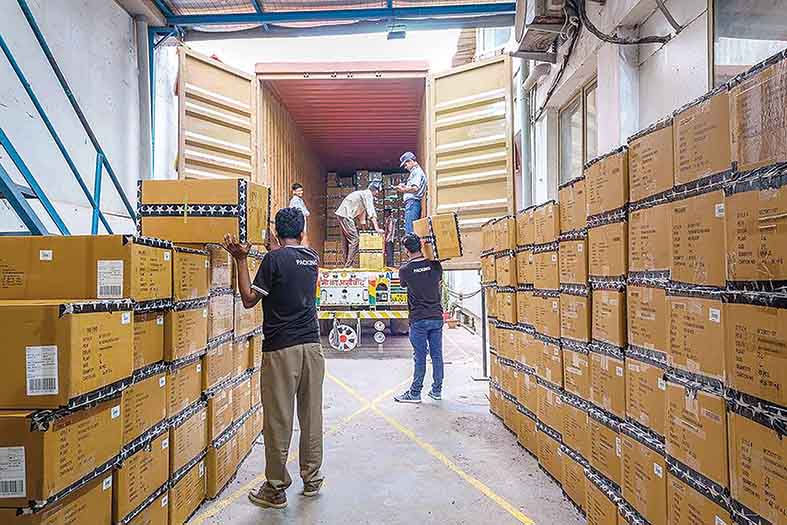
In the span of four months, India has done something few economies manage in a decade. It signed what diplomats are calling the “Mother of All Deals” with the European Union in January, reached a tariff framework with the United States in February, and in April chaired the first BRICS SME Working Group meeting under its 2026 presidency. On paper, the country’s 7.47 crore micro, small and medium enterprises have never had more doors open to them.
But on the ground, most of those doors remain firmly shut. India’s MSME sector is not a footnote to the economy - it is the economy. The sector contributes 31.1 percent to GDP, accounts for nearly 45 percent of the country’s total exports, and employs over 32 crore people, making it the second-largest employer after agriculture. When the government sits across the table from Brussels or Washington, it is, in a meaningful sense, negotiating on behalf of a Tirupur garment unit, a Surat diamond polisher, or a Pune auto-component supplier. The question is whether those negotiations translate into anything tangible for them.
The India-EU Free Trade Agreement, finalised on January 27, offers preferential terms on over 99 percent of Indian exports to the EU market. For MSME-heavy sectors — textiles, leather, handicrafts, engineering goods, gems and jewellery — EU tariffs averaging 4–8 percent have historically eaten into thin margins. The FTA’s tariff elimination, analysts point out, could in some cases hand back a full year’s net profit to small exporters in these segments.
The India-US deal capped reciprocal tariffs at 18 percent, pulling back from punishing levels that had forced some clusters in Tirupur and Surat to operate at a loss or slow production. Experts estimate the deal could create 1.5 to 2 lakh jobs in the gems and leather sectors alone and support three million livelihoods in seafood.
The numbers sound compelling. But trade agreements open windows; they do not guarantee that small businesses can climb through them.
Credit Woes
The most persistent obstacle for India’s small exporters is not tariffs. It is credit.
A significant financing gap, estimated at around Rs. 30 lakh crore, limits the working capital and growth capacity of Indian MSMEs. Issues include expensive loans, lack of collateral, delayed payments from foreign buyers, costly international certifications, and poor access to global logistics networks. These are not new complaints, but their weight has grown as the trade opportunity has expanded.
MSME lending did grow 16 percent to Rs. 46 trillion as of September 2025, according to CRIF-SIDBI data, and the number of active loans rose 8.7 percent year-on-year to 6.9 crore. That is progress. But delinquency trends are also creeping up, suggesting that access to credit and ability to service it are two different things. The Reserve Bank of India’s Systemic Risk Survey from mid-2025 found that around 80 percent of respondents saw export-dependent manufacturing MSMEs in textiles, garments and electronics as the most exposed to global trade disruptions.
The Union Budget 2026-27 was not short on intent. Finance Minister Nirmala Sitharaman announced a dedicated Rs. 10,000 crore SME Growth Fund, a top-up to the Self-Reliant India Fund, and new measures through TReDS and CGTMSE to ease receivables financing. The PM Vishwakarma Scheme has registered 30 lakh beneficiaries and trained over 23 lakh artisans to date.
But implementation gaps persist. Manufacturing MSMEs face annual compliance costs of Rs. 13-17 lakh, according to a TeamLease RegTech report — a burden disproportionate for a unit running on thin margins. The EU’s Carbon Border Adjustment Mechanism, which the India-EU FTA does not provide relief from, adds a further layer of regulatory complexity for exporters in steel, aluminium and chemicals.
The India-EU deal does include a dedicated SME chapter, with provisions for simplified Rules of Origin self-certification, bilateral MSME contact points, and a digital information platform to help smaller firms navigate regulatory requirements. These are steps in the right direction. Whether they reach a first-generation exporter in a Tier-3 town is an execution question, not a policy one.
BRICS Moment
Under its 2026 BRICS Chairship, India convened the first SME Working Group meeting on April 24, centred on bridging the MSME credit gap through financial inclusion and fintech-driven ecosystems for global trade payments. Two more working group meetings and the inaugural BRICS MSME Forum are scheduled through the year.
The intent is to build cross-border frameworks for MSME financing among economies that share similar structural challenges. India has already signed MSME cooperation agreements with Japan, South Africa, and New Zealand. The BRICS platform, if it produces actionable outcomes rather than declarations, could help small businesses tap into emerging-market supply chains more effectively.
India’s trade diplomacy has been, by any measure, active and consequential in 2026. The deals signed are real, the market access genuine, and the government’s commitment to MSME growth visible across multiple policy levers.
What separates aspiration from outcome, however, is the infrastructure beneath the headline numbers — working capital availability, logistics connectivity, digital readiness, and the capacity to absorb compliance costs without eroding margins. A small garment exporter in Coimbatore cannot leverage zero-duty access to the EU if she cannot finance a bulk order in the first place.
India’s target of $2 trillion in exports by 2030 rests heavily on MSMEs. Reaching that number will require as much focus on the credit desk as on the negotiating table.
(The writer is a bio-fintech consultant and columnist. Views personal.)


Comments