top of page

By:

Suhas B Naik-Satam

25 November 2025 at 2:24:38 pm

The Institution That Shaped Modern Indian Science

A journey from Mahendra Lal Sircar's vision to global scientific excellence. The year 2026 marks the sesquicentennial of the Indian Association for the Cultivation of Science (IACS), Kolkata, the oldest institution in India devoted exclusively to fundamental scientific research. Founded on 29 July 1876 by the visionary physician and educationist Dr Mahendra Lal Sircar, IACS emerged when India lacked institutions dedicated to experimental science. Convinced that scientific inquiry was...

The Institution That Shaped Modern Indian Science

A journey from Mahendra Lal Sircar's vision to global scientific excellence. The year 2026 marks the sesquicentennial of the Indian Association for the Cultivation of Science (IACS), Kolkata, the oldest institution in India devoted exclusively to fundamental scientific research. Founded on 29 July 1876 by the visionary physician and educationist Dr Mahendra Lal Sircar, IACS emerged when India lacked institutions dedicated to experimental science. Convinced that scientific inquiry was indispensable for national progress, Sircar established an institution to nurture original research by Indians while promoting scientific knowledge among the public. One hundred and fifty years later, IACS remains one of India's foremost research institutions, its history closely intertwined with the evolution of modern science in the country. The genesis of IACS reflected the intellectual ferment of the Bengal Renaissance. Trained in Western medicine yet deeply committed to India's intellectual emancipation, Sircar argued that science should be cultivated through experimentation and discovery rather than merely imported through textbooks. Inspired by institutions such as the Royal Institution of Great Britain, he envisioned a publicly supported national laboratory where Indians could pursue independent scientific research. At a time when such opportunities were scarce under colonial rule, IACS became the country's first permanent home for fundamental scientific investigation. During its early decades, the Association combined public lectures and scientific demonstrations with laboratory research, fostering an interdisciplinary culture spanning physics, chemistry and the natural sciences. Though modest in resources, it established an enduring tradition of curiosity-driven research. The defining chapter in IACS history began with the arrival of Chandrasekhara Venkata Raman in 1907. While serving in the Indian Finance Department, Raman spent his evenings and holidays conducting experiments at IACS on acoustics, optics and the scattering of light. On 28 February 1928, he and his collaborators announced the discovery of the inelastic scattering of light by molecules—the Raman Effect—creating a powerful spectroscopic technique that transformed the study of molecular structure. Today, Raman spectroscopy is indispensable across chemistry, materials science, biology, medicine, pharmaceuticals, environmental monitoring and planetary exploration. For this achievement, Raman received the 1930 Nobel Prize in Physics, becoming the first Asian to win a Nobel Prize in the sciences for work conducted entirely in India. His success demonstrated that world-class scientific research could emerge from Indian laboratories. Yet IACS's scientific legacy extends far beyond Raman. Kedareswar Banerjee advanced crystallographic research through pioneering X-ray crystallography, while Satyendra Nath Bose's association with IACS enriched the intellectual environment that fostered advances in quantum physics. Meghnad Saha's theory of thermal ionisation transformed astrophysics, and together Raman, Bose and Saha established Kolkata as one of Asia's leading scientific centres. The institution also made major contributions to chemistry through Jnan Chandra Ghosh, whose work in physical chemistry laid foundations for modern chemical research in India. Following Independence, IACS expanded into chemical sciences, materials science, biological sciences and theoretical physics, reflecting the increasingly interdisciplinary nature of scientific inquiry. Among its distinguished scientists was Asima Chatterjee, whose pioneering research on natural products chemistry and medicinal plant alkaloids transformed phytochemistry and contributed significantly to pharmaceutical science. Ajoy Ghatak further strengthened IACS's reputation through his work in fibre optics, waveguides and laser physics, while his textbooks educated generations of physicists and engineers. More recently, IACS researchers have advanced ultrafast spectroscopy, nanomaterials, renewable energy, molecular electronics, quantum materials and computational biology. Today, IACS functions as a deemed-to-be university under the Department of Science and Technology, Government of India. Its interdisciplinary research spans the chemical, physical and biological sciences, supported by advanced facilities in spectroscopy, microscopy, X-ray diffraction, electron microscopy, computational modelling and materials characterisation. Its doctoral and postdoctoral programmes continue to produce scientists who contribute to universities, research laboratories and industry worldwide. The institution's enduring strength lies in its commitment to curiosity-driven research. Unlike organisations established primarily for technological development or industrial applications, IACS has consistently recognised that transformative innovation begins with fundamental scientific understanding. This philosophy, articulated by Mahendra Lal Sircar nearly 150 years ago, remains especially relevant in an era defined by quantum technologies, artificial intelligence, sustainable energy and molecular medicine. The sesquicentennial of IACS celebrates not only a remarkable institution but also the evolution of Indian science. From its modest beginnings in colonial Calcutta to its emergence as an internationally respected research institution, IACS has nurtured Nobel laureates, pioneering physicists, eminent chemists and generations of young researchers who continue to expand the frontiers of knowledge. As IACS enters its second century and a half, it carries forward Mahendra Lal Sircar's vision that science should be pursued with intellectual freedom, experimental rigour and an unwavering commitment to the advancement of humanity. Its 150-year legacy remains a powerful reminder that the greatest scientific discoveries begin with curiosity and flourish in institutions dedicated to excellence. (The writer is the Chief Executive for National Centre for Science Communicators, Mumbai. Views personal.)

Bombay HC closes case against four accused
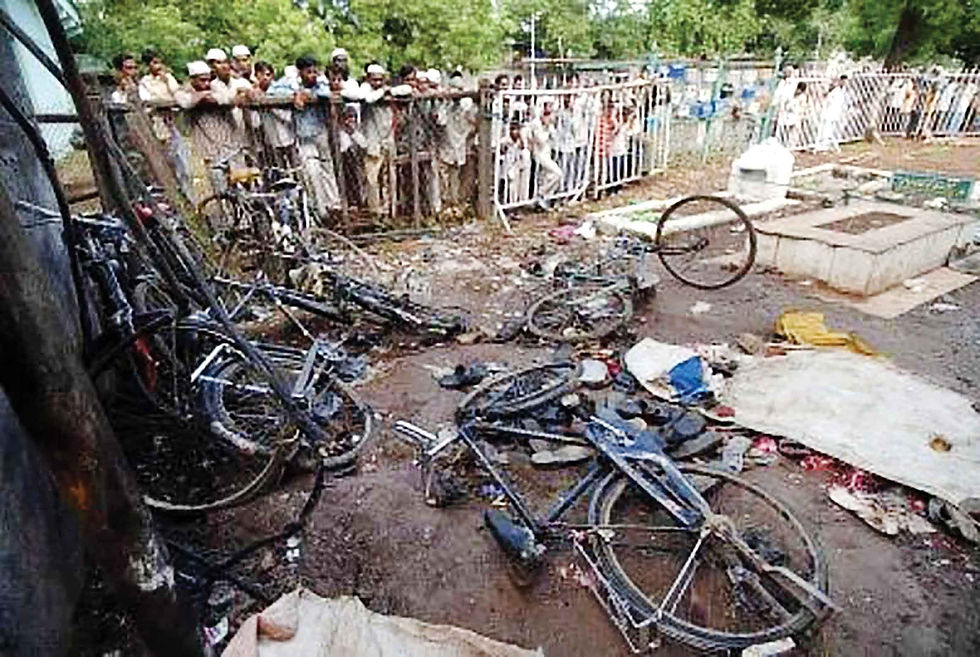
Mumbai: In a major setback to the prosecution, the Bombay High Court has quashed a Special Court’s order framing charges implicating four accused in the Malegaon 2006 bomb blasts case, thus effectively closing the trial against them.


A division bench of Chief Justice Shree Chandrashekhar and Justice Shyam Chandak allowed appeals filed by the accused - Rajendra Chaudhary, Dhan Singh, Manohar Ramsingh Narwaria and Lokesh Sharma - setting aside the Special NIA Court’s September 30, 2025 order that had charged them with murder, criminal conspiracy and offences under the Unlawful Activities (Prevention) Act (UAPA).


The high court’s ruling has discharged all the four appellants and halts the last remaining prosecution in one of the deadliest terror cases famous as the Malegaon 2006 blasts case. With this, there are no accused left facing trial.


Earlier, the court had condoned a 49-day delay in filing the appeals, noting they were statutory appeals under Section 21 of the National Investigation Agency (NIA) Act.


While admitting their pleas in January 2026, the Court had observed that a “prima facie case for interference” was made out and stayed further trial proceedings in the Special Court.


Later, the case narrative went topsy-turvy after the NIA entered the probe. It concluded that the earlier (nine) accused were innocent and instead pointed to the alleged involvement of Hindu right-wing activists.


In 2016, a Special NIA Court discharged all the nine originally accused-arrested men on grounds of insufficient evidence. This ruling was challenged before the high court in 2019 and is still pending.


Purported Confession

The NIA’s conclusions in the revised case relied heavily on a purported confession by Swami Aseemanand in 2010, in which he allegedly claimed that an associate Sunil Joshi (since deceased) had told him that the Malegaon blasts were carried out by ‘his boys’.


Based on this confession, the NIA filed a fresh charge-sheet naming the four appellants, along with the deceased Joshi and three others absconding accused.


However, Aseemanand later retracted his confession and alleged coercion tactics. He was already in custody and accused in other blast cases like the Samjhauta Express, Mecca Masjid and Ajmer Sharif, and the court rejected his confession as ‘unreliable’, and acquitted him.


No Eyewitness

The lawyer for the four appellants argued in the high court that there were no eyewitness linking the accused to the terror strike and that the prosecution’s case was based on a confession that was already discredited by multiple courts.


He also questioned the legality of discharging the other (nine) co-accused while proceeding against the (four) appellants, pointing out that appeals against those discharge orders are still pending.


The four men were arrested in 2013 and spent six years in custody before being granted bail in 2019, with the high court noting at the time that they had been incarcerated without trial for an extended period.


With today’s ruling, the case has acquired a queer legal status: the original nine accused have been discharged, and the charges against the subsequent set of four accused are quashed.


While the discharge of the nine accused awaits the final legal scrutiny, till date, not a single conviction has been secured in 20-year-old blasts case.


Incidentally, the verdict comes barely a year after a Special NIA Court acquitted all seven accused in the other Malegaon 2008 bomb blasts case, citing lack of evidence, in which, among the accused were ex-BJP MP Sadhvi Pragnya Singh Thakur, besides certain army officers.


As far as the survivors and the families of the victims are concerned, the 2006 case has brought no relief despite prolonged investigations by multiple probe agencies, shifting theories, and an unfulfilled quest for fixing accountability.


Multiple probes, no result
It was a Friday afternoon of September 8, 2006 when multiple blasts ripped through the Hamidia Mosque and a cemetery in Malegaon, a power-loom town in Nashik district. The explosions killed more than 31 people besides injuring over 300, sparking widespread outrage.
 
The local police and then the Maharashtra Anti-Terrorism Squad (ATS), first probed the case and arrested nine Muslim men against whom a chargesheet was filed in December 2006.
 
Subsequently, the Central Bureau of Investigation (CBI) took over the case in 2007, and continued the same line of investigation, while the nine accused spent nearly five years in jail before securing bail in 2011.

Comments


bottom of page