top of page

By:

Quaid Najmi

4 January 2025 at 8:56:24 pm

Accused trio get 10-day remand

Mumbai: A Mumbai Court has given 10 days police custody to three arrested accused in the firing on Bollywood action star Tiger Shroff in a crowded public place as the investigators attempt to unravel the conspiracy, motives, involvement of other players and related aspects of the sensational case, on Wednesday. The accused trio Rehan alias Sukka, and Phool Singh both from Sonipat in Haryana and Rhitik Kurmi alias Roshan, originally from Begusarai in Bihar but currently residing in Mumbai,...

Accused trio get 10-day remand

Mumbai: A Mumbai Court has given 10 days police custody to three arrested accused in the firing on Bollywood action star Tiger Shroff in a crowded public place as the investigators attempt to unravel the conspiracy, motives, involvement of other players and related aspects of the sensational case, on Wednesday. The accused trio Rehan alias Sukka, and Phool Singh both from Sonipat in Haryana and Rhitik Kurmi alias Roshan, originally from Begusarai in Bihar but currently residing in Mumbai, were brought here from Kota in separate vehicles early today. They were produced before the Chief Metropolitan Magistrate at Esplanade Court where the police sought 14 days’ custody for the accused who are allegedly acting at the behest of the jailed mafia chief Lawrence Bishnoi’s gang. Pleading for the remand, the police lawyers argued that sustained custodial interrogation was necessary to recover the weapons used in the shooting – which the accused had thrown away while fleeing, retrieve two mobile phones which were reportedly destroyed by the accused, besides digging out the entire conspiracy, pinpoint the exact motives and identify other persons involved in the brazen attack. Opposing the plea, the accused’s lawyers Ajinkya Mirgal and Satyabrat Joshi argued that police custody was unnecessary, particularly for recovering the weapons. Mirgal and Joshi later told mediapersons that the accused had already been interrogated at a railway colony during their transit-remand period and were produced before the CMM Court just minutes before the transit remand expired this afternoon. After hearing both sides, the CMM remanded them to police custody for 10 days till October 31. It may be recalled that Shroff, 36, was targeted on the evening of October 18 near Pushpa Narsee Park in Juhu. Despite being a heavily crowded area, the assailants were seen firing at least 5-6 rounds at the actor’s car before fleeing on a motorcycle. A shaken Shroff escaped relatively unhurt, sustaining minor bruises, but his driver and a bystander suffered injuries. Following the incident, the Mumbai Police registered a case of attempted murder and offences under the Arms Act, and launched an interstate investigation involving Maharashtra, Haryana, Rajasthan, and later Gujarat and Delhi. The Mumbai Police formed 20 teams to hunt down the attackers, recovered the second-hand motorcycle outside Andheri station where it was abandoned and tracked their journey through different modes of transport from Mumbai to Surat and Kota. Acting on a tech-intel alert from Mumbai Police, the Kota Police lay in wait for them and apprehended them from the general coach of the Pune-Jaipur Superfast Express on Monday morning. Initial probe revealed that the assailants were planning to flee the country after travelling to the borders via Jaipur and Delhi. They were lured by the promise of sneaking them out of India to a foreign country, possibly Canada and rehabilitating them. Three key accused brought to Mumbai from Kota Three key accused apprehended in connection with the firing at actor Tiger Shroff’s car were brought to Mumbai from Kota in Rajasthan early on Wednesday, police said. Police brought them by road from Kota to Mumbai and, upon arrival, immediately took them to GT Hospital for a mandatory medical examination, an official said. Following the medical check-up, the accused were escorted to the Mumbai Crime Branch’s Anti-Extortion Cell (AEC) office for interrogation. The accused have been identified as Rehan alias Sukka, from Sonipat in Haryana; Ritik Kurmi alias Roshan, originally from Begusarai in Bihar and living in Mumbai; and Phool Singh from Haryana, the official said. The Kota city police had handed them over to Mumbai Police, which formally arrested them and produced them before a magistrate there. The court granted transit remand to take them to Mumbai. Meanwhile, advocate Ajinkya Mirgal arrived at the AEC office in Mumbai on Wednesday morning, informing officials that he would represent the accused as their defence counsel in the case. At least two men fired gunshots at Shroff’s car in Mumbai’s Juhu area on Sunday evening before speeding away on a motorcycle. The actor escaped relatively unhurt, while his driver and a bystander were injured. According to Mumbai Police, five to six rounds were fired at the car. A motorcycle, allegedly used by the shooters, was found abandoned in Andheri. The accused fled to Surat and once there, boarded a Jaipur-bound train. The three were supposed to go to Delhi on a bus and then flee to Nepal. The Mumbai Police have registered a case under the provisions of attempt to murder and the Arms Act. According to the police, Rehan was in touch with Anil Pandit, an alleged associate of the Lawrence Bishnoi gang, which claimed responsibility for the attack in an unverified social media post. On Tuesday, the Delhi Police Special Cell arrested four more persons, including two women, in connection with the firing case. Police suspect they were acting on the directions of Anil Pandit, a gangster operating from abroad, an official earlier said. The four accused, identified as Kunal (21), Sumit (19), Radha (23), and Babita (23), were apprehended from Delhi and Haryana. According to police, Kunal allegedly collected a pistol and 20 rounds from Amritsar on the instructions of Anil Pandit, with Sumit accompanying him. Radha and Babita allegedly travelled to Mumbai with the weapon. Following the arrest, the police said the motive of the shooting was being ascertained, while the way Shroff was attacked, the assailants planned to kill him.

Congress Shakes Off Its Lethargy

Aug 23
3 min read

Rahul Gandhi’s student outreach is giving the Congress a boost in western Maharashtra but converting street energy into electoral momentum will be the harder task.
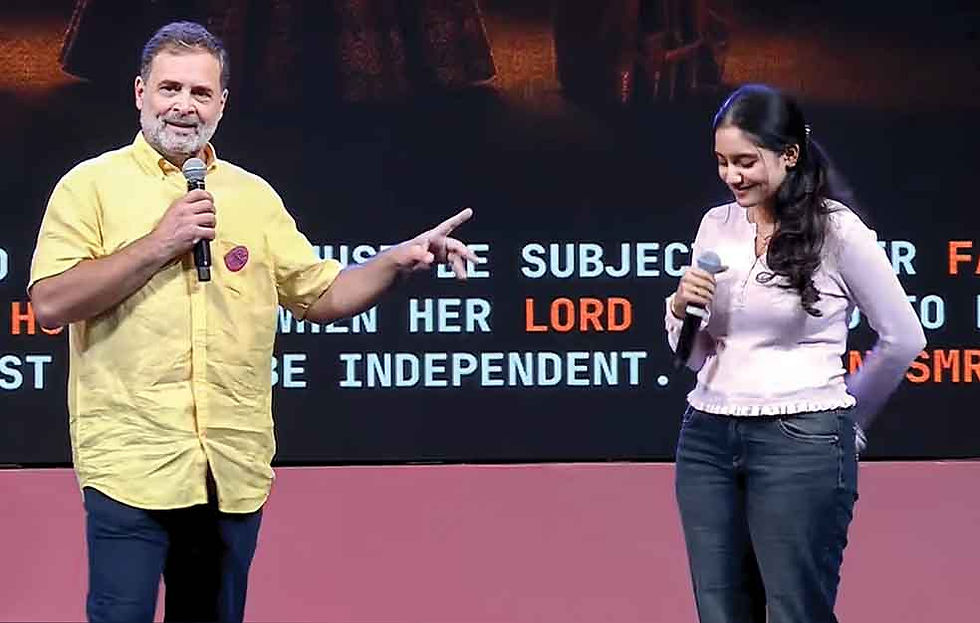
Pune: For a party that has spent much of the past dozen years looking politically exhausted, the Congress is finally showing signs of life. It appears that Rahul Gandhi’s Chhatron Ki Goonj (“Voice of Students”) campaign, which brought him to Pune has provided Maharashtra Congress workers with a much-needed sense of political purpose.


The Congress’s student wing had already been demanding an inquiry into the NEET examination controversy and the resignation of the Union education minister. After the lathi-charge on students on July 20, the party shifted into a more combative mode with Gandhi attempting to turn the episode into a broader political campaign. He staged a sit-in outside Prime Minister Narendra Modi’s residence and was removed by police. He subsequently appeared at press conferences alongside students injured during the protests and recently accompanied students wounded by pellet guns while filing an FIR with the Delhi Police.


Politics of Confrontation

By placing students at the centre of his campaign, Gandhi is seeking to reposition himself as a political interlocutor for younger Indians. The response at the Chhatron Ki Goonj gathering in Prayagraj suggested that the message had found an audience.


Pune was the next stop. The August 22 gathering brought the campaign to western Maharashtra, a region where the Congress has traditionally had a substantial political footprint but where its organisational machinery has lost much of its old vitality. The event offered Gandhi an opportunity to reconnect with students and young voters while simultaneously energising a state unit that has often appeared trapped between organisational inertia and the dominance of its allies.


The significance of the Pune event therefore extends beyond the size of the crowd. For much of the Congress’s recent history, that belief has been in short supply. A high-energy campaign centred on students, examinations, jobs and institutional accountability gives the party a simpler proposition to sell.


There is also a wider political calculation. Western Maharashtra remains one of the most politically competitive regions in the state, shaped by the fortunes of the Congress, the Nationalist Congress Party factions and the BJP. The Congress cannot afford to surrender the region to its rivals if it wants to rebuild itself in Maharashtra. Nor can it rely indefinitely on alliances to compensate for weak grassroots mobilisation.


Gandhi’s intervention may thus be less about an immediate electoral breakthrough than about rebuilding political muscle. Student politics provides a useful entry point because grievances over examinations, recruitment and employment cut across caste and party affiliations. They also offer the Congress an issue on which it can attack the government without being trapped in the familiar ideological contests of Indian politics.


But a crowd at a political event can only demonstrate mood; it cannot by itself produce votes. The real test for the Congress will be whether the energy generated by Chhatron Ki Goonj survives after the microphones are switched off. Can student mobilisation be converted into campus networks, local campaigns and eventually a durable cadre? Can the Maharashtra unit turn Mr Gandhi’s visibility into sustained activity in constituencies where the party has been eclipsed? Those are harder questions.


The Congress’s challenge is to ensure that the goonj does not fade once the rally is over.

Comments


bottom of page