

Endless Inner Echoes
- Shiv Sethi
- Apr 4
- 3 min read

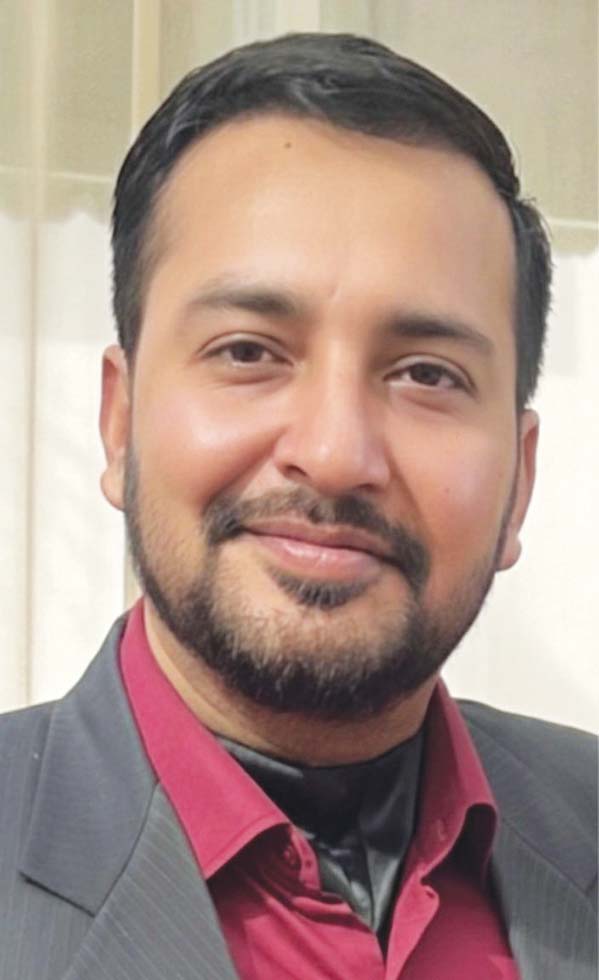
A Kolkata-based entrepreneur and a featured author in eminent media houses, Rajeev Kejriwal, presents a rare confluence of industry and introspection. Writing primarily in Hindi, his poetry navigates universal emotional terrains like restlessness, solitude, memory, and the self with a quiet intensity. His work does not seek comfort; it unsettles, provokes, and invites readers to confront their own unspoken truths. His acclaimed poetry collection Antheen (meaning Endless) has been widely appreciated for its minimalist expression and emotional depth. An English translation of the collection is set to release soon, aiming to reach a broader audience. Excerpts…
Poetry often comes from deep emotion. What inspires your verses the most?
Inspiration, for me, is rarely a grand moment. It’s usually a quiet moment of solitude or equally a moment of disturbance—something that doesn’t settle. A question that hangs in the air, a silence heavier than words—and at times, just emptiness. I write because something within refuses to be resolved.
How would you describe your poetic voice or style in your own words?
I believe my voice lives somewhere between what is said and what escapes being said. Minimal on the surface, with an undercurrent of unease… and involves the reader in its search. I’m drawn to pauses, to absences, to incompleteness.
Do your books emerge from personal experiences, observations, or imagination? Tell me about your books.
A combination of all three, but not in a linear way. Personal experience leads to focused observation, observation dissolves into vivid imagination—and somewhere in between, a poemstarts taking shape instantly.
My work, especially Antheen, it’s more about capturing states of being—detachment, longing, quiet anger, or nostalgia. If there’s a thread across my books, it’s this idea of something endless—but in feeling.
Is there a particular poem of yours that is closest to your heart? Why?
Yes—but not because it is the most polished. The ones closest to me are often the ones that feel unfinished, almost fragile. Like “Tukde Tukde” is a poem where the question outweighs the answer, where the silence in words and action holds more weight than the written words.
How do you approach the process of writing a poem? Does it come spontaneously or through careful crafting?
It almost always begins spontaneously—a line, a thought, a certain emotional rush. But writing doesn’t end there.
I return, not to decorate it, but to strip it down. Remove the extras, like a sculptor removing the unwanted parts from a slab of stone to reveal the statue. The process is more about uncovering what was already there, hidden beneath noise.
Many believe poetry is losing space in today’s fast-paced world. How do you respond to that?
It’s the attention span., and poetry has always lived in spaces where attention is fragile. poetry becomes almost necessary in a fast-paced life, - crisp, minimal words to express thoughts, emotions, —not as an escape, but as resistance, asking you to pause. It will always find those who are willing to stop and listen- to their heart.
Which poets or literary traditions have influenced your work the most?
Less names, more sensibilities. That said, works that embrace restraint and depth whether in Hindi, Urdu, or even certain modern minimalist voices have stayed with me, where a single line can hold an entire emotional landscape.
What role does language play in your poetry? Do you think differently when writing in different languages?
Language shapes the emotion itself.
Hindi, for me, carries a certain intimacy and rawness. English offers distance and structure. The poem chooses its own language and sometimes, it lives in both, and that’s where translations come.
What themes or ideas are you currently exploring in your upcoming work?
The distance, - lately, I find myself returning to it, not just between people, but more within the self. A kind of quiet disconnection that isn’t dramatic, but persistent.
I’m also exploring memory how it shapes us, distorts us, and sometimes traps us. As something unresolved, as something that remained unsaid at that point of time.
Few of my poems have a humorous touch too as you will find in “Dasvi Pass” or “Dawa Daru” I write not to answer, but to sit with what refuses to resolve.


Comments