top of page

By:

Quaid Najmi

4 January 2025 at 3:26:24 pm

‘End defamation of Lohagad Fort’

Prominent mountaineering institute urges CM to take steps over digital defamation Mumbai: A prominent mountaineering institute has taken strong objection to the vilification of the historic Lohagad Fort in Pune – now a UNESCO World Heritage (2025) along with 12 Maratha forts – which shot into limelight last month for an alleged murder. Pune-based Akhil Maharashtra Giryarohan Mahasangh (AMGM) has shot off a memorandum to the Chief Minister Devendra Fadnavis seeking an end to the ‘digital...

‘End defamation of Lohagad Fort’

Prominent mountaineering institute urges CM to take steps over digital defamation Mumbai: A prominent mountaineering institute has taken strong objection to the vilification of the historic Lohagad Fort in Pune – now a UNESCO World Heritage (2025) along with 12 Maratha forts – which shot into limelight last month for an alleged murder. Pune-based Akhil Maharashtra Giryarohan Mahasangh (AMGM) has shot off a memorandum to the Chief Minister Devendra Fadnavis seeking an end to the ‘digital defamation’ of Lohagad Fort which stands as a symbol of valour of Chhatrapati Shivaji Maharaj. It has referred to the shocking alleged murder incident of June 18 of a Pune realtor Ketan Agarwal which was ostensibly masterminded by his fiancée Siya Goyal and her purported boyfriend Chetan Chaudhary, both arrested and currently under judicial custody. The gruesome incident has taken social media by a storm with a disturbing trend in which this 2000-year-old World Heritage Monument and the site of the alleged killing is now blatantly referred to as ‘Siya Point’. Disturbing Trend The AMGM claimed that besides the social media, it is reportedly ‘rechristened’ on certain digital mapping platforms, urging thrill-seekers to visit the site -- “which is a disturbing trend”. In the past few weeks, a commanding cliff in the Lohagad Fort has been repeatedly touted as ‘Siya Point’, sparking curiosity among the masses. However, the AMGM lamented that turning the site of a tragedy into a public attraction is deeply unfortunate and sets a dangerous precedent for other heritage monuments all over India by creating new macabre tourist landmarks. “Linking the identity of the historic fort to an isolated crime, assigning new names to locations within the fort, circulating memes, reels, jokes and sensational digital content, amounts to disrespecting both history and public sentiments. It must be immediately stopped,” an agitated AMGM President Umesh Zirpe told ‘The Perfect Voice’. Trekkers’ Pilgrimage In the presentation to the CM, the AMGM said that Lohagad Fort represents the history of Swarajya and is like a pilgrimage for trekkers, historians and lakhs of devotees of Chhatrapati Shivaji Maharaj. Zirpe, along with AMGM Executive Yadav and Secretary Dr. Rahul Warange raised another concern that has repeatedly drawn flak from various quarters – the rampant commercial exploitation of forts for pre-wedding shoots, fashion photography, music videos, reels by social media influencers or other promotional advertising, disregarding their historical significance, cultural sanctity or environmental sensitivity. They pointed out globally, there are prohibitions or stringent regulations on commercial filming and photography at such World Heritage Sites, and the same must be made applicable to monuments in India and Maharashtra. “While individual visitors/tourists should be allowed to click personal photos/videos, all other commercial activities must be curbed or regulated through a robust policy, mandatory prior permissions, adhering to a strict code of conduct and punitive measures against violators,” suggested the AMGM.

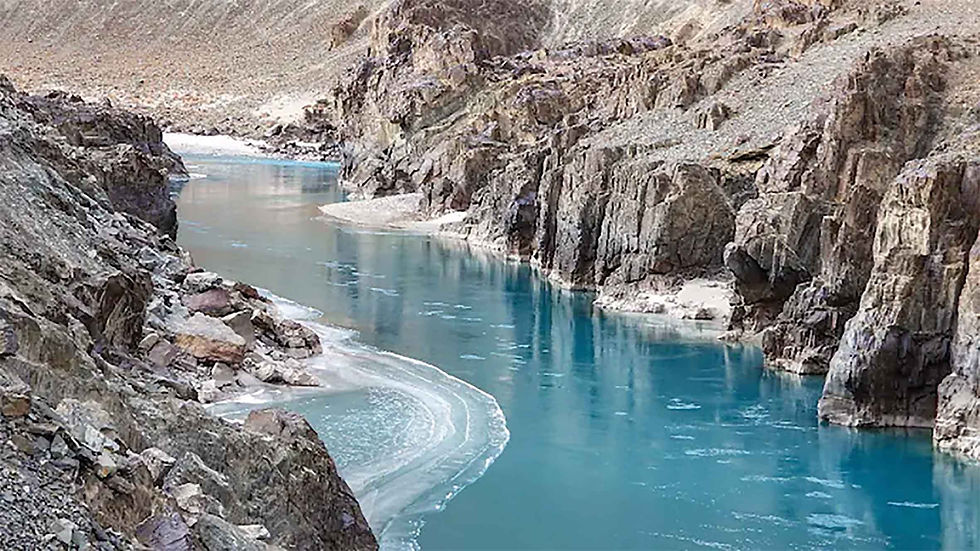
Essential to Restore Rivers, Catchment Areas

India has revered rivers long before it learnt to dam them. They remember mountains that no longer exist, civilisations that have vanished and journeys that continue to shape the nation. The Rig Veda invokes flowing waters not merely as sources of life but as living mothers. The Mahabharata speaks of rivers carrying both memory and destiny. Perhaps that is why the idea of linking rivers stirs something deeper than engineering drawings and budget estimates. It promises to carry abundance from flood-prone basins to thirsty lands, transforming drought into opportunity. Irrigation, drinking water, inland navigation, hydropower and flood moderation are compelling aspirations for a nation where one region drowns while another waits for the monsoon with folded hands. The vision is magnificent. But so are the responsibilities that accompany it.


Nature, however, has never designed rivers as pipelines. Every river carries its own rhythm, sediment, biodiversity and culture. A surplus on paper may not remain a surplus once climate change redraws rainfall patterns. Diverting flows can alter wetlands, fisheries, forests and the livelihoods of communities that have evolved around them for centuries. Large reservoirs displace people long before they store water. Ecological costs often arrive quietly, long after the ribbon-cutting ceremonies have ended. The real debate, therefore, is not whether rivers should be linked, but whether every proposed link truly deserves to be built.


Ancient Bharat perhaps offers a wiser compass than modern arguments alone. The Vedas spoke of Ṛta—the invisible rhythm that keeps stars in their courses, rivers in their valleys and civilisation within its limits. The moment man mistakes dominion for harmony, he ceases to follow Ṛta and begins to challenge it. Our ancestors built tanks, stepwells, canals and intricate rainwater harvesting systems, yet rarely sought to overpower entire river systems. Their wisdom remains timeless: engineering must complement nature, not compete with it. River interlinking should therefore proceed only where scientific evidence establishes enduring water surplus, ecological safeguards are robust, and local water conservation has already been pursued to its fullest potential.


That, however, must not become an excuse for indecision. India cannot afford paralysis disguised as prudence. Projects that have completed rigorous scientific appraisal, environmental scrutiny and meaningful public consultation should move with urgency, transparency and accountability. Endless delays inflate costs, deepen uncertainty and leave both floods and droughts unresolved. Equally, every completed link must remain subject to independent ecological audits, real-time hydrological monitoring and periodic reassessment as climate realities evolve. Speed without wisdom becomes recklessness; wisdom without execution becomes rhetoric.


India’s water future will not be secured by canals alone. It will depend equally on restoring rivers, protecting catchments, harvesting rain, recycling wastewater and learning to value every drop before seeking another source. Rivers are not merely channels of water; they are channels of civilisation. They also remember every kindness and every excess. If India’s river-linking mission can preserve the Vedic spirit of harmony while embracing modern science, it may become one of the greatest nation-building endeavours of this century. If it cannot, the rivers will remember long after we have forgotten.


(The writer is a bilingual author with five published titles to his credit. Views personal.)

Comments


bottom of page