

Fadnavis writes off Rs 48,000 crore

Mumbai: In a clear indication that the Maharashtra government is leaving no stone unturned to keep the state’s agrarian base happy, Chief Minister Devendra Fadnavis has unleashed yet another massive populist measure. Hot on the heels of relaxing the eligibility criteria to ensure a blanket farm loan waiver, the Chief Minister announced a sweeping Rs 48,000 crore waiver on the pending electricity bills of farmers across the state.
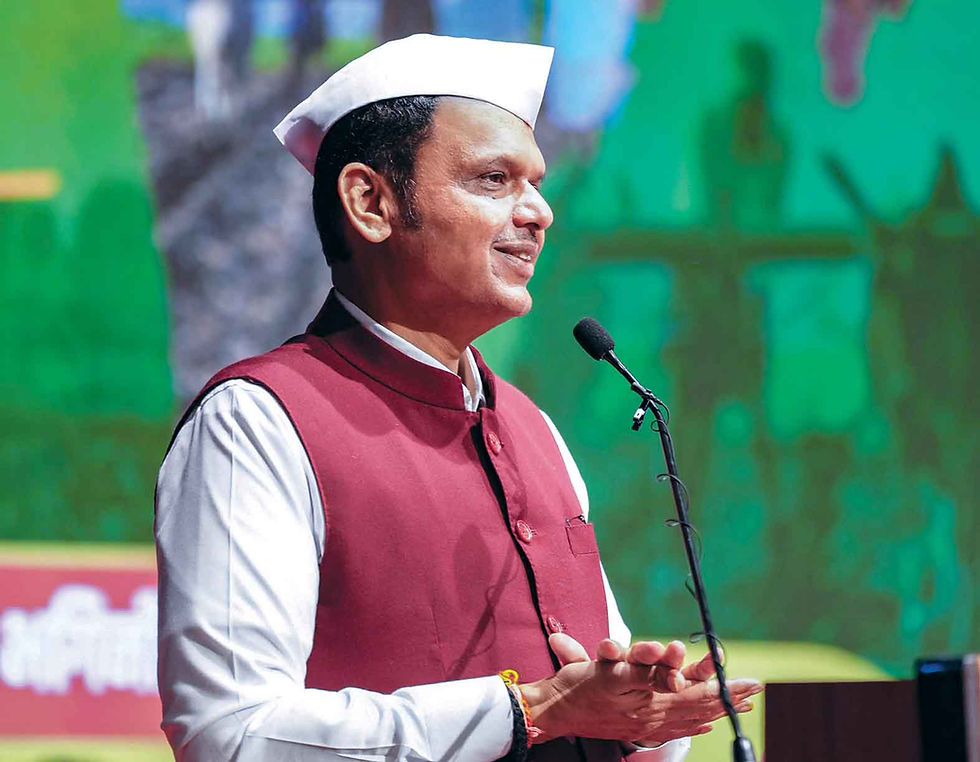
Addressing a ‘Krutadnyata Sohala’ (gratitude ceremony) organized by the BJP Kisan Morcha at Mumbai’s Yashwantrao Chavan Pratishthan on Wednesday, Fadnavis declared that farmers using agricultural pumps of up to 7.5 horsepower will see their historical electricity dues completely wiped out. The announcement was met with the traditional sounding of the Tutari and thunderous applause from hundreds of farmers who had gathered from every corner of the state. The Chief Minister framed the mega-sop as a necessary step to “wipe the farmers’ slate clean,” enabling them to write a new chapter of prosperity.
Calculated Pitch
The timing and scale of the announcement underscore a government that is boldly embracing populist economics to solidify its political footprint in rural Maharashtra. While Fadnavis maintained that these decisions were taken purely in the interest of the farmers—pointing out that the original loan waiver was announced when no elections were in sight—the political undertones were unmistakable.
Taking a sharp dig at the opposition, the Chief Minister accused rival parties of running “political shops” in the name of farmer agitations without understanding the government’s genuine intent. Asserting his grassroots connection, Fadnavis proudly claimed, “I do not make decisions sitting in my house. I am a farmer myself, a man of the soil.” He openly defended the government’s recent move to strip away the stringent conditions attached to the blanket farm loan waiver, signaling that his administration will not hesitate to clear bureaucratic hurdles if it means putting money directly into the hands of the rural voter.
Balancing Sops
Even as he rained freebies, the Chief Minister attempted to balance the populist optics with a dose of economic pragmatism. He acknowledged that handing out repeated loan waivers is a symptom of deep-rooted agrarian distress, not a permanent cure. Pointing to the Rs 95,000 crore in aid currently being pumped into the agricultural sector by the state and central governments, Fadnavis outlined his administration’s shift toward an investment-driven agricultural model.
He championed the success of schemes like ‘Jalyukt Shivar’ and ‘Magel Tyala Shettale’ (farm ponds on demand), claiming these initiatives have already empowered farmers to harvest multiple crops a year. Addressing the core issue of farming costs, he noted that the government already subsidises power to the tune of Rs 25,000 crore annually. By coupling this with a push for solar pumps and solar agricultural feeders, he promised that 100 percent of the state’s farmers would receive uninterrupted daytime electricity by the end of the year.
Infra Dream
Looking beyond immediate financial relief, the Chief Minister laid out a grandiose vision to permanently drought-proof Maharashtra’s most vulnerable regions. A staggering Rs 6 lakh crore infrastructure pipeline is being planned to ensure the next generation never witnesses a drought.
Fadnavis detailed ambitious river-linking projects, including the Wainganga-Nalganga link, to divert excess floodwaters to parched regions. The state plans to construct 24 new dams and raise the height of 16 existing ones to ensure not a single district in Vidarbha faces water scarcity. Furthermore, massive engineering feats are on the drawing board to divert 200 TMC of floodwater from Western Maharashtra to Marathwada, and lift 275 TMC of wasted water from the Ulhas basin to quench the thirst of North Maharashtra and Marathwada.
By marrying immediate, massive debt relief with long-term infrastructure promises, the Fadnavis administration is aggressively cementing its pro-farmer narrative. As the Yashwantrao Chavan auditorium echoed with whistles and cheers, it became highly evident that the government’s strategy of pairing mega populist waivers with big-ticket rural dreams is striking a powerful chord with the state’s agrarian voters.


Comments