

How AI is redefining Digital Voice
- Anusreeta Dutta

- May 12
- 4 min read
The rise of AI-generated speech is turning the human voice into both a technological marvel and a legal dilemma.
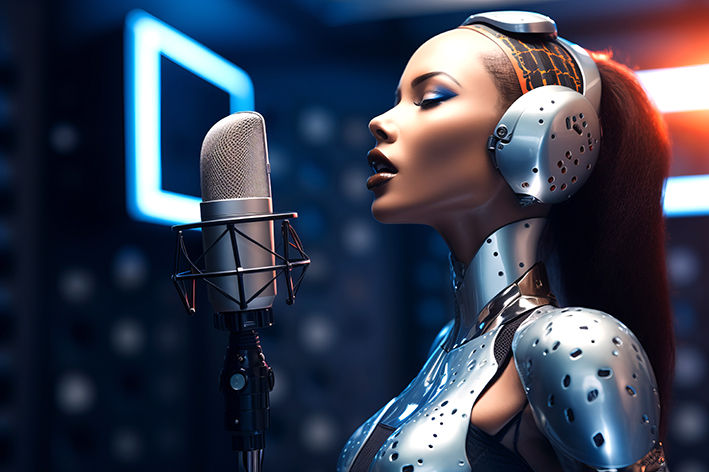
For a long time, the human voice has been one of the most personal ways to tell who someone is. A tone, timbre, or even a scared giggle can tell us right away if we're talking to a friend, a parent, or a stranger. Artificial intelligence has messed up the one-to-one link between voice and person. Voice-cloning technology makes it possible to copy speech so well that it's hard to tell the difference between "real" and "synthetic" speech. In 2026, when we write this, the question is no longer whether AI can copy your voice, but who owns it, who controls it, and how much of your identity you are willing to give up to the digital world.
Voice cloning, or voice replication, is when machine learning looks at short audio samples of a person's speech and makes new sounds in that same voice. Text-to-speech (TTS) algorithms today can make sentences that weren't in the original recordings. They can match not only pitch and rhythm but also subtle cues like breath, emotion, and micro-pauses. This isn't science fiction anymore.
Voice-cloning platforms can create visual assistants and help people who lost their voice during illness get it back and even make “digital twins” of famous people and artists for historical purposes. Business and the media can stay consistent by using cloned voices to let characters speak in a different language or to let a dead narrator “voice” new content. But this power comes with a big problem: the voice is no longer just a sound but a piece of personal information that can be copied, sold, and even stolen.
Ethics of Content
One of the major setbacks with voice cloning is that it doesn't get clear permission. Podcasts, interviews, YouTube videos, and customer service calls are just a few examples of recordings that aren’t marked as “voice data” for reuse. When a company or creator trains a model on those samples without the speaker’s permission, they are treating a biometric attribute like any piece of content.
Biometric data, like voiceprints, is very private because it is one-of-a kind and hard to change. People can use a cloned voice to impersonate someone else, commit fraud, or even blackmail someone with a deepfake. A cloned CEO’s voice on a phone call can approve a fake transfer, and a cloned friend's voice in a fake distress letter can trick family members into sending money. As a result, ethical rules now say that voice owners must give informed, detailed consent that includes where, how, and for how long their digital voice can be used. This is not just a box to check for “terms and conditions"; it changes how we think about speech as personal property.
The more accurate voice cloning is, the easier it is for someone to steal your identity. Voice authentication doesn't have a way to reset it like passwords and PINs do. Once a synthetic replica is made, it can be passed around forever without the original speaker.
Legal experts say that most countries still don't have a specific "right to one's voice." Voice theft using AI needs a mix of protections, such as privacy laws, defamation laws, and data-protection laws, which were not meant to deal with this problem. This makes it possible for someone to use a cloned voice to hurt someone's reputation, trick an audience, or impersonate a famous person, and the victim has to deal with a lot of different laws to find a way out. As AI speech replication becomes more affordable and expedient, lawmakers are recognizing voice as an essential element of personal identification, warranting its own legal classification rather than being merely a by-product of audio files.
Empowering People
Voice cloning isn’t always dangerous, even though there are risks associated. It can help people get their voice back when they lose it because of illness, surgery, or old age if they use it wisely. Some medical and artistic projects use old recordings of a person’s speech to make a synthetic voice that sounds like them. This lets them “speak” again. In these cases, voice cloning is used to protect people’s dignity instead of taking advantage of them.
Artists and voice professionals are also looking into licensing systems that let them intentionally clone their own voices under strict contracts. A singer might sell the right to use her voice in a certain game or ad, while a voice actor might license a character voice for animated projects. The speaker is still the owner and controller here, deciding which apps are okay and which ones aren’t. The idea takes power away from people who collect data without revealing their identities and gives it to people whose identities are at stake.
In the age of AI, one’s voice is more than just a sound; it’s a digital asset that can be saved, copied, and used. This means that the saying “If you say it online, it's not yours anymore" doesn't work anymore. A new vocal ethic needs to know three important things, foremost among them being consent. No one should be able to clone someone’s voice without their clear, informed consent, which includes information about context, length, and amount of use.
Then comes control, where people should be able to take back permission, delete voice data, and see where their digital voice is being used. The third thing is transparency, as it should be easy to tell the difference between synthetic voices and real human speech.
Not only will algorithms shape the future of voice cloning, but also the moral choices we make today. The goal shouldn’t be to stop the technology, but to make sure that your digital voice stays unique to you.
(The writer is a columnist and climate researcher with experience in political analysis, ESG research and energy policy. Views personal.)


Comments