

India's Shift from Import Reliance to Export Leadership

A decade ago, India was one of the world's largest arms importers; today, it exports defence equipment to more than 100 countries.
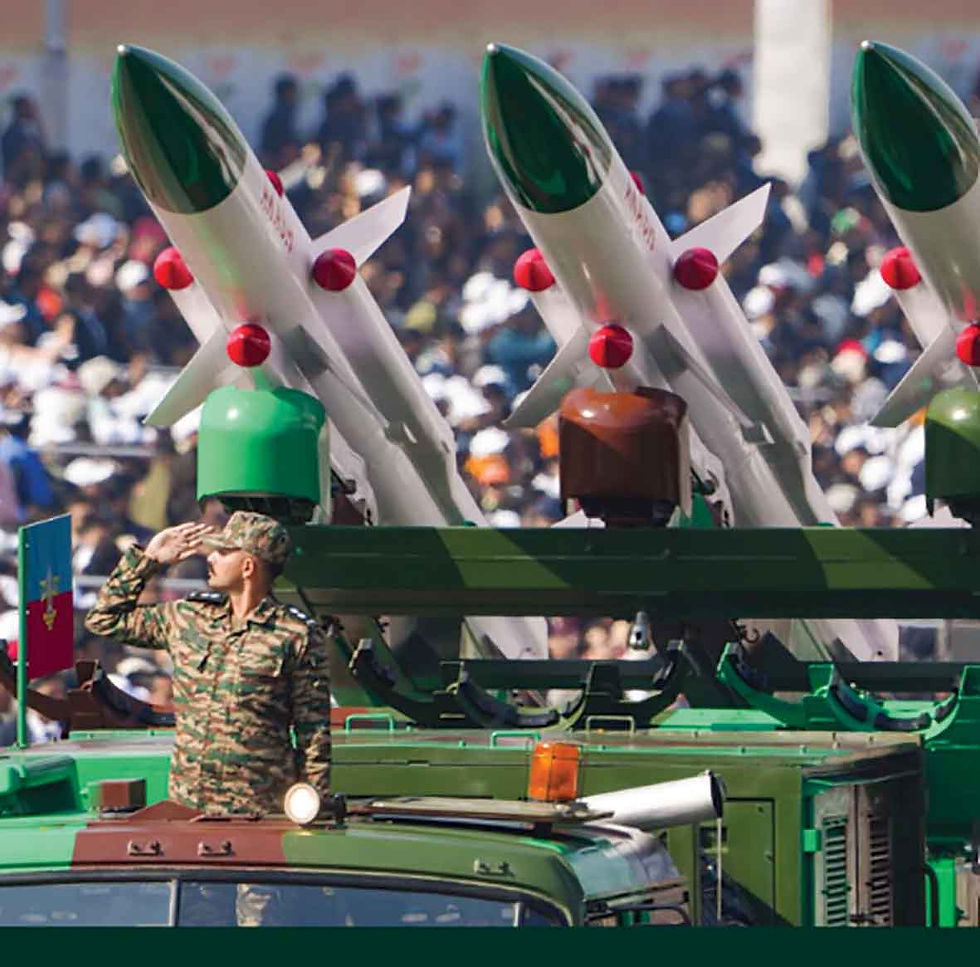
India now exports defence equipment to more than 100 countries, including the United States, France, and Armenia. A decade ago, however, the sector presented a very different picture. The country remained heavily dependent on imports to meet domestic requirements and support economic needs.
Before this shift, India’s economy relied heavily on imports, with domestic industries struggling to compete against foreign goods. During the decade leading up to 2014, imports grew by approximately 335 per cent, eventually accounting for around 24 per cent to 25 per cent of GDP. India depended on imports for essential sectors such as electronics, oil, fertilisers, and machinery. Reliance on countries such as China also continued to increase, making India increasingly dependent on foreign production rather than domestic manufacturing.
The defence sector was among the most import-dependent. India relied heavily on countries such as Russia, France, Israel, and the United States for critical military equipment, ranging from rifles to advanced fighter jets. As this dependence deepened, India emerged as one of the world’s largest arms importers, raising concerns about long-term strategic preparedness and self-reliance.
Over the past decade, however, India has steadily built domestic capabilities, strengthened manufacturing, and expanded its presence in global markets. Once known primarily for services and raw material exports, the country is increasingly emerging as a diversified export powerhouse. Today, India exports mobile phones, pharmaceuticals, software, automobiles, and agricultural products to markets around the world.
When Prime Minister Narendra Modi launched the “Make in India” initiative in 2014, it was not merely a policy announcement but an invitation to investors and manufacturers across the world. With the slogan “Goodbye red tape, hello red carpet", the initiative sought to boost manufacturing, foster innovation, and attract foreign direct investment. Its broader objective was to transform India into a hub where ideas could be developed, products manufactured, and businesses scaled for global markets.
Years later, the vision is reflected in tangible outcomes. India’s record export performance is not merely a story of rising numbers but of growing confidence in domestic capabilities. What makes this transformation particularly significant is that it has been driven not only by traditional sectors but also by emerging industries that are helping India strengthen its position in the global economy.
India’s journey towards self-reliance gained further momentum through the Atmanirbhar Bharat initiative launched in 2020. The initiative coincided with the COVID-19 pandemic, a period when factories shut down, businesses were disrupted, and economic activity slowed across the country. While this temporarily affected production and growth, the broader push towards domestic manufacturing and industrial expansion continued.
One of the clearest examples of this transformation is the defence sector. After 2014, India began shifting towards self-reliance, expanding domestic production while also emerging as a defence exporter. According to Ministry of Commerce data, defence exports have increased more than twentyfold in recent years, reaching record levels. Countries such as Armenia, the Philippines, and Bangladesh now import Indian defence products.
Supporting this shift were initiatives such as the Production Linked Incentive (PLI) scheme and PM Gati Shakti, which encouraged investment, improved infrastructure, and strengthened logistics. Better connectivity, modernised transport networks, and policy reforms have made it easier for businesses to produce, move, and export goods efficiently.
The government has also focused on simplifying regulations, facilitating exports, reducing dependence on imported raw materials, and increasing investment in research and development. Together, these measures aim to lower costs, strengthen supply chains, and improve the global competitiveness of Indian products.
Even during periods of global economic uncertainty, India pursued a resilient trade strategy by exploring alternative opportunities and strengthening international partnerships. One of the most significant developments in this regard has been the India–European Union Free Trade Agreement (FTA), often described as the “mother of all deals".
By reducing tariffs and strengthening supply chains, the agreement seeks to facilitate trade while reducing dependence on any single global power. It also carries strategic significance by acting as a counterbalance to rising protectionism in global trade.
At the same time, India protected key domestic interests by excluding sensitive agricultural products such as rice, sugar, and dairy from the agreement. While the FTA still requires ratification by EU member states, the European Parliament, and the Indian Cabinet, it has already strengthened confidence in India as a reliable trading partner and reinforced its position in international trade.
Together, these developments reflect a broader shift in India’s economic trajectory—from import dependence towards self-reliance, export growth, and deeper integration with global markets. More importantly, they point towards a future that is increasingly sustainable, competitive, and resilient.
(The writer is a student. Views personal.)


Comments