

Let Science Be the Referee
While Homoeopathy should face rigorous scientific scrutiny, neither its critics nor its proponents should decide the answer before the evidence is in.
Our previous article, “Homoeopathy, As We Know It,” received both bouquets and brickbats. That was not surprising. Homoeopathy has had a long history of practice and research, yet continues to generate sharply divided opinions. What surprised us was the nature of some of the criticism.
Homoeopathy has more than two centuries of clinical experience and a growing body of research. Modern science now gives us an opportunity to investigate its underlying phenomena more deeply than ever before. Today, science has tools far more powerful than those available even a few decades ago. Why not use them to examine homoeopathy more deeply? What happens in highly diluted preparations? Are the observed effects reproducible? Do they produce measurable changes in biological systems? What could these findings mean for patients? Such questions require rigorous, independently verified evidence.
Yet, some critics responded that homoeopathy was “quackery,” that the matter was already settled and that further research was unnecessary. Some went further, predicting that research sponsored by the Central Council for Research in Homoeopathy (CCRH) would inevitably be biased and poorly designed. This raises a basic question. Can we render a verdict before conducting the experiment?
Scepticism or Prejudgment?
Science cannot progress without scepticism. Every scientific claim must remain open to scrutiny. But scepticism and prejudgment are not the same. A true sceptic asks for evidence. Yet some critics seem to have already decided that homoeopathy cannot work and therefore see no reason to investigate it further. Is that really scientific scepticism? Science should neither begin with belief nor disbelief. It should ask the right questions, conduct sound experiments and accept what the evidence shows.
A study should be judged by how it is conducted and whether its findings can be reproduced, not by the label attached to the system under study. Criticizing research after examining it is science. Predicting its failure before it begins is prejudgment.
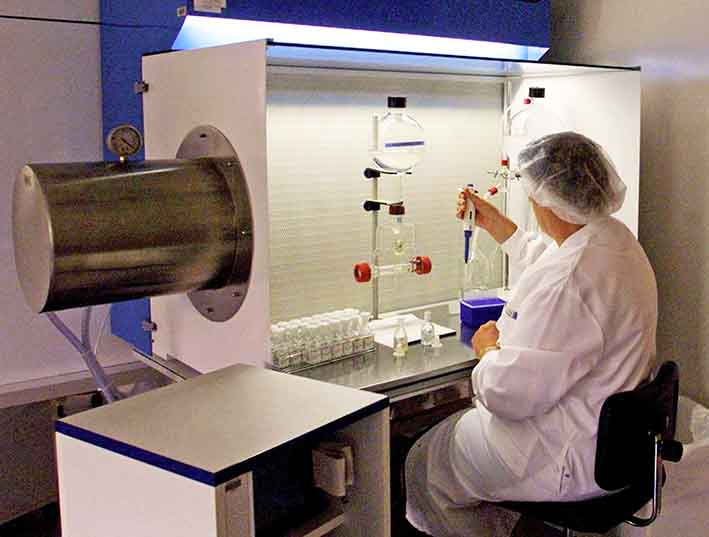
There is also a misconception that research in homoeopathy means homoeopathic practitioners working among themselves to prove what they already believe. The reality is quite different. CCRH is already investigating high dilutions through physicochemical, biological and nanotechnology-based studies in collaboration with leading institutions, including IITs, ICMR, NIMHANS, Delhi University, the University of Calcutta, ICAR institutes and other centres of scientific excellence.
These collaborations bring contemporary science directly into homoeopathy research. They use approaches ranging from nanoscience and molecular biology to omics, artificial intelligence, computational analysis and advanced analytical techniques. These are mainstream scientific tools used across biomedical research. What ultimately matters is whether the research is rigorous, reproducible and independently verifiable.
CCRH’s scientific responsibility is to strengthen the evidence base for homoeopathy through such rigorous laboratory research, well-designed clinical studies and collaboration with leading scientific institutions. This builds directly on the multidisciplinary approach described in the attached draft.
Revisiting Assumptions
A common argument is that homoeopathy has already been studied, so why “reinvent the wheel”? But revisiting a question is not reinventing the wheel when instruments become more sensitive, methods improve and new questions become possible. This does not mean simply repeating earlier studies. New research must advance the subject with better tools, stronger controls or questions that earlier studies could not adequately address. We should not revisit a question because we dislike an earlier answer. We should revisit it when we can ask the question more effectively.
Scientific knowledge is not a collection of conclusions permanently carved in stone. It advances because earlier observations are revisited, explanations are challenged and accepted ideas are retested when new methods become available. Re-examination is not a weakness of science but one of its greatest strengths.
One critic made an extraordinary suggestion: people who use homoeopathy should avoid modern medicine altogether. But why should healthcare demand such loyalty? A patient does not have to “belong” to homoeopathy, modern medicine or any other system. The real question is simpler. What does reliable evidence tell us about a treatment for a particular patient and condition?
Ultimately, neither the patient nor the physician should be loyal to a medical system. Both should be loyal to evidence. During COVID-19, early studies suggested that remdesivir could shorten recovery time, while the much larger WHO Solidarity trial later found little to no effect on mortality among hospitalised patients. As more evidence emerged, recommendations evolved. That was not a failure of modern medicine. It was science working as it should. When evidence changes, conclusions must be allowed to change too.
Confirmation bias is a concern in all research, not something unique to homoeopathy. Researchers in every field can be influenced by what they expect or hope to find. Biomedical research must also guard against selective reporting, conflicts of interest and commercial pressures. Science has ways of addressing such risks: proper controls, disclosure of conflicts, peer review and independent replication. We do not reject a pharmaceutical study simply because the company sponsoring it has a commercial interest in a positive result. Why should the principle be different for research in homoeopathy?
Homoeopathy should face rigorous scientific scrutiny without being prejudged. Its critics must be equally willing to accept reproducible evidence, including findings that challenge current understanding. Science demands this openness from both sides. Neither side gets to decide the answer in advance. Let the experiment be the referee.
(Dr. Kaushik is Director General, Central Council for Research in Homoeopathy (CCRH), Ministry of Ayush, New Delhi. Dr. Paknikar is a Member of the Scientific Advisory Board, CCRH, New Delhi, and ANRF Prime Minister Professor, COEP Technological University, Pune. Views personal.)


Comments