top of page

By:

Quaid Najmi

4 January 2025 at 3:26:24 pm

Seventy-six mayors ruled BMC since 1931

After four years, Mumbai to salute its first citizen Kishori Pednekar Vishwanath Mahadeshwar Snehal Ambekar Sunil Prabhu Mumbai: As the date for appointing Mumbai’s First Citizen looms closer, various political parties have adopted tough posturing to foist their own person for the coveted post of Mayor – the ‘face’ of the country’s commercial capital. Ruling Mahayuti allies Bharatiya Janata Party (BJP) and Shiv Sena have vowed that the city...

Seventy-six mayors ruled BMC since 1931

After four years, Mumbai to salute its first citizen Kishori Pednekar Vishwanath Mahadeshwar Snehal Ambekar Sunil Prabhu Mumbai: As the date for appointing Mumbai’s First Citizen looms closer, various political parties have adopted tough posturing to foist their own person for the coveted post of Mayor – the ‘face’ of the country’s commercial capital. Ruling Mahayuti allies Bharatiya Janata Party (BJP) and Shiv Sena have vowed that the city will get a ‘Hindu Marathi’ person to head India’s richest civic body, while the Opposition Shiv Sena (UBT)-Maharashtra Navnirman Sena also harbour fond hopes of a miracle that could ensure their own person for the post. The Maharashtra Vikas Aghadi (MVA) optimism stems from expectations of possible political permutations-combinations that could develop with a realignment of forces as the Supreme Court is hearing the cases involving the Shiv Sena-Nationalist Congress Party this week. Catapulted as the largest single party, the BJP hopes to install a first ever party-man as Mayor, but that may not create history. Way back in 1982-1983, a BJP leader Dr. Prabhakar Pai had served in the top post in Mumbai (then Bombay). Incidentally, Dr. Pai hailed from Udupi district of Karnataka, and his appointment came barely a couple of years after the BJP was formed (1980), capping a distinguished career as a city father, said experts. Originally a Congressman, Dr. Pai later shifted to the Bharatiya Janata Party, then back to Congress briefly, founded the Janata Seva Sangh before immersing himself in social activities. Second Administrator The 2026 Mayoral elections have evoked huge interest not only among Mumbaikars but across the country as it comes after nearly four years since the BMC was governed by an Administrator. This was only the second time in the BMC history that an Administrator was named after April 1984-May 1985. On both occasions, there were election-related issues, the first time the elections got delayed for certain reasons and the second time the polling was put off owing to Ward delimitations and OBC quotas as the matter was pending in the courts. From 1931 till 2022, Mumbai has been lorded over by 76 Mayors, men and women, hailing from various regions, backgrounds, castes and communities. They included Hindus, Muslims, Christians, Parsis, Sikhs, even a Jew, etc., truly reflecting the cosmopolitan personality of the coastal city and India’s financial powerhouse. In 1931-1932, the Mayor was a Parsi, J. B. Boman Behram, and others from his community followed like Khurshed Framji Nariman (after whom Nariman Point is named), E. A. Bandukwala, Minoo Masani, B. N. Karanjia and other bigwigs. There were Muslims like Hoosenally Rahimtoola, Sultan M. Chinoy, the legendary Yusuf Meherally, Dr. A. U. Memon and others. The Christian community got a fair share of Mayors with Joseph A. D’Souza – who was Member of Constituent Assembly representing Bombay Province for writing-approving the Constitution of India, M. U. Mascarenhas, P. A. Dias, Simon C. Fernandes, J. Leon D’Souza, et al. A Jew Elijah Moses (1937-1938) and a Sikh M. H. Bedi (1983-1984), served as Mayors, but post-1985, for the past 40 years, nobody from any minority community occupied the august post. During the silver jubilee year of the post, Sulochana M. Modi became the first woman Mayor of Mumbai (1956), and later with tweaks in the rules, many women ruled in this post – Nirmala Samant-Prabhavalkar (1994-1995), Vishakha Raut (997-1998), Dr. Shubha Raul (March 2007-Nov. 2009), Shraddha Jadhav (Dec. 2009-March 2012), Snehal Ambedkar (Sep. 2014-March 2017). The last incumbent (before the Administrator) was a government nurse, Kishori Pednekar (Nov. 2019-March 2022) - who earned the sobriquet of ‘Florence Nightingale’ of Mumbai - as she flitted around in her full white uniform at the height of the Covid-19 Pandemic, earning the admiration of the citizens. Mumbai Mayor – high-profile post The Mumbai Mayor’s post is considered a crucial step in the political ladder and many went on to become MLAs, MPs, state-central ministers, a Lok Sabha Speaker, Chief Ministers and union ministers. The formidable S. K. Patil was Mayor (1949-1952) and later served in the union cabinets of PMs Jawaharlal Nehru, Lah Bahadur Shastri and Indira Gandhi; Dahyabhai V. Patel (1954-1955) was the son of India’s first Home Minister Sardar Vallabhbhai Patel; Manohar Joshi (1976-1977) became the CM of Maharashtra, later union minister and Speaker of Lok Sabha; Chhagan Bhujbal (1985-1986 – 1990-1991) became a Deputy CM.

Lowering the Bar or Fixing the Ladder?
The furore over the NEET-PG cut-offs misses the real malaise in how the country trains its doctors.

AI generated image
AI generated image

The January 13 notification from the National Board of Examinations regarding lower cut offs for eligibility to enter post graduate courses in India has ruffled feathers has ruffled feathers well beyond the medical fraternity, unsettling media commentators, policymakers and the wider public.


The proposal to lower cut-offs did not emerge from bureaucratic whimsy but from the Indian Medical Association (IMA), the country’s largest body of doctors practising modern medicine. Its motivation was practical given that an uncomfortably large number of postgraduate seats remain vacant even after the final round of counselling.


India now has close to 800 approved medical colleges. Their rapid proliferation has exposed a structural weakness in form of an acute shortage of full-time faculty. Empty postgraduate departments threaten the functioning of medical colleges themselves. It was against this backdrop that the IMA urged a relaxation of eligibility thresholds.


Yet, as in medicine itself, a treatment can provoke side-effects that obscure its intended benefit. The National Board of Examinations’ notification had precisely that effect.


A sharp reduction in cut-offs - what critics deride as a “percentile shift into negative territory” – has triggered a national backlash. Alarmist questions followed in quick succession: was meritocracy about to be eclipsed by mediocrity? Was India, long admired for producing world-class specialists, now preparing a generation of underqualified and hesitant doctors?


The answer to both is an emphatic no.


Lower cut-offs in an examination with 25 percent negative marking do not dilute competence but merely extend eligibility. Candidates who previously failed to obtain any rank at all can now be ranked, despite modest scores. Eligibility, however, is not entitlement.


Qualifying for a postgraduate seat does not automatically confer entry into coveted clinical specialties. By the time relaxed cut-offs come into effect, seats in disciplines such as ophthalmology or diabetology are already taken by higher-ranked candidates. What remains are disciplines that attract few takers but are essential to keeping medical colleges alive.


Here too, the answer is a firm no as all the seats of clinical branches would have already been exhausted. 


So, what remains are the seats of pre-clinical subjects for which there are no takers. The question arises that if nobody takes those seats, how does one run a medical college? 


The reason for decreased marks need not lie with a doctor's knowledge component, but largely to his ‘knack’ in solving an MCQ exam with negative marking. It is always better to leave a question and get a zero, rather than answering it incorrectly and getting a negative mark. 


The bigger flaw lies in the curriculum itself. Is it humanly possible to cram fifteen subjects taught through five-and-half years of the MBBS curriculum into one year and excel in the exam? It is like asking a Commerce student to study the five years of B.Com. course in one year and sit for an M.Com. exam.


That said, do we have a solution to this method of gradation? The answer is a strong yes. Just as the government brought reforms in the GST, it can bring reforms in this NEET PG exam, too. The solution lies in the Super Speciality entrance exam pattern itself. 


As a general surgeon in clinical practice who aspires to be a neurosurgeon, I will sit for a neurosurgery Super Speciality entrance of a premier institute like AIIMS where 50 percent of my exam questions are based on neurosurgery and the remaining on subjects like general surgery which relate to neurosurgery. 


Similarly, as an MBBS doctor, if my interest lies in ophthalmology, my NEET PG MCQs paper should contain 50 percent questions on ophthalmology and the rest should be based on allied topics like surgical anatomy of the eye. 


What is the point of asking a budding ophthalmologist questions related to indications of caesarean section or prolapse intervertebral disc or National Malaria Eradication program? And then if he scores negative marks which usurp his positive tally in ophthalmology, he will be branded as a poor clinician in the making. 


But the truth is that he could be a pioneering ophthalmologist of the future who would be doing path braking research in retinitis pigmentosa.


The government needs to sit down with stakeholders and take proper feedback to make detailed policies which are practical, thereby giving impetus to cover not only the problem of vacant PG seats but also good specialists who will make our country proud.


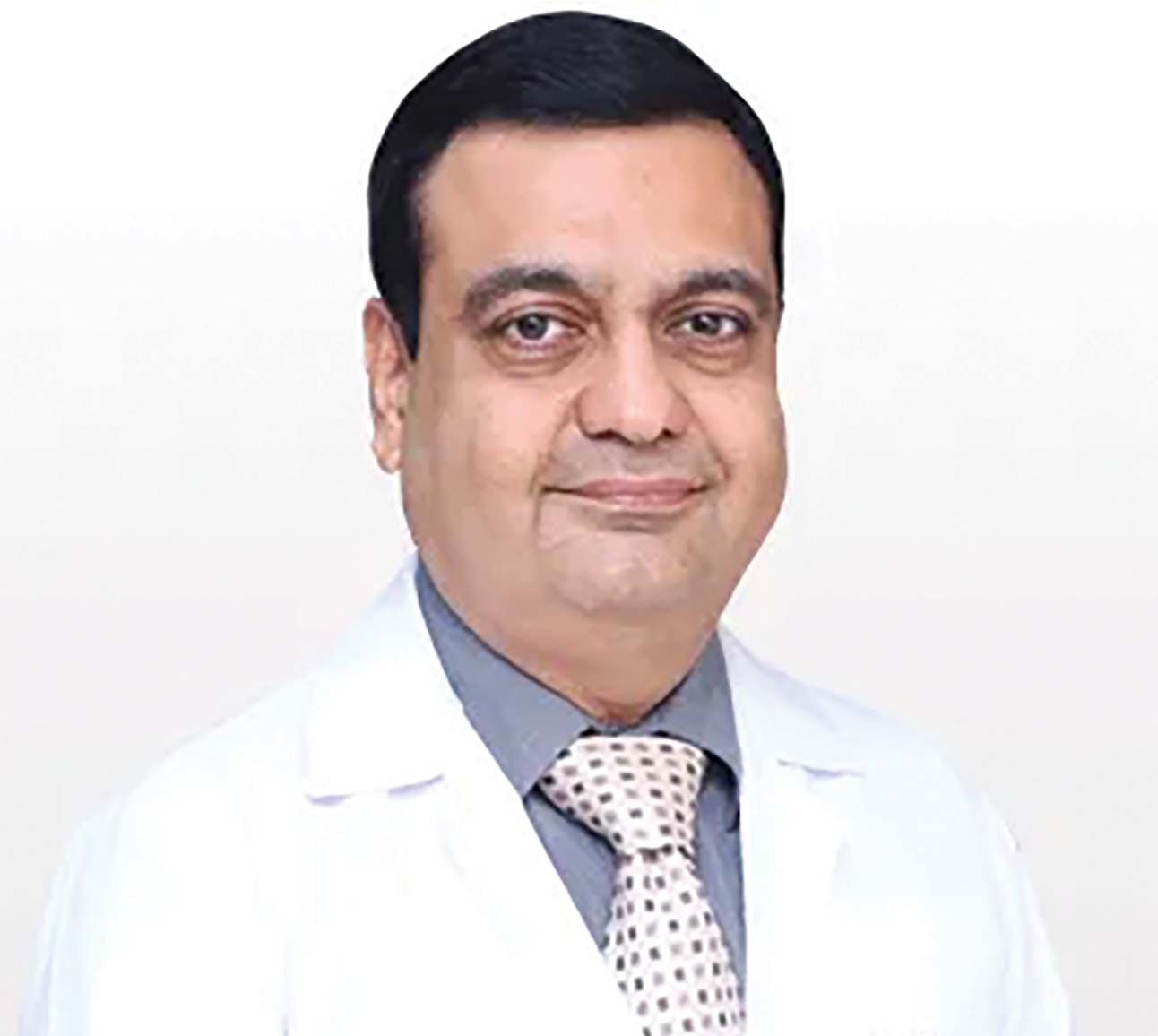
 (The writer is ex- Secretary, IMA Maharashtra State, 2015-18. Views personal.)


Comments


bottom of page