

Marathi Pride and the Taxi Debate
- Abhijit Joshi

- May 1
- 4 min read
A proposed rule for taxi drivers is turning into a wider test of Marathi identity and the political risks of enforcing linguistic pride.
Maharashtra marked the 66th year of its foundation yesterday. As with every other May 1 celebration that has taken place in six decades, this year, too, Maharashtra Day was celebrated not just with mere pageantry, but with a memory of fire. The state’s birth in 1960, wrested from the old Bombay State after a turbulent Samyukta Maharashtra Movement, still lingers in its political and cultural DNA. That the day coincides with International Labour Day only deepens its meaning, tying the assertion of identity to the labour that built one of India’s most formidable states.
Marathi Mandatory
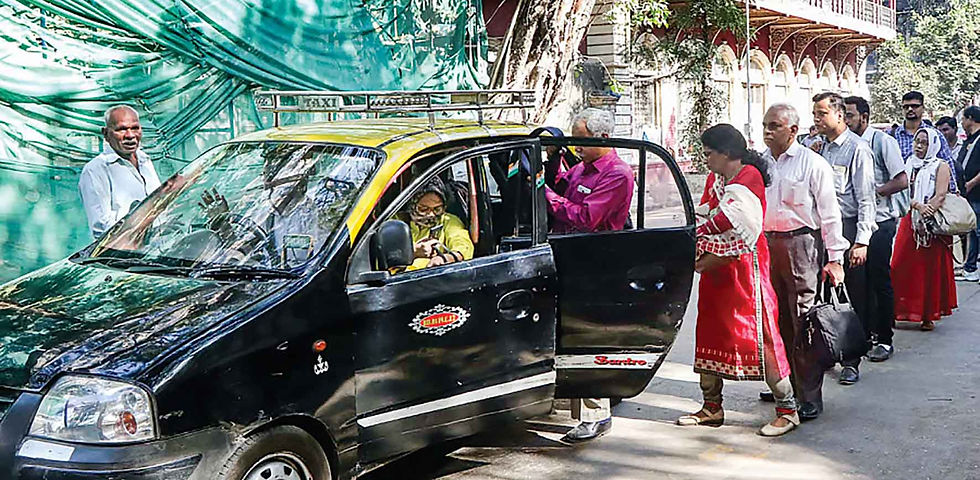
But this year, along with celebrations, an important and sensitive debate has taken centre stage — whether Marathi should be compulsory for auto and taxi drivers. In the last few weeks, Maharashtra found itself close to a serious policy and political discussion. Transport Minister Pratap Sarnaik proposed that all auto and taxi drivers must be able to speak basic Marathi. Initially, there were strong signals that from May 1, 2026, drivers who failed to comply could even risk losing their licences. This created both excitement and fear. Many Marathi-speaking citizens welcomed the move, seeing it as a step towards preserving their language. At the same time, thousands of drivers, especially those from outside Maharashtra, felt uncertain about their future. As Marathi speakers, many of us feel proud of our language. We often admire how people in states like West Bengal or in South India strongly use their own language in daily life. But when we look at ourselves, a different picture appears.
In everyday situations, whether it is speaking to a taxi driver or buying vegetables, we quickly switch to Hindi. Even in groups of Marathi people, if one person does not understand Marathi, everyone changes their language instead of helping that person learn. So, the question is simple: if we ourselves do not use Marathi regularly, can we expect others to learn it? The issue soon moved beyond language and became political.
Parties like the Maharashtra Navnirman Sena, led by Raj Thackeray, supported the idea strongly, saying Marathi must be respected in Maharashtra. On the other hand, leaders like Sanjay Nirupam and labour representatives questioned the decision. They argued that forcing language rules could hurt workers, especially those who have come from states like Uttar Pradesh and Bihar to earn a living. Many of these drivers have been working for years without any major communication problems.
Political Complexity
Alongside the public debate, a sharper political subtext is hard to ignore. Questions are already swirling over whether Pratap Sarnaik’s decision followed full consultation with Chief Minister Devendra Fadnavis or whether it was a more calculated gambit. To some, the move looks less like policy and more like positioning: a bid to signal linguistic assertiveness and consolidate Marathi sentiment.
Yet such manoeuvres carry risk. Should the policy provoke unrest - as in among drivers or a wider public backlash, then the political costs may not rest with its architect alone, but with the Chief Minister, who ultimately bears the burden of governance.
Another perspective suggests that even if the leadership was aware, there may have been hesitation in fully supporting such a strict rule as the ruling BJP has a strong base in the Hindi belt and an important state like Maharashtra could not safeguard their own people – which could be double sword fight for the CM.
In that case, the issue could be used politically to create an impression that some leaders are not fully supportive of Marathi identity. In simple terms, whichever way the situation unfolds, the political pressure seems to circle back to the top leadership — especially Devendra Fadnavis — making this not just a social issue but a strategic political challenge. As tensions increased, the government appeared to take a balanced approach.
The strict deadline of May 1 was relaxed, and more time was given until August 15 for drivers to learn basic Marathi. At the same time, new developments —including discussions around other political and local issues — have also come into focus, indirectly shifting attention and creating pressure on key decision-makers.
This shows how quickly public issues in politics can change direction. While the idea of promoting Marathi is widely supported, many people are asking an important question — is this the right time and the right way? With the new deadline still months away, the situation may change further. There could be new protests, policy changes, or even completely different discussions taking over the public space. Marathi is the soul of Maharashtra and deserves respect and promotion. But Maharashtra is also a state that welcomes people from all over India. These people contribute to the economy and daily life of cities like Mumbai.
The solution may not lie in strict rules, but in encouragement and support. Language learning can be made simple and friendly. Citizens can also take responsibility by using Marathi more often and helping others learn. Maharashtra Day is a time to celebrate unity, culture, and progress.
The current debate reminds us that growth comes with challenges. Language should bring people together, not push them apart. A thoughtful and balanced approach can ensure that Marathi continues to grow while also protecting the livelihoods of thousands of hardworking people. As the situation develops in the coming months, one thing is clear — this is not just about language. It is about identity, politics, and the future direction of Maharashtra. And as many would say in simple words — “Aap samajh rahe ho na?”
(The writer is a political observer. Views personal.)


Comments