top of page

By:

Kiran D. Tare

21 August 2024 at 11:23:13 am

Bengal’s Ludwig Erhard

For decades, Swapan Dasgupta made a career of diagnosing India’s political ailments. As a columnist, editor, author and public intellectual, the erudite and scintillating Dasgupta dissected challenged orthodoxies and defended the intellectual traditions of the Indian Right. However, following his new appointment as the new Finance Minister of a West Bengal in economic doldrums, he perhaps faces the most demanding assignment of his career. His supporters however are confident that if there is...

Bengal’s Ludwig Erhard

For decades, Swapan Dasgupta made a career of diagnosing India’s political ailments. As a columnist, editor, author and public intellectual, the erudite and scintillating Dasgupta dissected challenged orthodoxies and defended the intellectual traditions of the Indian Right. However, following his new appointment as the new Finance Minister of a West Bengal in economic doldrums, he perhaps faces the most demanding assignment of his career. His supporters however are confident that if there is anyone most suited to sort out Bengal’s messy economy, it is Dasgupta. His appointment following the Bharatiya Janata Party’s ascent to power in Bengal after overthrowing Mamata Banerjee’s TMC regime is among the more intriguing political transitions in recent Indian political memory. India has seen journalists cross into politics before. M.J. Akbar moved from the newsroom to the Ministry of External Affairs. Arun Shourie, one of India’s most formidable investigative journalists, became a reform-minded minister in Atal Bihari Vajpayee’s government. Others, from Manish Sisodia to Priya Ranjan Dasmunsi and Chandan Mitra, have made similar journeys. Yet Dasgupta’s case is distinctive. Unlike many journalists-turned-politicians, he was never merely a ‘reporter.’ Whether in debate or through his prolific and trenchant writings, he has always been an intellectual combatant, a scholar of political ideas with a sweeping knowledge of world history by which he leavens those ideas. Dasgupta has always been one of the most articulate exponents of modern Indian conservatism. Educated at La Martiniere College in Kolkata, St Stephen’s College in Delhi and later the School of Oriental and African Studies in London, where he earned a doctorate, Dasgupta cultivated a reputation for formidable scholarship. His books, including Awakening Bharat Mata: The Political Beliefs of the Indian Right and The Ayodhya Reference, revealed an uncommon ability to place contemporary political disputes within a broader historical and ideological framework. For his supporters, he was among the few intellectuals capable of articulating conservative ideas in a language usually dominated by the Left. To critics, he was a sophisticated polemicist. Yet, even his opponents seldom questioned the breadth of his reading or the sharpness of his arguments. However, the challenge facing Dasgupta now is no longer intellectual but administrative. The Bengal he inherits bears little resemblance to the state that once led India in industry, commerce and scientific innovation. As he himself quipped in trademark fashion with a sharp historical analogy, the state’s economy resembled postwar Germany. The figures are sobering. West Bengal’s state debt has ballooned to around Rs. 8 lakh crore during the TMC regime. Thousands of companies have relocated or curtailed operations over the years amid a hostile investment climate. The new BJP government has inherited not merely a fiscal challenge but a crisis of confidence. “We are left with a near-bankrupt treasury,” Dasgupta said. Equally troubling, in his view, is the erosion of trust among investors and entrepreneurs. Bengal’s relationship with business has been uneasy to say the least. First the long night of the Left, followed by the TMC’s anti-business, appeasement brand of politics has ensured that the scars of industrial disputes and land controversies remain fresh. In this dire situation, reviving private investment will require convincing businesses that Bengal has changed. In this respect, Dasgupta’s strengths may prove unexpectedly useful. Throughout his career he displayed an ability to engage with ideas, institutions and stakeholders across ideological divides. His early moves hint at a broader vision. Rather than confining pre-budget consultations to Kolkata, Dasgupta shifted the Finance Department’s attention to Siliguri in a moved suffused with deliberate symbolism. North Bengal has long complained of neglect by governments centred on the state’s southern districts. By engaging tea producers, agricultural interests, tourism operators and local business groups, the newly-minted finance minister appears eager to demonstrate that economic revival will not just be a Kolkata-centric project. That said, debt servicing consumes a substantial portion of state revenues. Welfare commitments are politically difficult to unwind and infrastructure deficits remain significant. While public intellectuals excel at identifying problems, governing demands compromises and the acceptance of imperfect solutions. Still, Bengal’s new finance minister possesses as fine an appreciation of history than any Indian politician around. He knows that states decline not just because economic mistakes but because they lose faith in their future. Restoring that confidence may be the central task of his tenure. For years Swapan Dasgupta chronicled India’s political story from the sidelines. Now he finds himself at the centre of one of its most consequential state-level experiments. Whatever the outcome of his tenure, few would deny that Bengal’s finances have acquired perhaps their most learned custodian in decades.

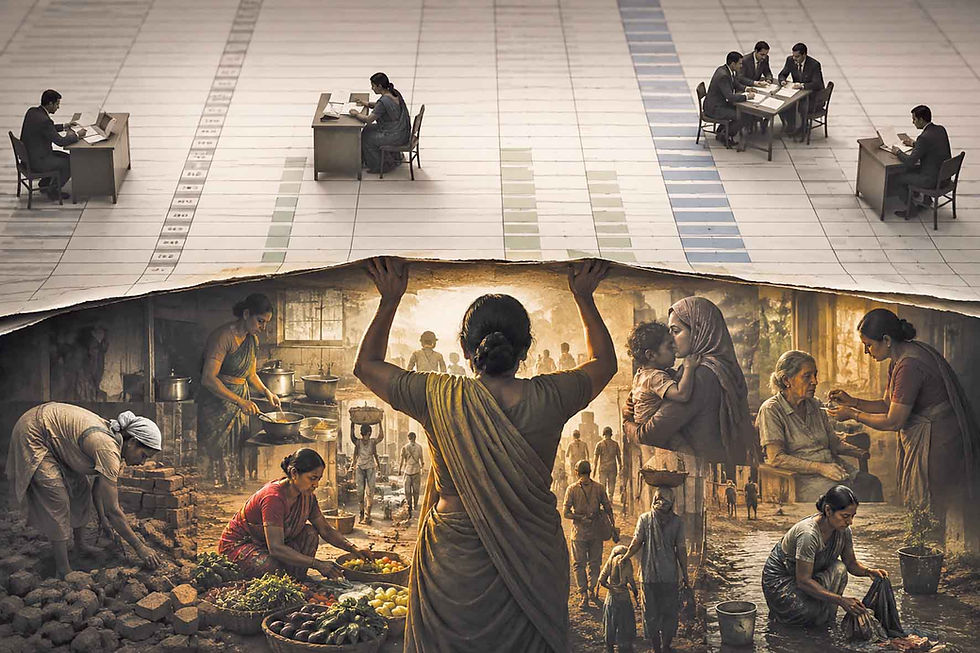
More Than One Day: Celebrating Womanhood Every Day        

A woman does not need a special day to prove her worth. She is a celebration in herself.

Just a few days ago, we celebrated Holi, the beautiful festival of colours—streets filled with laughter, faces bright with colour, and hearts light with joy. Around the same time, we also observe International Women’s Day, honouring women for their strength, sacrifices, and achievements.


On this day, women are made to feel special. They celebrate their womanhood and remind the world they are no less capable than anyone else.


But the real question is: Is celebrating womanhood on just one day enough? Should appreciation, respect, and self-love be limited to a date on the calendar, or should a woman celebrate herself every day?


The truth is that every life has some void—love, recognition, companionship, opportunity, or understanding may be missing. Such gaps are part of being human; no life is perfectly complete. What matters is how we live despite those missing pieces.


A woman must never let emptiness make her bitter. She should not allow loneliness or disappointment to close her heart. Instead, she should fill her life with colour—just as Holi fills the world with colour. Her life itself should become a festival of colours.


Embracing Every Role with Grace

A woman plays many roles in life—as a mother, wife, daughter, sister, friend, teacher, guide, and nurturer. Each carries responsibility but also great beauty.


The secret to emotional peace lies in fulfilling these roles without heavy expectations. When we expect too much from others, we often invite disappointment.


Simple Philosophies

A few simple philosophies can transform life:


Zero expectations, zero disappointment — When a woman gives love, care, and effort sincerely without constantly seeking appreciation or validation, she experiences inner freedom. Her happiness no longer depends on others’ reactions.


Dignity and self-respect must remain intact — while giving love and fulfilling duties, a woman must never compromise her self-respect. Kindness should never be mistaken for weakness, and being loving does not mean tolerating humiliation.


A woman must remember three principles:

• Never allow anyone to disrespect your dignity.

• Never shrink yourself to make others comfortable.

• Never lower your worth to meet someone else’s expectations.


How a Woman Can Maintain Her Dignity Every Day

Maintaining dignity is not about pride or ego. It is about quiet confidence and self-awareness. Here are some simple but powerful ways:


1. Know Your Self-Worth: A woman should recognise her value. Her worth is not defined by someone's approval, relationship status, or external validation. When you know your worth, you naturally carry yourself with grace.


2. Set Healthy Boundaries: Boundaries protect emotional energy. Saying “no” when something feels uncomfortable is not rude—it is self-respect.


3. Speak with Calm Confidence: A dignified woman does not need to shout to prove her point. She communicates clearly, respectfully, and firmly.


4. Protect Your Emotional Peace: Not every argument deserves your response. Sometimes dignity lies in walking away from negativity.


5. Continue Growing: A woman who keeps learning, evolving, and improving herself radiates confidence and strength.


Celebrating Yourself Daily

Celebrating womanhood is not about grand gestures but small daily habits that nurture the mind, heart, and soul.


Appreciate Yourself: Acknowledge your efforts and celebrate small victories. Self-appreciation builds confidence.


Spend Time With Yourself: Solitude is not loneliness; it helps you understand yourself better.


Do What Brings Joy: Reading, music, exercise, cooking, travel, or creative hobbies—make time for what nourishes your soul.


Care for Your Health: Women often care for others first, but physical and mental well-being must also be a priority.


Be Independent at Any Age: Independence brings dignity, confidence, and security—and it is never too late to develop it.


Emotional Independence: Do not rely entirely on others for emotional stability; learn to manage your feelings and find inner strength.


Financial Independence: Even a small income builds confidence and the freedom to make choices.


Mental Independence: Think for yourself. Read, learn, and stay curious.


Physical Independence: Stay active, exercise, and care for your health so you can live energetically at any age.


A Personal Reflection

Like everyone, my life has seen ups and downs—challenges, lessons, growth, and change.


Today I feel complete, not because life is perfect, but because I have learned to embrace my journey and value every step of it.


I take pride in my work, the effort I give, and the strength my experiences have shaped. My journey speaks for itself.


That is how I celebrate my womanhood—quietly, gracefully, and confidently. A woman does not need a special day to prove her worth. She is a celebration in herself.


(The writer is a tutor based in Thane. Views personal.)

Comments


bottom of page