

New Plastic Rules Push Producers Towards Circular Economy Goals
- Dr. Sanjay Joshi

- 1 day ago
- 3 min read
Comprehensive regulations alone cannot solve the plastic waste crisis. Their success will depend on credible enforcement and accountability.
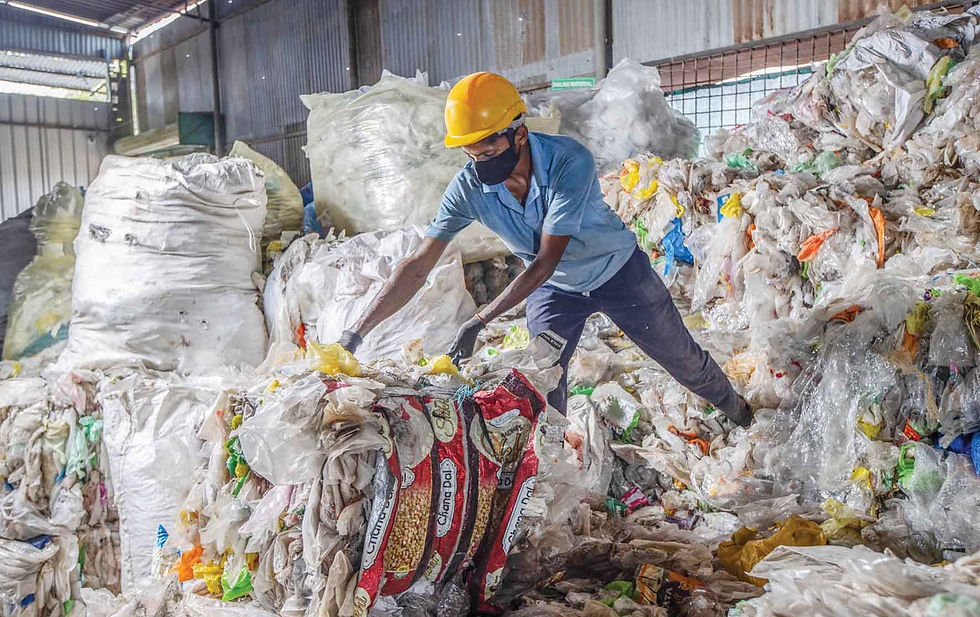
Through previous articles in this series, we have learned that India's plastic waste management framework is primarily anchored by the Plastic Waste Management Rules, 2016. These rules have been continuously strengthened through major amendments in 2018, 2021, 2022, 2024-25, and most recently in April 2026.
The latest amendments mark a significant policy shift. Earlier, the focus was largely on collection and processing targets. The new framework increasingly emphasises the use of recycled plastic content, with mandatory minimum recycled content requirements rising from 30 per cent to 60 per cent by 2028-29. This signals a move from collection-centric regulation to market-driven compliance.
At the same time, some provisions may weaken accountability. For example, allowing companies to carry forward unmet targets could create "elastic" enforcement, reducing the pressure for timely compliance.
India generates an estimated 9 million tonnes of plastic waste every year. As a result, the central challenge is no longer policy design alone but ensuring credible monitoring, effective enforcement, and deeper integration of circular economy principles.
Extended Producer Responsibility (EPR) remains the backbone of India's plastic waste management strategy. Based on the "Polluter Pays" principle, EPR shifts the responsibility for managing plastic waste from local municipalities to the companies that generate it.
The rules apply to PIBOs (Producers, Importers and Brand Owners) as well as PWPs (Plastic Waste Processors), including recyclers and waste-to-energy plants.
The following are the key provisions introduced under the latest amendment.
Mandatory Recycled Content
Category I: Rigid Plastic: This category includes hard plastics such as bottles, containers, tubes, and jars, which are generally easier to collect and recycle. Producers must ensure that recycled content constitutes at least 30 per cent of such packaging in 2025-26, with the requirement increasing to 60 per cent by 2028-29.
Category II: Flexible Plastic: This category covers single-layer and multi-layer sheets, cling films, carry bags, sachets, and stand-up pouches, including LDPE and zip-lock bags. The mandatory recycled content requirement starts at 10 per cent in 2025-26 and rises to 20 per cent by 2028-29.
Category III: Multi-layered Plastic: This includes packaging made of plastic combined with other materials such as aluminium foil, paper, or paperboard, commonly used for chip packets and instant food packaging. The recycled content target has been set at 5 per cent for 2025-26 and will increase to 10 per cent by 2028-29.
Companies that fail to meet their targets in 2025-26 can carry forward the shortfall for up to three years, until 2028-29. However, they must make up at least one-third of the deficit each year.
The rules also institutionalise a tradable credit system. Companies can fulfil their recycling obligations by purchasing credits from firms that exceed their prescribed targets.
While this provides flexibility and may reduce compliance costs, it also allows companies to meet obligations without directly recycling their own plastic waste. The risk of misuse remains significant. In 2023, the Central Pollution Control Board reported more than six lakh fake recycling certificates.
Compliance is monitored through a centralised Extended Producer Responsibility (EPR) portal operated under the supervision of the Central Pollution Control Board. The portal is designed to facilitate registration, reporting, monitoring, and enforcement.
The shift to a digitised EPR platform has transformed corporate accountability by replacing opaque self-reporting mechanisms with a more verifiable, market-linked credit system. This institutional change encourages brand owners to internalise environmental costs and creates a formal economic incentive for plastic waste traceability and lifecycle management.
India's EPR framework is undergoing rapid formalisation. More than 60,000 Producers, Importers, and Brand Owners (PIBOs) are now registered on the centralised portal, improving traceability and expanding regulatory coverage across the plastic value chain.
The impact has been substantial. Since the EPR guidelines came into force in 2022, approximately 20.7 million tonnes of plastic packaging waste have been recycled.
More on this in my next article. Till then, have a nice weekend!
(The writer is an environmentalist. Views personal.)


Comments