top of page

By:

Bhalchandra Chorghade

11 August 2025 at 1:54:18 pm

Applause for Cricket, Silence for Badminton

Mumbai: When Lakshya Sen walked off the court after the final of the All England Badminton Championships, he carried with him the disappointment of another near miss. The Indian shuttler went down in straight games to Lin Chun-Yi, who created history by becoming the first player from Chinese Taipei to lift the prestigious title. But the story of Lakshya Sen’s defeat is not merely about badminton final. It is also about the contrasting way India celebrates its sporting heroes. Had the same...

Applause for Cricket, Silence for Badminton

Mumbai: When Lakshya Sen walked off the court after the final of the All England Badminton Championships, he carried with him the disappointment of another near miss. The Indian shuttler went down in straight games to Lin Chun-Yi, who created history by becoming the first player from Chinese Taipei to lift the prestigious title. But the story of Lakshya Sen’s defeat is not merely about badminton final. It is also about the contrasting way India celebrates its sporting heroes. Had the same narrative unfolded on a cricket field, the reaction would have been dramatically different. In cricket, even defeat often becomes a story of heroism. A hard-fought loss by the Indian team can dominate television debates, fill newspaper columns and trend across social media for days. A player who narrowly misses a milestone is still hailed for his fighting spirit. The nation rallies around its cricketers not only in victory but also in defeat. The narrative quickly shifts from the result to the effort -- the resilience shown, the fight put up, the promise of future triumph. This emotional investment is one of the reasons cricket enjoys unparalleled popularity in India. It has built a culture where players become household names and their performances, good or bad, become part of the national conversation. Badminton Fights Contrast that with what happens in sports like badminton. Reaching the final of the All England Championships is a monumental achievement. The tournament is widely considered badminton’s equivalent of Wimbledon in prestige and tradition. Only the very best players manage to reach its final stages, and doing it twice speaks volumes about Lakshya Sen’s ability and consistency. Yet the reaction in India remained largely subdued. There were congratulatory posts, some headlines acknowledging the effort and brief discussions among badminton enthusiasts. But the level of national engagement never quite matched the magnitude of the achievement. In a cricketing context, reaching such a stage would have triggered days of celebration and analysis. In badminton, it often becomes just another sports update. Long Wait India’s wait for an All England champion continues. The last Indian to win the title was Pullela Gopichand in 2001. Before him, Prakash Padukone had scripted history in 1980. These victories remain among the most significant milestones in Indian badminton. And yet, unlike cricketing triumphs that are frequently revisited and celebrated, such achievements rarely stay in the mainstream sporting conversation for long. Lakshya Sen’s journey to the final should ideally have been viewed as a continuation of that legacy, a reminder that India still possesses the talent to challenge the world’s best in badminton. Instead, it risks fading quickly from public memory. Visibility Gap The difference ultimately comes down to visibility and cultural investment. Cricket in India is not merely a sport; it is an ecosystem built over decades through media attention, sponsorship, and mass emotional attachment. Individual sports, on the other hand, often rely on momentary bursts of recognition, usually during Olympic years or when a medal is won. But consistent performers like Lakshya Sen rarely receive the sustained spotlight that their achievements deserve. This disparity can also influence the next generation. Young athletes are naturally drawn to sports where success brings recognition, financial stability and national fame. When one sport monopolises the spotlight, others struggle to build similar appeal. Beyond Result Lakshya Sen may have finished runner-up again, but his performance at the All England Championship is a reminder that India continues to produce world-class athletes in disciplines beyond cricket. The real issue is not that cricket receives immense attention -- it deserves the admiration it gets. The concern is that athletes from other sports often do not receive comparable appreciation for achievements that are equally significant in their own arenas. If India aspires to become a truly global sporting nation, its applause must grow broader. Sporting pride cannot remain confined to one field. Because somewhere on a badminton court, an athlete like Lakshya Sen is fighting just as hard for the country’s colours as any cricketer on a packed stadium pitch. The only difference is how loudly the nation chooses to cheer.

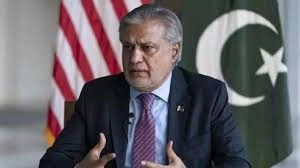
Pak foreign minister says chances of revival of conflict with India 'remote'

  • PTI
  • Jun 4, 2025
  • 3 min read


Islamabad: Foreign Minister Ishaq Dar on Wednesday said that the chance of revival of an armed conflict between Pakistan and India is remote but warned of a befitting response in case of any such development.


Dar's comment came while responding to a question during his press conference giving details of Prime Minister Shehbaz Sharif's recent visit to Turkiye, Iran, Azerbaijan and Tajikistan and to thank the respective leadership for support during the last month's conflict with India following the April 22 Pahalgam terror attack that killed 26 people.


When asked about a possible new round of fighting, Dar said that he could not predict the future but the chances of any such possibility are slim.


¿The ceasefire is holding and all steps regarding withdrawal of troops have been implemented by the two sides in letter and spirit. So there is no chance (of new war) in my opinion,¿ he said. ¿However, we will give a befitting reply if India resorts to armed conflict.¿


He said Pakistan was ready for dialogue with India, but not desperate for it, adding that Pakistan seeks a composite dialogue that includes terrorism as well as other issues, including Indus Waters Treaty (IWT).


He also claimed the IWT cannot be suspended.


Soon after the April 22 Pahalgam terror attack, India announced abeyance of the IWT among other punitive measures.


The IWT was signed in 1960 by the two countries to address the water dispute between them and to share the waters of the six main rivers of the Indus basin.


The minister reiterated the offer for a neutral probe into the Pahalgam incident, which led to the recent escalation between Pakistan and India.


Dar, who is also the Deputy Prime Minister, claimed while Pakistan's kinetic action has been appreciated, its diplomatic efforts have also earned international recognition.


The minister also appreciated the role played by the US, UK, Saudi Arabia, the UAE, Qatar, Iran and other countries during the conflict and bringing peace.


Dar announced that Prime Minister Sharif was set to visit Saudi Arabia during the next 24 hours to thank its leadership for its positive role during hostilities with India.


Speaking about Sharif's recent four-nation tour, Dar said the Prime Minister undertook a visit to Turkiye, Iran, Azerbaijan and Tajikistan to express Pakistan's gratitude for the solidarity expressed by these countries during the conflict with India.


He also praised the diplomatic outreach led by former foreign minister Bilawal Bhutto Zardari, which, he said, ¿has garnered international acclaim for its clarity.¿


Tensions between India and Pakistan escalated after the Pahalgam terror attack, with India carrying out precision strikes on terror infrastructure in Pakistan and Pakistan-occupied Kashmir in the early hours of May 7.


Pakistan attempted to attack Indian military bases on May 8, 9, and 10. The Indian side strongly responded to the Pakistani attempts by inflicting heavy damage to a number of key Pakistani military installations, including air bases, air defence systems, command and control centres and radar sites.


Foreign Secretary Vikram Misri on May 10 announced that India and Pakistan reached an understanding to stop all firings and military actions on land, air and sea, with immediate effect.


Starting May 22, India tasked seven multi-party delegations to visit 33 global capitals to reach out to the international community on Pakistan's designs and India's response to terror after the Pahalgam terror attack.


Pakistan too announced last month to send a team of experts to foreign capitals to inform the world about the four-day conflict with India and also highlight its point of view regarding the conflict.

Comments


bottom of page