
Parents, It’s Time to Wise Up
- Kuldeep Ambekar

- May 24
- 3 min read
For two decades, India’s obsession with engineering and medicine has created not merely competition, but a generation burdened by fear, exhaustion, and borrowed dreams.

Roughly two decades ago, a new dream took hold across Maharashtra. Two words began to dominate the aspirations of countless households: “doctor” and “engineer.” Success came to be defined so narrowly that all other careers appeared secondary, even meaningless. From farmers in villages to middle-class professionals in cities, parents increasingly came to believe that their lives would feel fulfilled only if their children entered one of these two professions.
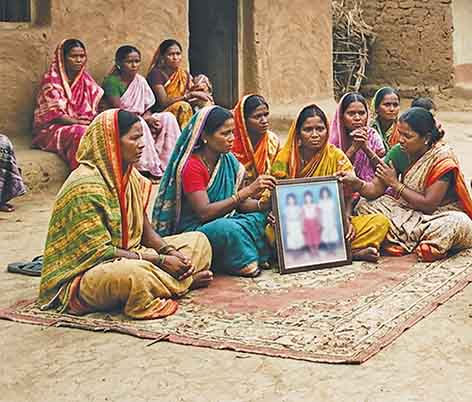
Driven by this aspiration, an enormous wave of JEE and NEET aspirants emerged across the state, especially in the Marathwada region. Burdened by the weight of these expectations, hundreds of thousands of children from rural areas flocked to cities such as Latur, Kota, and Hyderabad. Some parents mortgaged farmland while others sold jewellery to fulfil these aspirations. Some took out loans, while others, consumed by social pressure and prestige, tragically ended their own lives.
Faulty Assumptions
At the heart of this frenzy lay a dangerous social assumption: only those who cracked NEET or JEE were truly “smart.” Little thought was given to the dreams, talents, or individuality of other children. Few parents paused to ask what their children genuinely enjoyed, where their natural aptitude lay, or what kind of life they wished to build for themselves. The message was blunt and unforgiving: become a doctor or an engineer or risk being seen as a failure.
Uncomfortable Questions
Today, looking back, deeply uncomfortable questions arise. What became of those celebrated “toppers”? Where are the students who spent years rote-learning, attending coaching classes that cost lakhs of rupees, and chasing impossible scores? Why do we not see larger numbers of them leading the country’s great research institutions, producing groundbreaking scholarship, shaping public life, or driving innovation?
There are, of course, exceptions. But too often, what emerged was a generation exhausted by competition and conditioned to treat education as a transaction rather than a journey of discovery. Parents invested money; children invested their youth. Eventually, both expected returns.
Medicine ceased to be viewed solely as a service and increasingly became a business. Engineering drifted away from innovation and became synonymous with salary packages and placements. Children were not nurtured into complete human beings; they were trained to survive a relentless competitive race.
Even grimmer has been the psychological toll. Thousands of children saw their mental health collapse under the pressure of expectation and failure. Some slipped into depression. Others developed a permanent sense of inadequacy. Many, tragically, took their own lives.
This happened because society never taught them that life exists beyond the narrow confines of becoming a doctor or an engineer. There is dignity, meaning, and success in countless other fields like art, literature, journalism, agriculture, entrepreneurship, scientific research, sports, public administration, environmental conservation, technology, social work, and countless others. Yet instead of expanding children’s horizons, society has narrowed them.
Today, discussions about the JEE and NEET coaching industry revolve around paper leaks, financial irregularities, fabricated success stories, manipulative advertising, and the commercialization of parental anxiety. Yet the most important question remains unanswered: do parents truly understand their children?
Children are not slaves to their parents’ unfulfilled dreams. Their lives are not meant to become status symbols in society’s endless competition. Nor should their careers be reduced to salary figures and social prestige alone.
Every child is different. Each possesses unique strengths, interests, and ambitions. Yet society continues to force millions of children through the same narrow funnel of competition. The time has come for parents to pause and ask themselves an uncomfortable question: are we truly building our children up—or merely breaking them down?
For while not every child can become a doctor, every child can certainly become a good human being. Society must learn once again to value character over marks, curiosity over rank, and fulfilment over prestige.
Fifteen years from now, society may once again confront the same unsettling question: millions ran the race but how many truly found fulfilment? It is still not too late. Parents, at least now, it is time to wise up.
(The writer is a lawyer and president, Student Helping Hands. Views personal.)



Comments