

Pawars are losing the Pune plot

Municipal elections expose the identity crisis within both factions of the Nationalist Congress Party
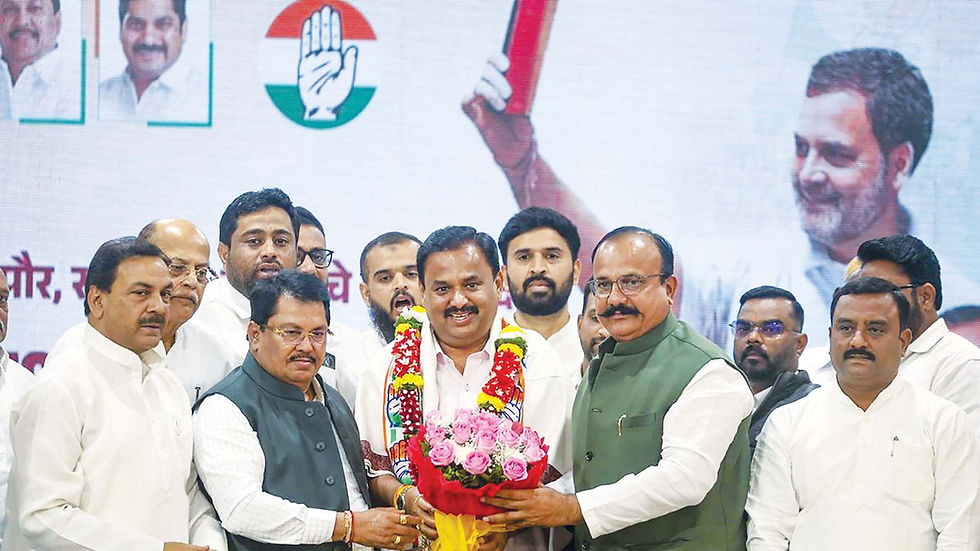
Pune: Local elections are often treated as administrative skirmishes. But in Pune, they have become something akin to a philosophical debate about loyalty and legitimacy, ideology and expediency, and whether political parties can survive repeated acts of self-contradiction. The week-long turmoil surrounding the city’s municipal polls has laid bare the Nationalist Congress Party’s deepest malaise: a party split not merely by factions, but by incompatible ideas of what it stands for.
At the heart of the drama lie the two NCPs led respectively by Sharad Pawar, the patriarch who once gave the party its ideological spine, and the other by his nephew Ajit Pawar, now Deputy Chief Minister in the BJP-led Mahayuti. When the election schedule was announced, many that each faction would fight separately, and the Bharatiya Janata Party would keep its distance.
Instead, the BJP made clear it would not ally with Ajit Pawar’s NCP faction for the Pune civic polls. That refusal set off a chain reaction. A section within Sharad Pawar’s faction began exploring a local alliance with Ajit Pawar’s group, arguing insistently that municipal elections were about pragmatism and not ideological purity. The proposed move has startled even seasoned observers. More surprising still was the apparent openness of Supriya Sule, Sharad Pawar’s daughter and the party’s most prominent national face, to facilitating talks between the two sides.
What followed was not just a tactical disagreement but a revolt of principle. Prashant Jagtap, the NCP’s Pune city president, publicly challenged the idea of any alliance with Ajit Pawar’s faction. His reasoning was that he had fought both the Lok Sabha and Assembly elections on an explicit anti-BJP plank. To now partner with a group that formed part of the BJP government, he argued, would amount to a betrayal of voters.
Talking Point
Jagtap’s defiance quickly became a state-wide talking point. At 47, a former mayor and a policy-minded local leader with a reputation for mastering civic minutiae, he was hardly an insurgent outsider. Yet by questioning Sharad Pawar’s tactical instincts while remaining within the party, he punctured the aura of unquestioned authority that has long surrounded the Pawar name. Even more awkwardly, BJP leaders maintained an almost studied silence as one of their allies flirted with Sharad Pawar’s camp, highlighting the convenience that define coalition politics in Maharashtra.
Supriya Sule attempted damage control, stepping in to mollify Jagtap and to still the speculation about a grand NCP reunion, however temporary. It did not work as Jagtap refused to retreat and soon took a more decisive step by crossing over to the Congress.
His exit was an indictment on the nature of the breathtaking contortions that have come to define to Maharashtra’s politics in recent times. In Pune, many saw it as the migration of credibility from a party mired in equivocation to one desperate for organisational revival. Congress leaders privately admitted that Jagtap’s arrival was a windfall: a grounded urban politician with local appeal at a time when the party struggles to find both. For residents weary of endless factional manoeuvres, his stand seemed refreshingly legible.
Meanwhile, the much-discussed talks between the two NCP factions quietly collapsed. By Saturday evening, it was clear that the Sharadchandra Pawar-led NCP would contest the municipal elections as part of the Maha Vikas Aghadi, alongside Congress and the Shiv Sena (UBT). The attempted rapprochement had yielded only confusion, bruised authority and one prominent defection.
The episode has also cast a shadow over the BJP. In Pune, whispers are growing that dynastic considerations may dominate its candidate selection, potentially provoking internal dissent. The party’s aggressive induction of new entrants, often from rival camps, has generated unease among long-time workers who fear being sidelined.
For the NCP, however, the implications are more existential. Once conceived as a party that blended Maratha pragmatism with a secular, reformist outlook, it now risks becoming a vessel defined solely by surnames and split loyalties. The Pune episode suggests that local leaders and voters alike are increasingly impatient with ambiguity masquerading as strategy.
Municipal elections rarely rewrite political history. But they do reveal fault lines. In Pune, they have exposed a party struggling to reconcile legacy with coherence and a city electorate alert to the difference.


Comments