

Seeking Urban Validation
The ruling Congress faces an acid test in the high-stakes Telangana civic polls.
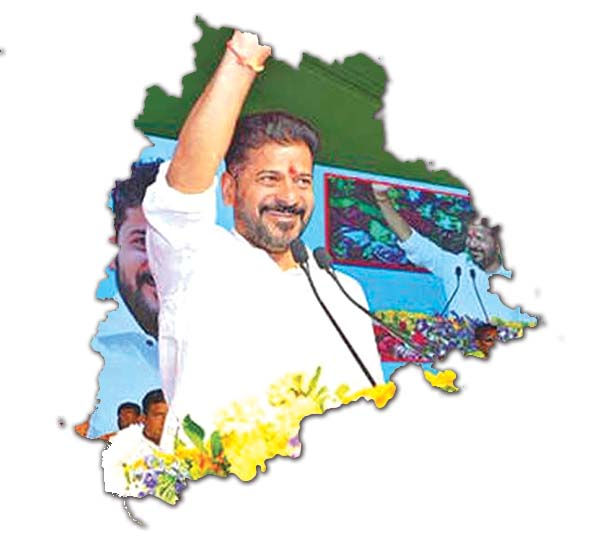
While the noise in Telangana’s urban local body elections has subsided and the people have cast their votes, the stakes have only sharpened further. The fate of 3,000 municipal seats across 116 towns and seven corporations will be decided. On February 13. This time, the Telangana civic poll contest, like that of Maharashtra, is about political momentum in a state still adjusting to the upheavals of 2023.
For the ruling Congress, the vote is an early verdict on its two-year-old government in the State. It is also a test of whether the party’s dramatic rural comeback can be replicated in cities. Telangana’s political geography is lopsided: of its 119 assembly seats, 80 are rural. It was there that the Congress staged its revival in 2023, reducing the once-dominant Bharat Rashtra Samithi (BRS) to just 19 rural seats from 62 five years earlier. Yet the cities told a different story. In Hyderabad, the BRS retained its urban heft while the Congress failed to win a single assembly seat.
That imbalance haunts the Congress now. Chief Minister A. Revanth Reddy has framed the civic polls as a referendum on welfare schemes and administrative rectitude, repeatedly accusing the previous BRS regime of having “looted” the state. He has also sought to reassure minorities by committing to protect the 4 percent reservation for OBC Muslims. But the subtext is clearer than the slogans: unless the Congress can break into urban Telangana, its grip on power will remain structurally fragile. Party insiders privately acknowledge that a strong showing is essential ahead of the Greater Hyderabad Municipal Corporation elections, which loom later this year.
For the BRS, these polls are existential. The party that once dominated Telangana politics is still struggling to recalibrate after its 2023 defeat. Its patriarch, K. Chandrashekar Rao, has retreated from the public gaze, depriving the party of its most formidable campaigner. The burden has fallen on his son and heir, K. T. Rama Rao (KTR), whose aggressive tone marks a departure from his earlier technocratic image. The civic polls will test whether he can convert visibility into authority.
Complicating matters are the party’s internal fissures. The defection last year of KCR’s daughter, K. Kavitha, who has since accused the leadership of illicit enrichment, has dented the party’s aura of cohesion, even if she has stopped short of forming a rival outfit. Still, writing off the BRS would be premature. Unlike during its decade in power, when the Congress often appeared comatose, BRS leaders have been conspicuously active on the ground, probing administrative lapses and amplifying urban discontent.
The Bharatiya Janata Party, meanwhile, sees opportunity in the turbulence. Having won eight of Telangana’s 17 parliamentary seats in 2024 (mostly in urban constituencies) it hopes to translate its national gains into municipal footholds. Its campaign has leaned heavily on Hindutva, with senior leaders alleging that Hindus were being taken for granted under Congress rule. Yet the BJP’s ambitions are constrained. Its NDA ally, the Jana Sena Party, has fielded hundreds of candidates, muddying arithmetic and message alike. Even so, party strategists calculate that a fragmented opposition and latent anti-incumbency could expand their modest municipal presence.
Hovering at the margins, yet indispensable in Hyderabad, is the All India Majlis-e-Ittehadul Muslimeen. Asaduddin Owaisi’s party has avoided confrontation with the Congress, speaking instead of the need for independent Muslim leadership and hinting at post-poll arrangements. In a fractured verdict, its councillors could once again play kingmaker.
A Congress surge in the results would validate its rural mandate in the Assembly polls in the urban areas as well. A BRS revival would signal that the party still has clout in the cities it built its power on. BJP gains would confirm Telangana as an emerging three-cornered contest rather than a bipolar one.
Either way, the intense campaigning for the Telangana civic polls prove that they are nothing short of a dress rehearsal for the state’s political future.


Comments