

The Art of Political Reinvention

From Gadkari’s protégé to Fadnavis’s trusted lieutenant, Chandrashekhar Bawankule’s journey captures shifting power equations within the Maharashtra BJP.
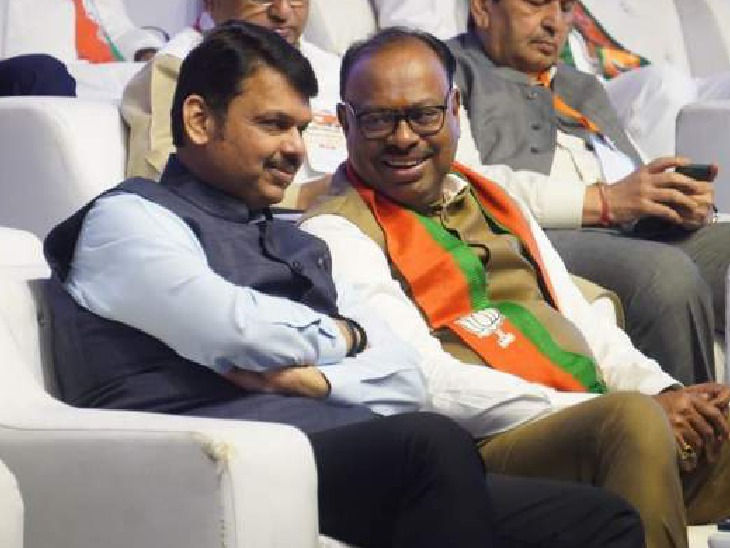
By the time Maharashtra politics reaches its next important turn, Chandrashekhar Bawankule may find himself playing a role considerably larger than that of a Revenue Minister. His journey from a grassroots OBC leader shaped by Nitin Gadkari’s political influence to a trusted lieutenant of Devendra Fadnavis, offers an instructive window into how power operates within the Maharashtra BJP.
The BJP has long maintained a strong political connection with Other Backward Classes (OBCs). This does not place Scheduled Castes, Brahmins, Marathas or other communities outside the party’s political imagination. But OBC voters have occupied an important place in its social strategy, particularly in states such as Maharashtra. Within the state BJP, different leaders have, at different times, cultivated their own political networks. The Mahajan-Munde era had its own cohort. Nitin Gadkari, when he led the state BJP, likewise had leaders who grew under his influence. Bawankule was one of them.
Steady Ascent
He entered politics as a young worker in the early 1990s, when Gadkari was already a major force in Maharashtra politics. For a young OBC leader from Vidarbha, Gadkari became an important political guide. At the same time, another young politician, Devendra Fadnavis, was steadily establishing himself.
The equation became particularly interesting after the BJP-Shiv Sena government came to power in 2014. Fadnavis became Chief Minister and Bawankule was given the Energy portfolio. His proximity to Gadkari was well known. But Maharashtra BJP politics was changing, and Fadnavis was emerging as the state’s central power centre.
Despite being a three-time MLA and a senior minister, Bawankule was denied a BJP ticket from Kamptee. The decision generated considerable political discussion. Bawankule himself described Fadnavis and Gadkari as being like a brother and father to him. Fadnavis later acknowledged that denying Bawankule the ticket had hurt the BJP’s performance in parts of Vidarbha.
The episode could have permanently damaged his political career. Instead, it became a turning point. Bawankule did not openly fight Fadnavis but gradually adjusted to the changing power structure. His political rehabilitation began, and in 2022 he returned to the centre stage as president of the Maharashtra BJP.
The significance of that appointment went beyond organisational rank and distinguishes his trajectory from those of several other senior BJP leaders. Eknath Khadse, Vinod Tawde and Pankaja Munde, at various points, found themselves on different sides of the party’s internal power equations. Tawde moved to Delhi and eventually assumed a major organisational role in the central leadership. Bawankule chose another route: accommodation rather than confrontation.
Today, he is Maharashtra’s Revenue Minister and Guardian Minister of Nagpur. Revenue may lack the glamour of some portfolios, but it is among the government’s most powerful and sensitive departments. Land records, property disputes, mutation entries, registration, stamp duty, government land, farmers’ land and caste-related documentation all eventually pass through it.
Ambitious Plans
Bawankule has therefore sought to make the department more technology-driven and citizen-friendly. His plans include digitising land records, simplifying registration procedures and reducing delays. He has spoken of taking stamp-duty and registration revenue from around ₹55,000 crore in 2024-25 towards ₹1 lakh crore over five years. He has proposed the Panand Rasta Yojana to provide access roads to farms across thousands of villages. The department has also moved towards faster land surveys. In March 2026, the government announced the appointment of licensed private surveyors to address manpower shortages and accelerate land measurement under the E-Mojni system.
Yet, the same portfolio has placed Bawankule at the centre of controversies. The Mundhwa land deal involving Parth Pawar became a political issue, with Bawankule overseeing a committee inquiry into alleged irregularities. He rejected allegations that he had given a clean chit, saying the inquiry had been extended to examine the matter properly.
Another controversy involved allegations concerning a BJP MLA’s firm and land. Former Maharashtra Congress president Nana Patole publicised a probe letter and alleged large-scale irregularities. The matter became another political confrontation, with allegations and counter-allegations feeding into the wider debate over the Revenue Department.
For a minister handling land and revenue, controversies may be difficult to avoid. But they also constitute a political test.
Bawankule’s larger challenge, however, is not land. It is OBC-Maratha politics. This has acquired particular importance with Manoj Jarange Patil’s continuing agitation for Maratha reservation and the demand for Kunbi certificates for eligible Marathas. Jarange has targeted Bawankule over allegations that some Kunbi certificates were being invalidated. Bawankule has denied influencing the certification process.
The confrontation became personal when Jarange mocked Bawankule and made remarks involving his family. Bawankule responded emotionally, saying criticism of him was one thing, but bringing his mother and family into political attacks was painful.
Yet he has also tried to keep the political door open. He has repeatedly maintained that the BJP wants justice for the Maratha community while protecting existing OBC reservation. This gives Bawankule a distinctive political identity. He is an OBC leader, but also a senior minister who works closely with Fadnavis and remains connected to Gadkari’s political network. If he can position himself not as the “OBC face fighting the Maratha movement” but as the minister seeking a constitutional and practical solution acceptable to all communities, his political stature could rise considerably.
That will require results. Revenue reforms must reach ordinary farmers and landowners. Digital land records must reduce corruption rather than create new problems. Investigations into land irregularities must be seen as independent. Above all, Bawankule must navigate the OBC-Maratha question without becoming the face of a caste confrontation.
His political journey suggests that he has already learned one lesson: survival in politics depends not only on how strongly one fights, but on how intelligently one adjusts. The man who once lost his Assembly ticket now sits at the centre of Maharashtra’s political and administrative machinery.
(The writer is a political observer. Views personal)


Comments