top of page

By:

Ruddhi Phadke

22 September 2024 at 10:17:54 am

Thackerays try to encash youth’s sentiments

Succeed in pulling crowd that celebrated Dharmendra Pradhan’s resignation with sharp political messaging Mumbai: Shiv Sena (UBT) President Uddhav Thackeray and Maharashtra Navnirman Sena (MNS) chief Raj Thackeray came together for the third time in five days at a joint rally at Mumbai’s iconic Shivaji Park on Sunday to celebrate a ‘victory’ they were not part of. They addressed a rally as a celebration of the resignation of Union Education Minister Dharmendra Pradhan a day earlier. Addressing...

Thackerays try to encash youth’s sentiments

Succeed in pulling crowd that celebrated Dharmendra Pradhan’s resignation with sharp political messaging Mumbai: Shiv Sena (UBT) President Uddhav Thackeray and Maharashtra Navnirman Sena (MNS) chief Raj Thackeray came together for the third time in five days at a joint rally at Mumbai’s iconic Shivaji Park on Sunday to celebrate a ‘victory’ they were not part of. They addressed a rally as a celebration of the resignation of Union Education Minister Dharmendra Pradhan a day earlier. Addressing the massive turnout, Uddhav Thackeray said the student-led agitation had proved that the voice of the people could not be silenced. Calling Pradhan’s resignation a moral triumph for students, he said those who demanded accountability for the alleged examination irregularities had achieved a significant victory. He said the campaign had laid the foundation for a wider fight against the BJP-led Central government. Uddhav said, “This fight is a united fight which is BJP vs India. A cockroach has defeated dictatorship. This is the real avatar of lord Vishnu. Modi ji can steal votes but not youngsters.” Raj also lauded the students for their determination and perseverance throughout the agitation. He urged the youth to remain aware and actively engaged on issues related to education and governance. He said the success of students' protest proved Gen Z can challenge the government. He thanked the Mumbai Police for maintaining order during the programme and said the country had seen "the difference between the Maharashtra Police and the Delhi Police," a reference to the thrashing of protesters in the national capital. Spirited Speeches The rally featured spirited speeches, slogans and enthusiastic participation by supporters of both parties, particularly young workers. A strong police presence was maintained in and around Shivaji Park, with barricades, traffic diversions and other security measures put in place to regulate the large crowds and maintain public order. The rally was also viewed as a major political display of unity by the Thackeray cousins, who used the platform to reaffirm their common position on matters concerning Maharashtra and the interests of students. Sweets were being distributed, slogans were being raised, while many highlighted that one of the grievances of the protesters was also the alleged illegal arrests of the protesters and misbehavior with women protesters. Crowd was dominated by young teenagers, many of whom were students and were present to enjoy the vibe of a demonstration lacking much deeper insight of the NEET paper leak issue or the larger issue. Minor Children who were as young as nine years old, also stood with slogans written on placards. They had memorized poems to present some thoughts their parents had fed them with, making full use of the platform as a medium to overcome stage fear. ‘Fight against illegal arrests’, say protestors Several demonstrators, who were a part of the celebrations on Sunday, alleged that they were not against any party but they were against unconstitutional behavior. Alleging illegal arrests to suppress freedom of speech by the Mumbai police, several demonstrators claimed to have joined the fight at the point where they felt that voices were being suppressed, and criticism was not being taken seriously. A 26-year-old Sharvari Bukane, a practicing advocate at the Bombay High court, was also a part of the celebration. Bukane told ‘The Perfect Voice’ that she had been voluntarily active in expediting smooth release of students who were illegally being detained. “We are not against a person or any party. The nation is in the right hands. I was just doing my part. I am a part of Gen-Z. We will fight against any party or person who does something that is unconstitutional,” she said. A Member of All India Student Federation Amir alleged that women protesters faced misbehavior and several people were illegally arrested. He said, “We will ensure NEET is abolished. Mahatma Gandhi has taught us nonviolence, Ambedkar taught us the path and Chhatrapati Shivaji Maharaj taught us determination. Youth is politically aware now. We want resignation from (Education minister) Dada Bhuse. Ambani and Adani are providing them money. Trump and Epstein files are by Modi’s side. We will continue to fight against capitalism, and privatisation.” A 38-year-old working woman Anuja Bhate said, “Today the common man fears expressing opinions on politics because there is a real fear of retribution. For our democracy to become stronger, this fear needs to be eliminated.” 'We want anybody but Modi!’ Rajendra Chavan, a 65-year-old Thane resident and a retired civil Engineer, also joined the celebration with his family and children. He said the youths are desperate for a change as the education system is in shambles. They have no jobs and hence they are ready to go for anyone except Modi. He said, “Senior citizens are devotees of Modi. They benefited from the free government schools and smooth education in their time, and now they are Modi devotees. The irony is that their children are in US and Europe for better education. My generation is busy worshiping an individual. Indira Gandhi too was defeated in 1975. Anybody but Modi! is the sentiment right now. It will take time, and it should happen democratically.” "The dictator has been shaken. This is the power of the youth. They need not be told to do anything. They know what they want. The response of Mumbai has been tremendous. Asking questions to the government is not being anti-India. All FIRs against protesters should be withdrawn. The countdown has begun for this government.” Aaditya Thackeray, MLA, Shiv Sena (UBT) “Power and arrogance have to bow before people's power. The youth will now have to rise against the Special Intensive Revision (SIR) and delimitation (referred to the proposed delimitation bill). The youth power led a peaceful struggle against the system unitedly.” Rohit Pawar, MLA, NCP (SP) “Sanjay Raut’s agenda is clear which is restoring and settling the careers of Aditya Thackeray and Amit Thackeray. Why is Sanjay Raut not being able to address the public here? He is being prevented from addressing the public so that Rahul Gandhi doesn’t take away the credit of the whole agitation. Raut’s agenda is clear. He has nothing to do with NEET aspirants or youth.” Navnath Ban, Chief Spokesperson, BJP “We are open to peaceful protests and voicing concerns lawfully. We are followers of democracy. However, many of these protesters are crossing lines, using obnoxious language and misusing freedom of expression. This is not healthy. Why are people shying away from a discussion in Parliament? That is the place where discussions can bring about a change in law.” Aniket Nikam, Spokesperson, BJP

The Plough and the Spreadsheet
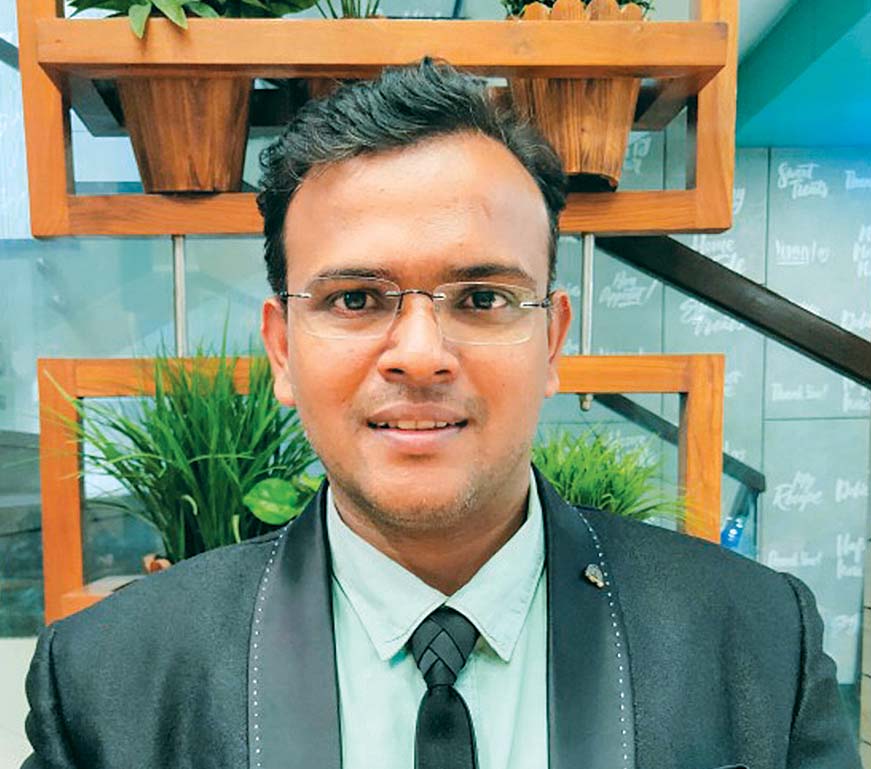
While global farm policy obsesses over land, capital and climate, it still ignores the health of the person behind the plough.

The world’s agricultural debates have acquired an oddly abstract quality. Ministers and leaders argue over climate finance, development banks model productivity curves, and economists refine forecasts for food security. Yet the central figure in agriculture - the farmer - often disappears into the spreadsheet.


This omission is one reason why so many well-intentioned agricultural reforms fail. More than 500 million smallholder farming families produce a substantial share of the world's food. Their economic reality is immediate and unforgiving. A failed monsoon, a medical emergency, an unexpected pest infestation or a spike in borrowing costs can erase years of accumulated savings. Survival is measured in whether there is enough money to buy seeds for the next sowing season.


Vast Disconnect

The institutions attempting to help them inhabit a different universe. Multilateral lenders, climate negotiators and national planning commissions demand measurable indicators, scalable interventions and econometric certainty. Local distress that cannot be quantified rarely becomes policy. As a result, agricultural programmes often look elegant in conference halls but unravel in the fields.


For decades, agriculture has been treated as an engineering problem. Raise yields by improving irrigation, distributing better seeds, subsidising fertiliser or expanding mechanisation. Health, meanwhile, has occupied an entirely different policy silo, regarded largely as a welfare expenditure rather than a productive investment.


A farmer suffering from untreated illness, chronic malnutrition, heat stress or mental exhaustion is not simply a patient. He or she represents diminished productive capacity. Every missed day during sowing or harvesting carries consequences that ripple through the supply chain. Lower labour efficiency means lower output, higher production costs and ultimately greater food-price volatility.


This insight is captured in the emerging concept of Farmer Health Capital. It argues that agricultural productivity is determined not merely by land, machinery and technology but by the physical and mental condition of those who work the land. Labour is not a fixed variable. It is a health-adjusted asset.


Viewed through this lens, rural healthcare ceases to be a fiscal burden. It becomes productive infrastructure, no less important than irrigation canals or storage facilities. Investments in preventive healthcare, occupational safety and accessible medical services generate measurable returns through higher yields, lower labour losses and greater resilience against climatic shocks.


That is a far more persuasive argument for finance ministries than appeals to compassion alone. A similar failure of translation bedevils climate policy.


International agencies routinely urge smallholders to adopt agroforestry, diversify crops and restore degraded ecosystems. These impose immediate costs on farmers whose financial horizon rarely extends beyond the next harvest. Expecting impoverished cultivators to absorb these costs in pursuit of global carbon targets is politically unrealistic and economically naïve.


Climate policy succeeds only when ecological benefits become commercial benefits. Advances in natural-resource accounting now make that increasingly possible. Carbon captured by diversified farms and food forests can be measured with growing precision. When thousands of small farms are aggregated through Farmer Producer Organisations, these environmental gains become marketable assets capable of accessing voluntary carbon markets and climate-finance mechanisms.


The principle is straightforward. A farmer should not be paid only for producing food. He should also be compensated for producing environmental services.


That transforms sustainability from a moral obligation into a reliable secondary income stream. The practical agenda is hardly revolutionary. Agricultural credit can be bundled with affordable health insurance so that illness does not force distress sales of land or livestock. Governments can finance digital platforms enabling farmer collectives to participate in carbon markets that remain inaccessible to individuals. Public-private partnerships can complement investments in roads and warehouses with mobile rural health services timed to critical agricultural seasons.


Farmer’s Health

None of these measures requires reinventing global agriculture but merely recognising an inconvenient truth. Economists have long understood the value of physical capital. They increasingly appreciate natural capital. Human capital has become a familiar policy cliché.


Yet in agriculture, the health of the farmer still occupies surprisingly little space in macroeconomic thinking. Climate volatility, ageing rural populations and growing food insecurity demand a more sophisticated understanding of productivity. The future of agriculture will depend not only on smarter seeds or better satellites but also on healthier farmers. The world’s agricultural planners have spent decades measuring the fertility of the soil. It is time they devoted equal attention to the resilience of the hands that cultivate it.


(The writer is a member of Maharashtra Agriculture Price Commission. Views personal.)


Comments


bottom of page